

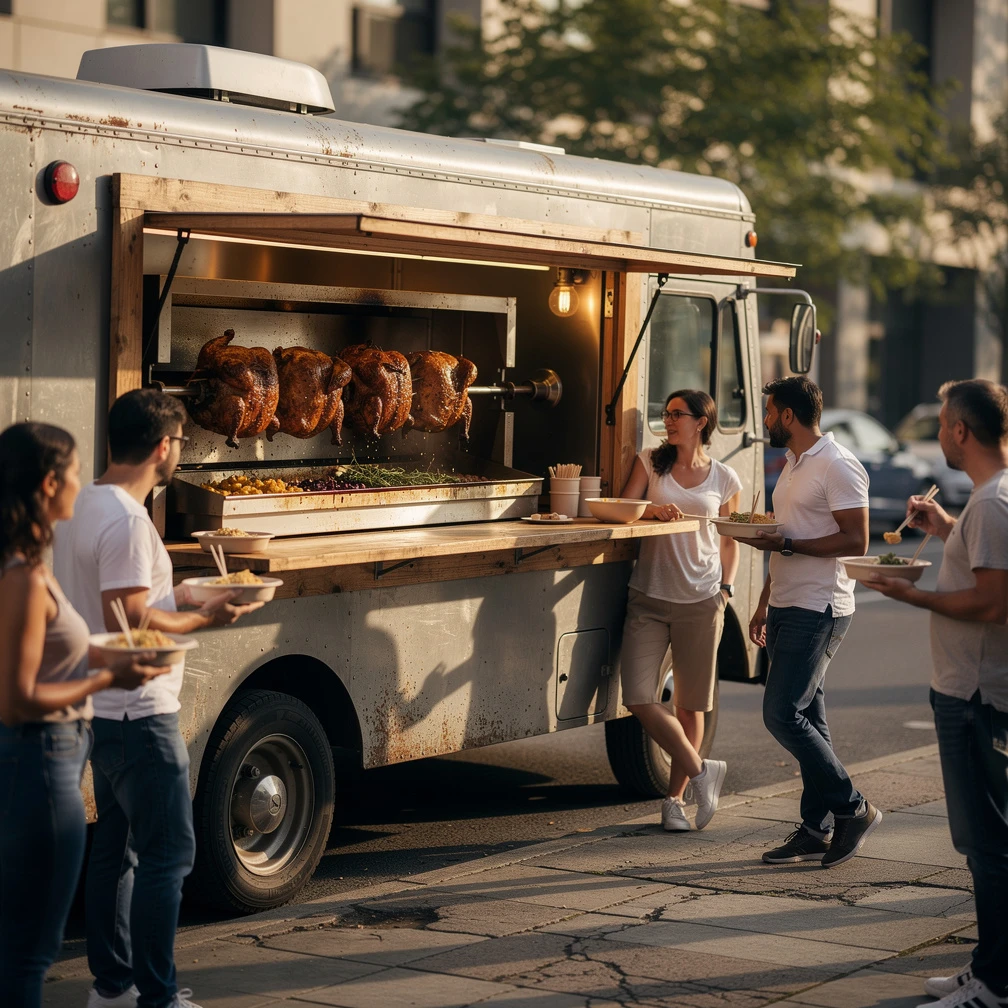
Summer 2026 is shaping up to be a breakout season for mobile food, and rotisserie trucks are muscling their way to the front of the line.
As festivals and open-air food markets multiply across France, more operators are betting that the oldest crowd-pleaser in the book, meat turning on a spit, can outshine the usual burger-and-fries circuit. The pitch is simple: traditional comfort food, cooked in plain sight, served fast, and built for big crowds.
For would-be owners, the appeal goes beyond the aroma. A well-equipped rotisserie truck can chase high-traffic events, keep overhead lower than a brick-and-mortar restaurant, and turn short seasonal windows into serious revenue.
Rotisserie trucks are the street-food trend gaining steam for 2026
Rotisserie food trucks are popping up as a go-to format for vendors who want mobility without sacrificing “real food” credibility. The model thrives at summer festivals, pop-up markets, and regional fairs, places where people are hungry, impatient, and ready to spend.
What makes rotisserie different is the built-in show. A row of chickens browning under heat lamps sells itself. The smell does the marketing. And the menu can stay tight, roasted chicken, suckling pig, lamb on special weekends, without looking boring.
Why mobility is pulling in restaurant pros
In the U.S., the closest comparison is the way food trucks cluster around major concerts, county fairs, and sports weekends, following the crowd instead of waiting for it. That same logic is driving interest in rotisserie trucks in France.
Operators can move from one market to the next, target the busiest dates on the calendar, and adjust to seasonal demand. It’s a flexible setup that fits modern eating habits: people want something hot and satisfying, right now, without committing to a sit-down meal.
Festivals and food markets are supercharging the business
France’s summer calendar is increasingly packed with music festivals and “marchés gourmands”, food-focused outdoor markets that function a bit like a recurring night market or a weekend food festival in an American downtown.
Those events are fueling demand for street food that feels more artisanal than mass-produced. For mobile vendors, each stop is a chance to build a following quickly, especially when the product is rooted in familiar tradition and served with a sense of occasion.
What a well-designed rotisserie truck does better than a standard food truck
A rotisserie truck is built for throughput. Instead of juggling multiple made-to-order items, the core product cooks continuously, letting staff serve fast during rushes.
It also wins on visibility. People don’t just buy roasted chicken, they buy what they can see and smell. That sensory pull matters at crowded events where every vendor is fighting for attention.
Key advantages include:
• Easy movement between sites and events
• Flexibility to match menus to seasons and local celebrations
• A visual-and-aroma “billboard” that draws foot traffic
• Lower fixed costs than a permanent location
The equipment that matters most in 2026
The big priorities for 2026 are efficiency, ergonomic layouts, and gear that can handle health-code scrutiny. Vendors are looking for durable equipment that’s easy to clean and versatile enough to expand the menu without slowing service.
The rotisserie itself is the whole game
The centerpiece is a high-capacity professional rotisserie that can cook multiple birds, or larger cuts like lamb or suckling pig, at the same time. Multifunction units let vendors switch proteins based on local tastes and event type.
Food safety features are non-negotiable: drip collection, sturdy materials, and components that come apart quickly for cleaning.
Other must-have add-ons
Beyond the rotisserie, operators typically rely on:
• Refrigerated storage for sides, salads, and drinks
• A temperature-controlled display case for finished items
• An integrated hand-washing station
• Clear signage and a checkout setup designed for speed
Modular prep space also matters, especially when lines spike and the team has to restock, plate, and clean on the fly.
Where rotisserie trucks make the most money in summer
Location is everything, and the best money is still tied to big crowds: music festivals, sporting events, and multi-day regional fairs. Those settings create predictable surges, halftime, intermissions, peak evening hours, when hot food sells fast.
Traditional markets remain reliable, too, thanks to repeat customers who care about quality and familiarity. Busy city centers and beach towns during tourist season can deliver both steady volume and high visibility.
In practical terms, the strongest spots tend to break down like this:
• Music festivals: high foot traffic, very high sales potential
• Urban markets: medium-to-high traffic, steady repeat business
• Regional fairs: variable traffic, strong multi-day earning opportunities
• Sporting events: intense bursts of demand tied to game breaks
If the trend holds, rotisserie trucks won’t just be a novelty in 2026, they’ll be a blueprint for how mobile food operators chase crowds, cut risk, and still serve something that feels like a real meal.