

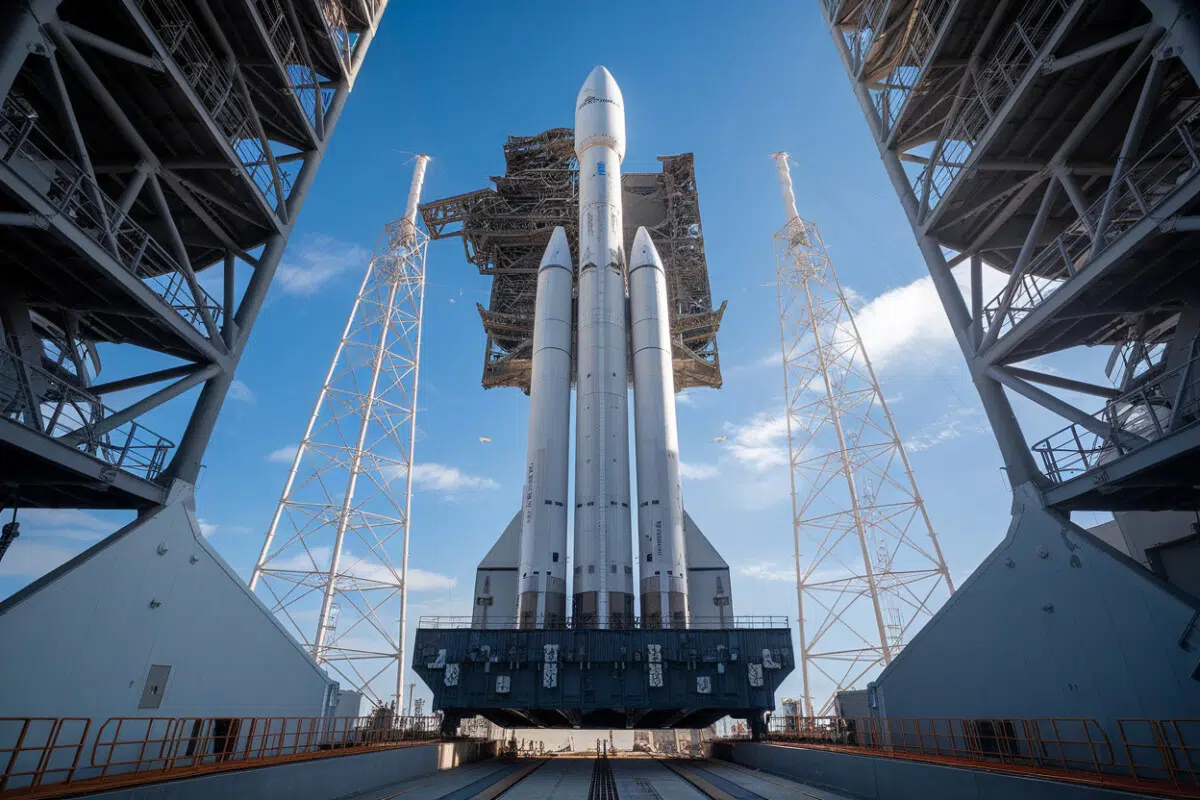
NASA is handing a critical chunk of its lunar program to a brand-new rocket: Vulcan, the heavy-lift launcher built by United Launch Alliance, the Boeing–Lockheed Martin joint venture.
The deal runs through 2028 and totals about $2.8 billion, a major vote of confidence in Vulcan after its first flight in January 2024—and a sign NASA is leaning harder on established aerospace giants and public-private partnerships to keep its Moon ambitions on track.
Exactly which “key element” Vulcan will carry is central to NASA’s broader Artemis effort, the agency’s plan to return astronauts to the Moon and build the foundations for longer-term lunar operations that could eventually support missions to Mars.
Why NASA is turning to Vulcan now
Vulcan’s successful debut in early 2024 changed the conversation. NASA has been looking for reliable, high-capacity launch options as it juggles tight schedules, complex hardware, and the political reality that big-ticket space programs live and die by performance.
By tapping ULA, NASA can swap out or rethink some previously planned equipment and redirect resources—an approach meant to reduce risk compared with betting everything on unproven systems or extended new development cycles.
Meet Vulcan: Boeing and Lockheed Martin’s next-generation workhorse
Vulcan is ULA’s successor to its Atlas and Delta rocket families—vehicles that have launched everything from national security satellites to deep-space probes. Development began in 2014, with the goal of modernizing U.S. launch capability and staying competitive in a market reshaped by SpaceX and other newcomers.
The program has been backed in part by the U.S. government, including about $1.2 billion in funding, with Boeing and Lockheed Martin covering the rest. For NASA, it’s another example of the agency relying on industry to build the hardware while NASA focuses on mission architecture, science, and human exploration goals.
The money: $2.8 billion through 2028—and the tradeoffs
The $2.8 billion price tag is already in U.S. dollars, and it underscores how expensive “routine” access to deep space remains even as launch technology advances. NASA’s bet is that buying into a rocket that has already flown can lower the odds of costly delays and redesigns.
But the spending also raises familiar questions: How much of NASA’s budget should go to launch services versus spacecraft, landers, spacesuits, and the lunar infrastructure needed to keep astronauts alive and productive on the surface?
If Vulcan’s costs climb—or if the rocket can’t meet cadence and performance targets—NASA could be forced to reshuffle priorities across multiple missions.
The technical hurdles Vulcan still has to clear
Vulcan’s development has been marked by delays, many tied to its BE-4 engines built by Blue Origin. New engines are notoriously hard to perfect, and the BE-4 required extensive testing and adjustments before it could be cleared for flight.
Engine integration is only part of the challenge. Engineers also have to ensure the rocket’s systems work seamlessly with other components, including solid rocket boosters, and that the full stack performs reliably under the stresses of launch.
The January 2024 flight helped validate the design, but NASA’s lunar ambitions demand repeatability—success once is encouraging; success every time is the standard.
What this could mean for the Moon—and for Mars
NASA’s long game is bigger than planting flags. The agency wants a sustained presence on and around the Moon—think power, communications, cargo delivery, and science missions that can run for years, not days.
More dependable heavy-lift launches could speed up the buildout of that lunar “supply chain,” including missions aimed at locating and characterizing resources like water ice, which could be turned into drinking water, breathable oxygen, or even rocket propellant.
And if NASA can make lunar logistics work, it strengthens the case that the Moon can serve as a proving ground for Mars—where every failure is far more costly and far harder to fix.
A ripple effect across the commercial space industry
NASA’s move is also a market signal. By putting billions behind a public-private rocket program run by legacy contractors, the agency is reinforcing a model where government demand helps underwrite industrial capacity—while private companies compete to deliver.
That could intensify competition, push innovation, and potentially drive down launch costs over time. It may also encourage other countries and space agencies to pursue similar partnerships as the next era of lunar exploration becomes more crowded—and more geopolitically significant.
If Vulcan delivers, NASA gets another dependable ride to deep space. If it doesn’t, the agency’s Moon timeline—and the broader U.S. strategy for space leadership—could feel the impact.
Key Takeaways
- NASA selects the Vulcan rocket for a key element of its lunar mission.
- The partnership between Boeing and Lockheed Martin is crucial to Vulcan's success.
- Vulcan could redefine the future of lunar and space exploration.
Frequently Asked Questions
Why did NASA choose the Vulcan rocket for its lunar mission?
NASA chose the Vulcan rocket because of its advanced technology and its successful inaugural flight in January 2024, making it a reliable option for critical lunar missions.
What challenges are associated with using the Vulcan rocket?
Challenges include integrating the new BE-4 engines and managing high costs, requiring close coordination between NASA and United Launch Alliance to ensure mission success.