

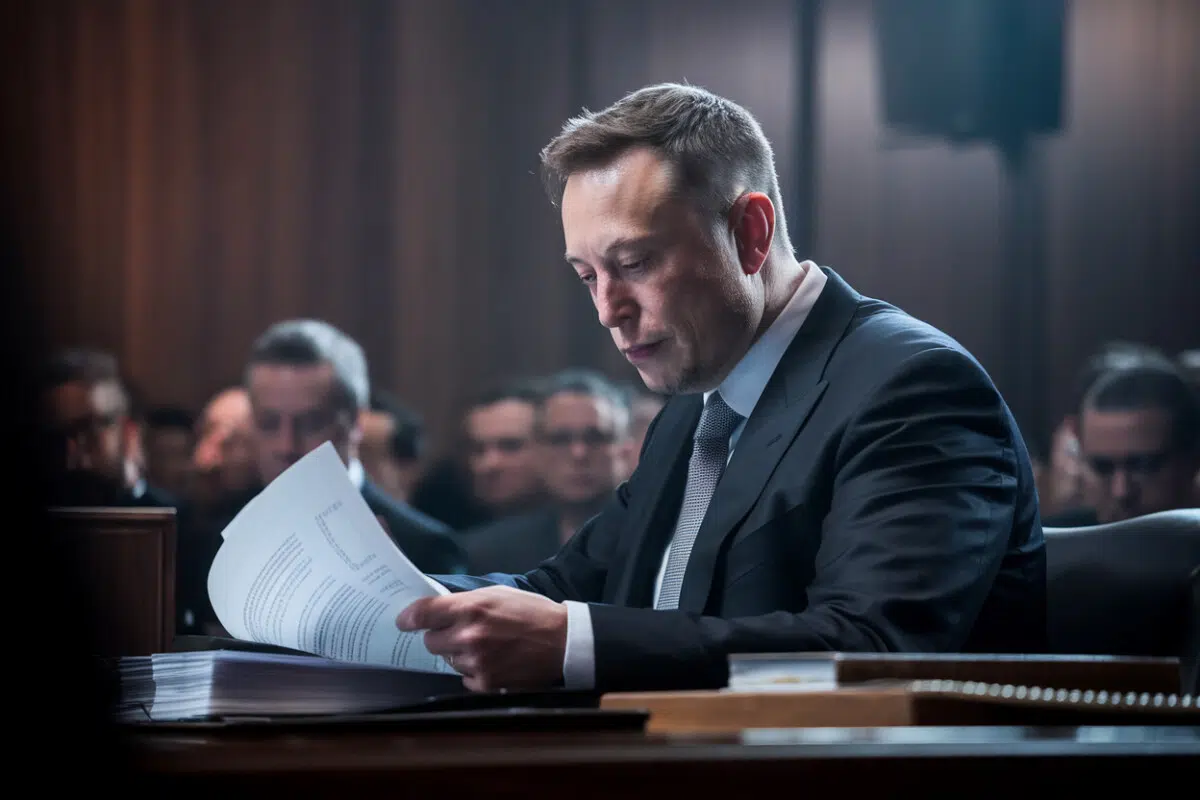
Elon Musk is back in court—this time facing accusations that he played investors ahead of his $44 billion Twitter takeover by talking down the company to drive its stock price lower.
Shareholders say Musk used his massive online megaphone to rattle the market, hoping to renegotiate the deal or walk away cheaper. The trial, unfolding in federal court in San Francisco, puts Musk’s public statements—and his long-running collision course with securities rules—under a microscope.
At the center of the case is a blunt question: Did Musk intentionally manipulate Twitter’s share price before buying the platform now known as X?
What the lawsuit says Musk did
Investors argue Musk violated federal securities laws by making misleading public claims about Twitter’s bot and fake-account problem while the acquisition was pending. They say those statements weren’t just commentary—they were a strategy designed to depress Twitter’s stock and strengthen Musk’s negotiating position.
The lawsuit traces back to October 2022, when Musk ultimately closed the deal for $44 billion (still $44 billion in U.S. dollars). But in the months leading up to the purchase, he repeatedly signaled doubts about the company’s disclosures, creating whiplash for shareholders watching the stock swing with each new post and headline.
If a jury agrees Musk’s statements were knowingly deceptive and aimed at moving the market, the consequences could be serious—both financially and legally—given the SEC’s strict rules against market manipulation.
Musk’s defense: Twitter misled him, and the deal deserved a reset
Musk has insisted he had legitimate reasons to challenge the purchase terms, arguing Twitter’s leadership wasn’t transparent about how many accounts on the platform were bots. In his telling, he wasn’t trying to rig the market—he was reacting to information he believed was incomplete or inaccurate.
He has also suggested the courtroom itself has been tilted against him, testifying that he felt pressure to finalize the acquisition because of what he perceived as bias from the judge. That claim adds another layer of drama to a case already fueled by Musk’s high-profile persona and unconventional approach to corporate communication.
Why this feels familiar: Musk’s history with market-moving posts
This isn’t Musk’s first time fighting allegations that his public statements moved markets. In 2018, he sparked a major controversy involving Tesla after tweeting he had “funding secured” to take the company private—an episode that triggered intense scrutiny and became a defining example of how a CEO’s social media posts can collide with securities law.
Musk ultimately avoided a jury finding of liability in that earlier saga, but it cemented his reputation as a business leader whose online presence can send stocks lurching in real time.
In the Twitter case, shareholders say the bot narrative served a similar purpose: inject doubt, apply pressure, and try to gain leverage over price.
What’s at stake for Musk’s brand—and his next big bets
Musk has built his career on bold promises and a cultivated image as a visionary willing to break rules and move fast. But securities law is one arena where “move fast” can turn into “pay up.” A finding that he manipulated the market could damage his credibility with investors and business partners who bankroll his sprawling empire.
Even if Musk wins, the trial reinforces a reality that follows him: his words can move markets, and courts are increasingly willing to treat those words as potential evidence—not just noise.
What it could mean for X and the broader tech world
For the platform formerly known as Twitter, the case lands during an already turbulent reinvention. Musk’s rebrand to X signaled a push to remake the service into something bigger than social media, but the company has faced persistent questions about stability, advertiser confidence, and governance.
A loss for Musk could invite more legal pressure and force sharper scrutiny of how the company communicates with investors and the public. A win could embolden other executives to test the boundaries of dealmaking in public—though few have Musk’s reach or his ability to dominate the news cycle with a single post.
Either way, the trial underscores a broader lesson for Silicon Valley: in an era when CEOs broadcast directly to millions, the line between commentary and market influence is thin—and courts are paying attention.
Key Takeaways
- Elon Musk is accused of misleading investors during the purchase of Twitter.
- The trial could affect Musk's reputation and future projects.
- The case highlights the importance of transparency in financial transactions.
Frequently Asked Questions
Why is Elon Musk on trial over the acquisition of Twitter?
Musk is accused of manipulating public statements to influence Twitter’s stock price, which could violate federal securities laws.
What are the possible consequences for Musk if he is found liable?
A ruling against him could damage his reputation, affect his future projects, and lead to legal repercussions for Twitter.
Sources
- Elon Musk defends himself against accusations of …
- Musk defends himself against accusations of misconduct prior … – PBS
- Elon Musk to take stand in Twitter shareholder trial … – ABC7 Chicago
- Twitter investors claim Elon Musk 'cheated' in $44 billion takeover of …
- Elon Musk to Face Trial Over His Tweets Ahead of Twitter Purchase