

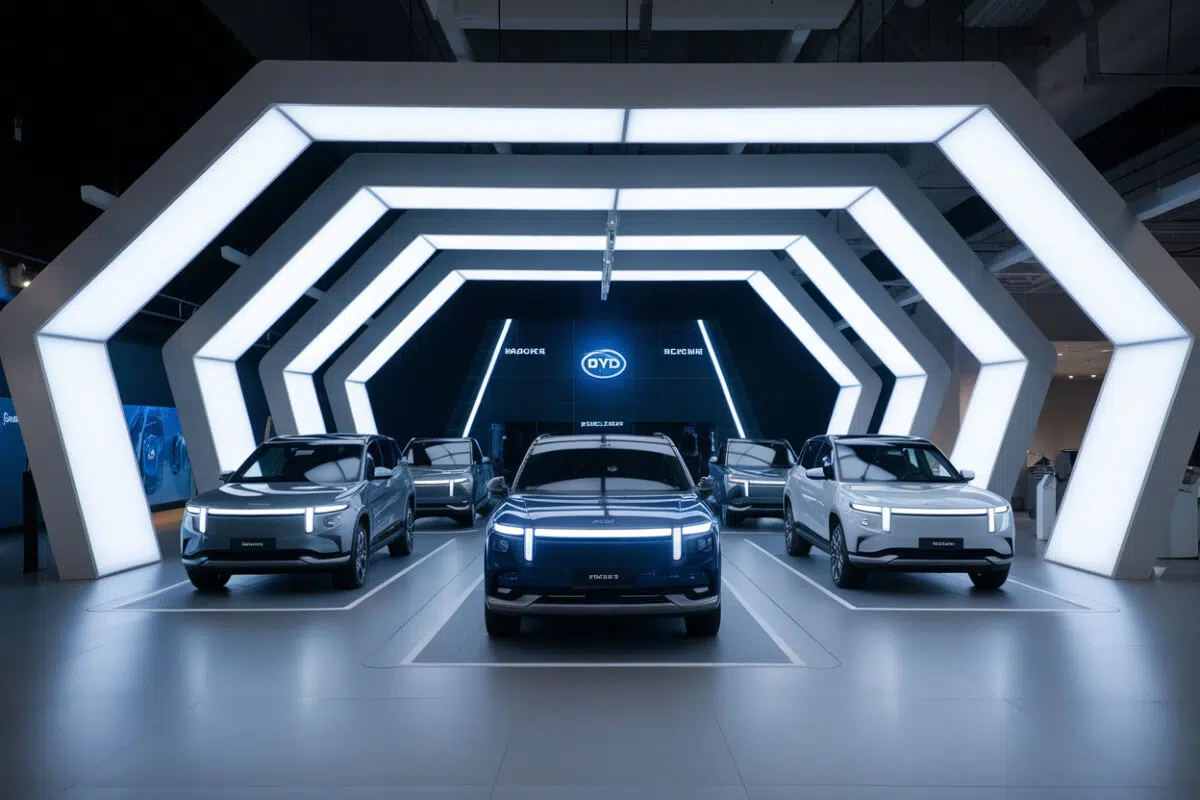
BYD, the Chinese electric-vehicle powerhouse that has helped define the country’s EV boom, is suddenly losing altitude at home. The company’s sales fell 36% in the first two months of 2026 compared with the same period a year earlier, a sharp drop that signals just how quickly China’s once-red-hot EV market is cooling.
The slump is giving rivals an opening. Brands like Nio and Li Auto are picking up momentum, while Geely—owner of Volvo and a major force in China’s auto industry—pushes harder overseas. For American readers watching the global EV race, the message is clear: China’s market is maturing, competition is brutal, and even the biggest players can stumble.
BYD hits a wall as rivals accelerate
BYD’s slide comes as China’s EV sector shifts from breakneck growth to a more crowded, price-sensitive fight for buyers. The timing didn’t help: the Lunar New Year holiday, which typically slows retail activity, cut into selling days and amplified the downturn.
But the bigger story is competitive pressure. Nio and Li Auto have been quick to capitalize on wavering demand for BYD models, using fresh product cycles and sharper positioning to pull shoppers their way.
China’s EV market now looks less like a gold rush and more like a cage match. Nio, Li Auto and Geely have each found ways to siphon demand that BYD isn’t capturing right now, especially among buyers who want the newest tech or a different kind of drivetrain.
Li Auto has leaned heavily on hybrids—an approach that can appeal to drivers worried about charging access or range. While BYD sells both pure EVs and plug-in hybrids, its overall sales in those categories dropped sharply early this year, while Li Auto posted steadier growth.
Geely, meanwhile, is flexing internationally. The company’s exports jumped 138% in February, underscoring a global expansion push that adds another layer of pressure for BYD, which is also trying to grow outside China.
Nio’s pitch has been technology and continuous upgrades—an approach that appears to be resonating as BYD’s domestic momentum fades. And new entrants keep arriving, adding more innovation, more models, and more noise in an already saturated marketplace.
China’s EV market is changing—and government support is fading
BYD’s downturn is also tied to forces bigger than any one company. Chinese government subsidies that helped fuel years of rapid EV adoption have been shrinking, directly affecting consumer demand.
At the same time, the market is getting crowded. A flood of new models each year has given buyers more choices than ever—great for consumers, tougher for brands trying to hold loyalty and pricing power.
Global economic uncertainty is another headwind. When growth slows and households feel less confident, big-ticket purchases like new cars are often the first to be delayed.
BYD’s counterpunch: longer financing, new batteries, faster charging—and more exports
BYD isn’t standing still. The company has rolled out new efforts to stimulate demand, including attractive seven-year financing plans designed to lower monthly payments and keep buyers in the showroom.
On the tech front, BYD is touting upgrades like its Blade Battery 2.0 platform and second-generation fast-charging systems—moves aimed at keeping pace in a market where consumers expect rapid improvement year over year.
Perhaps the most striking shift: in February 2026, BYD sold more vehicles overseas than it did in China for the first time, a milestone that highlights how central international growth is becoming to its strategy.
BYD is also preparing new launches under its higher-end Denza and Yangwang brands, targeting premium buyers with more performance and advanced features—an attempt to defend margins while competitors crowd the mainstream.
What BYD’s stumble could mean for the global EV race
BYD’s slowdown is a warning flare for China’s EV industry: the easy growth is over, and the next phase will reward companies that can innovate fast, control costs, and differentiate their products.
That could drive consolidation, with weaker players squeezed out as the strongest brands fight for scale. For consumers, the upside may be more choice and more aggressive pricing as automakers battle for attention.
It could also force Beijing to rethink how it supports the sector—adjusting subsidies and regulations to keep the industry growing without fueling wasteful overcapacity.
The road ahead: can BYD turn overseas momentum into a new growth engine?
BYD still has enormous advantages—scale, manufacturing muscle, and a deep lineup. But to regain its footing, it will need to tighten operations, manage costs, and keep its product cadence sharp in a market that punishes complacency.
The company’s biggest opportunity may be outside China, where rising overseas sales could offset softer demand at home. That expansion comes with its own challenges: local regulations, consumer preferences, and intensifying political scrutiny of Chinese-made vehicles in some markets.
How BYD navigates that next chapter won’t just shape its own future—it could reshape the balance of power in the global EV industry.
Key Takeaways
- BYD sees a 36% drop in sales in early 2026.
- Local competitors like Nio and Li Auto are taking advantage to gain market share.
- BYD is betting on innovation and international expansion to bounce back.
Frequently Asked Questions
Why did BYD's sales drop in early 2026?
BYD’s sales fell by 36% in early 2026 due to increased competition, market saturation, and the Chinese New Year period, which reduced the number of selling days.
Sources
- BYD Sales Tumble as China's EV Market Cools – The Tech Buzz
- BYD Sales Slide 41% as NIO, Zeekr Post Sharp Gains in Feb …
- BYD Feb NEV sales plummet 41% domestically, hit by Chinese …
- BYD Sales Crash Hard in February — CHARTS – CleanTechnica
- BYD sells more cars overseas than in China for the first time