

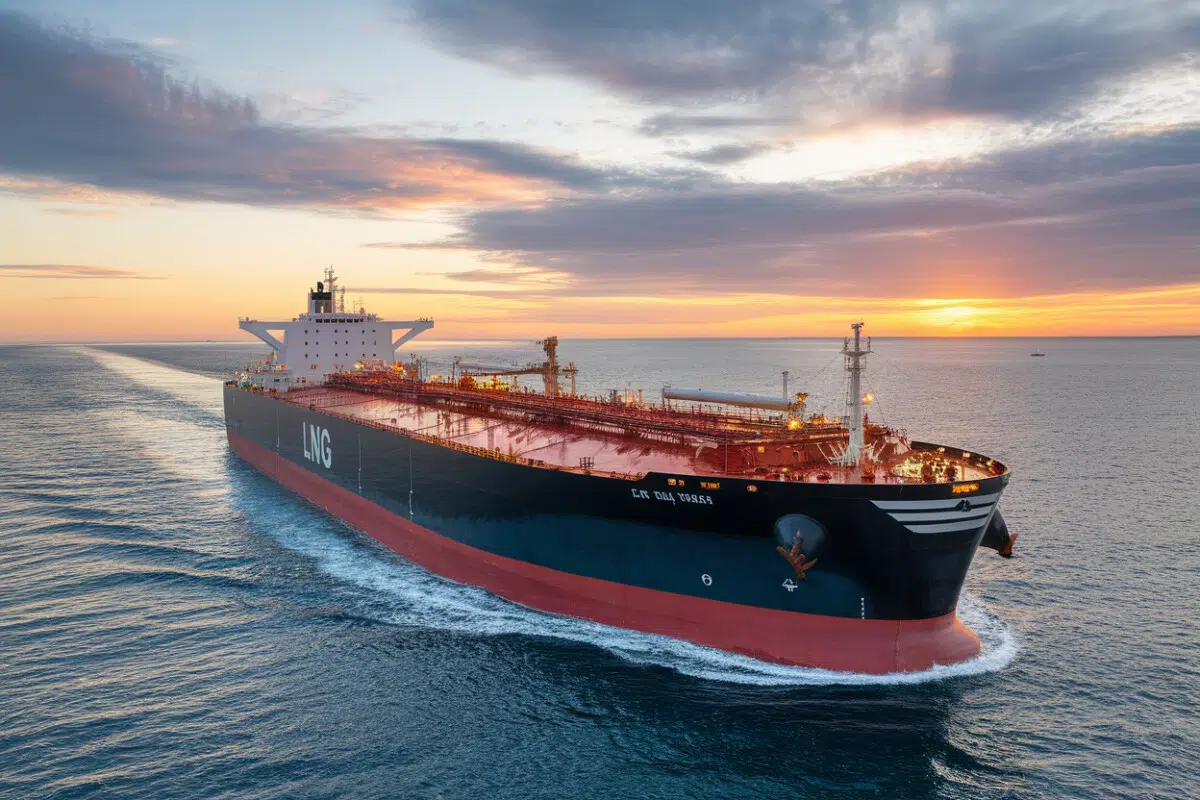
The cost to move liquefied natural gas (LNG) across the ocean has suddenly turned into a budget-buster. Charter rates for LNG tankers have surged to about $300,000 per day—a roughly 650% jump—as escalating tensions in the Middle East rattle shipping routes near the Strait of Hormuz, one of the world’s most critical energy corridors.
The spike is already rippling through global energy markets, especially in Asia, where major economies rely heavily on imported LNG to keep power plants running and homes heated or cooled. When ships get scarcer and voyages get longer, the bill doesn’t just land on traders—it can show up in higher electricity and fuel costs.
A global LNG market squeezed by longer routes and fewer available ships
This rate shock caught many buyers and sellers off guard, and analysts warn it could last weeks—or longer—if security risks persist. When vessels avoid certain waters or are forced to reroute, each trip ties up a ship for more days, shrinking effective supply even if the number of tankers hasn’t changed.
That dynamic is brutal in a market that already runs tight during periods of high demand. Importers and exporters end up competing for the same limited pool of available LNG carriers, pushing daily rates into record territory.
Why the Strait of Hormuz matters to Americans, too
The Strait of Hormuz is a narrow passage linking the Persian Gulf to the open ocean, and it’s one of the most strategically sensitive shipping lanes on Earth. Disruptions there don’t just affect regional players—they can reshape global energy flows, including LNG shipments that ultimately influence prices worldwide.
For U.S. readers: even though America has become a major LNG exporter, global LNG is priced on a connected market. If Asia has to pay more to secure cargoes—and pay more to ship them—those pressures can bleed into broader pricing and contract negotiations, including for U.S. supply.
Qatar disruptions and the scramble for alternative LNG supplies
The turmoil is also colliding with supply concerns. Qatar—one of the world’s top LNG exporters—has faced production disruptions, tightening the market further and forcing importers to look farther afield for replacement cargoes.
That often means turning to suppliers such as the United States or Australia. But longer distances translate into longer voyages, more ship-days per delivery, and even higher transport costs—fuel for the rate surge now hitting the industry.
Charterers shift tactics: longer contracts, diversified routes, fierce competition
Companies that book LNG ships—known as charterers—are adjusting on the fly. Some are locking in longer-term charters to avoid the whiplash of the spot market, trading flexibility for cost certainty.
Others are trying to diversify supply sources and shipping routes to reduce exposure to geopolitical flashpoints. But alternatives can be limited: new routes may add days at sea, and replacement suppliers may not have enough spare volume to fully offset disruptions.
Meanwhile, the simple reality is that ship availability is tightening. When daily rates hit six figures, every vessel becomes a prize—and charterers can find themselves in direct bidding wars just to secure capacity.
Asia feels the pain first—and consumers could be next
Asian buyers are among the most exposed. Japan, China, and South Korea are major LNG importers, using the fuel to generate electricity and support industrial demand.
As shipping costs climb, those higher logistics bills can inflate delivered LNG prices. That can pressure utilities and, depending on how governments and regulators respond, may filter down to households and businesses through higher power prices.
Some governments may lean more heavily on strategic reserves or pursue bilateral supply deals to stabilize costs. Others may push harder to expand renewables—but that shift takes years and major investment, not weeks.
What this means for the LNG industry—and what comes next
The fallout goes well beyond shipping companies. Producers can see margins squeezed if freight costs rise faster than LNG prices. Traders face a tougher hedging environment as freight volatility becomes a bigger piece of the risk puzzle.
Regulators and policymakers could also come under pressure to help calm markets, whether through coordination on maritime security or measures aimed at reducing extreme price swings that can spill into the broader economy.
If the current tensions persist, the LNG business may emerge more cautious—and more structurally changed—placing a higher premium on diversified supply chains, flexible contracting, and routes that don’t hinge on a single geopolitical chokepoint.
Key Takeaways
- LNG shipping rates have jumped 650% to $300,000 per day.
- Tensions in the Middle East are disrupting routes and driving up costs.
- Asian markets are particularly affected by this energy crisis.
Frequently Asked Questions
Why have LNG shipping rates increased so much?
Rates have risen due to tensions in the Middle East disrupting supply routes, increasing demand and transportation costs.
Sources
- LNG Shipping Rates Soar 650% to $300,000 Per Day | OilPrice.com
- LNG pricing to jump sharply as Gulf shutdown traps vessels and …
- LNG Shipping Rates Surge to $200K/Day Amid Middle East Tensions
- LNG charter rates can push above $300,000 per day, Poten says
- Daily LNG freight rates jump over 40% amid Mideast strikes, Spark …