

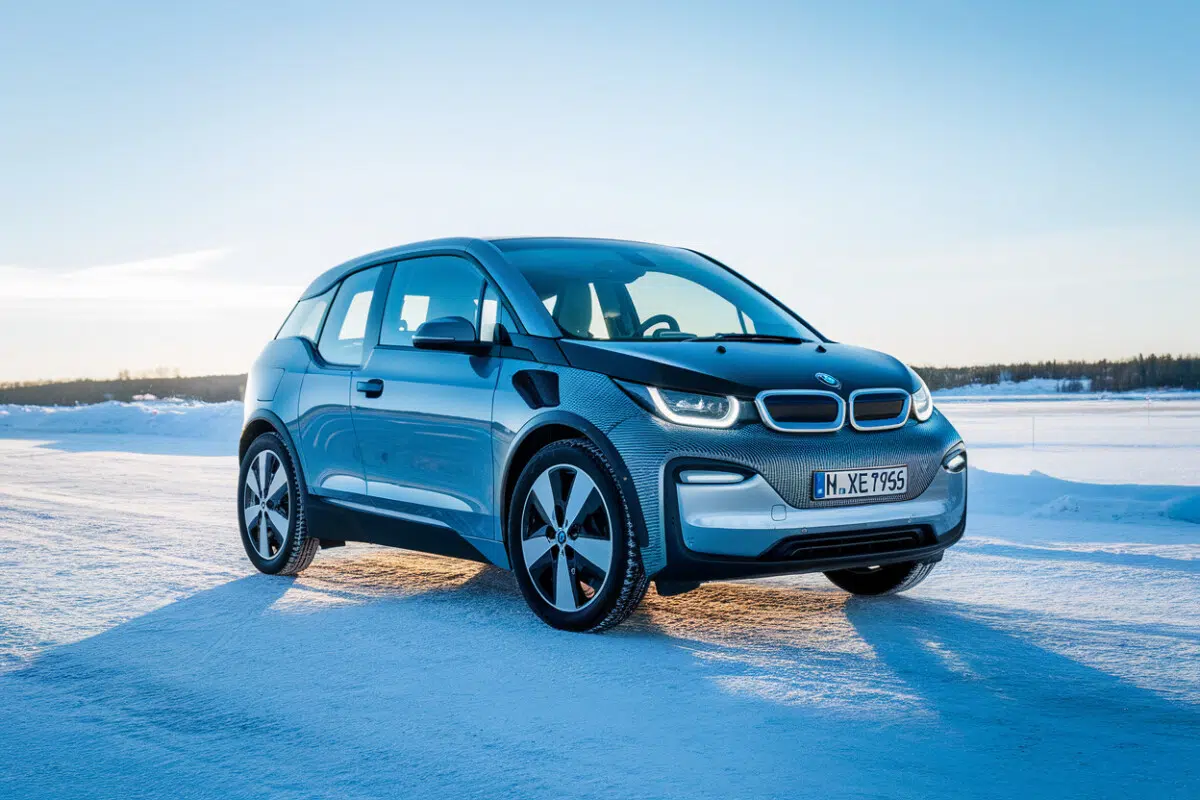
BMW is taking its next-generation electric sedan to one of the toughest proving grounds on Earth: a frozen test track in Sweden. The company’s i3 “Neue Klasse” prototype—badged i3 50 xDrive—pairs all-wheel drive with a claimed 463 horsepower, aiming to prove it can deliver control, not just speed, when traction disappears.
The headline feature isn’t simply the power. It’s how BMW says it manages that power on slick surfaces, leaning hard on regenerative braking, tighter coordination between its dual motors, and a new computing platform the automaker is pitching as the brains behind a more confident EV.
A new i3—separate from the old one Americans remember
If “BMW i3” rings a bell, you’re probably thinking of the quirky carbon-fiber city car BMW sold in the U.S. years ago. This is different: a new i3 nameplate tied to BMW’s “Neue Klasse” (German for “New Class”) EV architecture, a clean-sheet platform meant to underpin a wave of future electric BMWs.
BMW is positioning this i3 as a tech-forward performance sedan designed to hold its own in winter climates—an important pitch for U.S. buyers in snow-belt states who still worry about how EVs behave when roads turn to glass.
Why Sweden’s ice matters: traction, braking, and driver confidence
On ice, the challenge isn’t launching fast—it’s staying composed when you lift off the accelerator or need to slow down. BMW says the i3 50 xDrive’s all-wheel drive helps keep the car hooked up, but the bigger differentiator is how it blends regenerative braking with traditional friction brakes.
Regenerative braking turns the motors into generators to slow the car while sending energy back to the battery. Done poorly, it can feel grabby or unpredictable on low-grip surfaces. BMW’s claim is that it has tuned the system to reduce reliance on the physical brakes and deliver smoother, more controllable deceleration—exactly what drivers want when the road is slick.
Neue Klasse: BMW’s big bet on a new EV platform
The prototype rides on BMW’s Neue Klasse platform, which the company says is designed to boost efficiency and performance while supporting multiple vehicle types. BMW also plans to use the architecture for the iX3 SUV, signaling the platform is meant to scale from sedans to crossovers without sacrificing capability.
One of the key engineering changes is a “cell-to-pack” battery design—packaging battery cells more directly to improve energy density and reduce bulk. Less weight matters in any EV, but it’s especially important on ice, where extra mass can make a car harder to settle and stop.
Range claims and what they mean for U.S. readers
BMW is touting range improvements with Neue Klasse, with the article citing up to 153 miles on a charge. That figure is already in miles, but it’s not presented as a U.S. EPA rating—so American shoppers should treat it as an early, non-final number that may not translate directly to what you’d see on a Monroney sticker.
Still, BMW’s broader message is clear: the company wants Neue Klasse to be a step-change platform, not a mild refresh—more efficient packaging, smarter controls, and better real-world drivability.
The “Heart of Joy” computer and the Qualcomm connection
BMW says the i3’s stability control, ABS, and motor controllers are more tightly integrated than before, allowing the car to react faster when grip changes. The system is powered by high-performance chips from Qualcomm—best known in the U.S. for smartphone processors, but increasingly a major player in automotive computing.
BMW calls this computing-and-control stack the “Heart of Joy,” and it’s central to the company’s pitch: EV performance isn’t just about horsepower anymore, it’s about software and silicon managing torque and braking with precision.
How it stacks up against familiar EV names
The article frames the i3 against mainstream EV benchmarks Americans will recognize. A Nissan Leaf is often seen as a practical, commuter-first EV; BMW is aiming for something more athletic and tech-intensive. Tesla’s Model 3 remains a reference point for regenerative braking feel and efficiency, but BMW is arguing it can deliver a more seamless blend of motor control and stability systems—especially on slippery surfaces.
Design is another dividing line. BMW’s Neue Klasse styling is a sharp departure from more conservative shapes, and it won’t be universally loved. But it signals BMW is willing to take risks to visually separate its next-gen EVs from both its gas lineup and its rivals.
What this could mean for EV adoption in cold-weather America
If BMW’s claims hold up in production form, the payoff could be bigger than one model launch. Better low-traction behavior—predictable regen, stable braking, confident AWD control—addresses a real barrier for drivers in places like Minnesota, upstate New York, and Colorado who want EV benefits without winter anxiety.
And if BMW’s tighter integration of chips, software, and vehicle dynamics becomes the new standard, competitors may have to respond—not just with bigger batteries or faster charging, but with smarter control systems that make EVs feel safer and more natural when conditions get ugly.
Key Takeaways
- The BMW i3 uses an innovative platform to improve its performance.
- Regenerative braking technology provides exceptional control on ice.
- The i3 is shaping the future of urban mobility with its advanced technology.
Frequently Asked Questions
What sets the BMW i3 apart from its competitors?
The BMW i3 stands out thanks to its Neue Klasse platform, regenerative braking, and innovative design, delivering superior performance, especially on ice.