

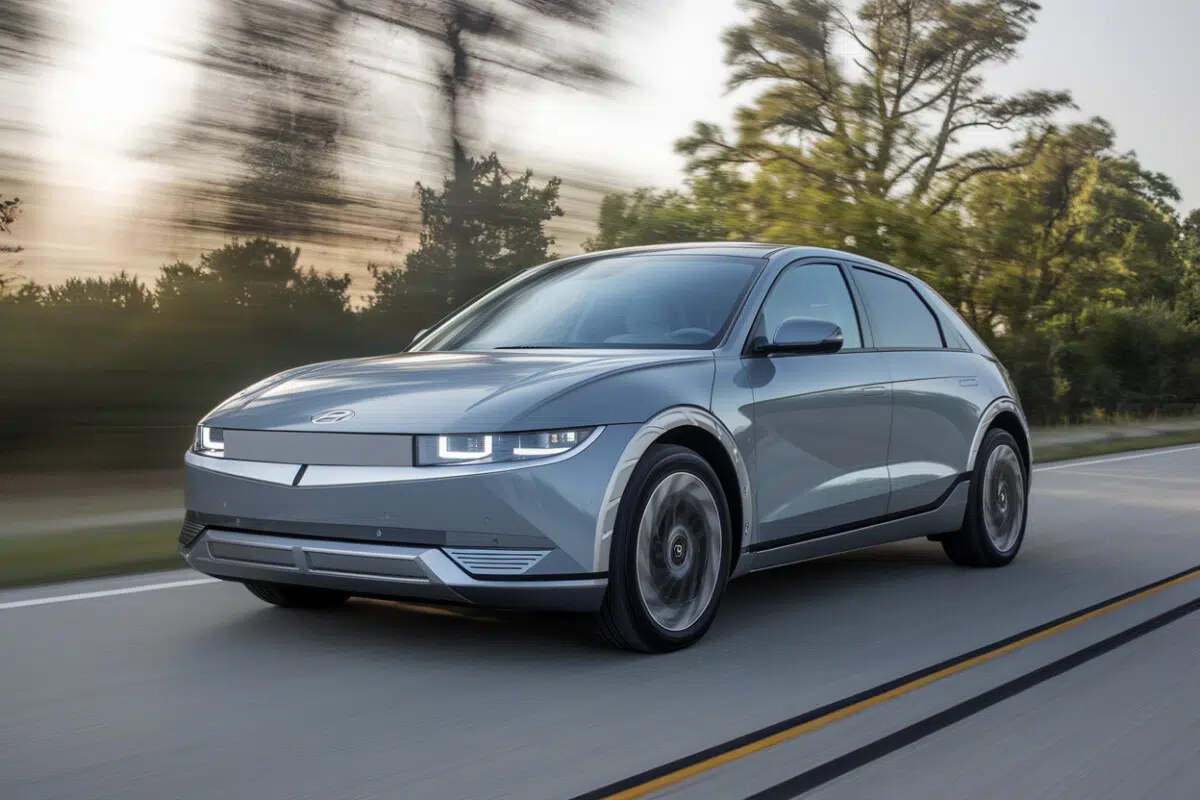
Hyundai is effectively pulling the plug on the mainstream Ioniq 6 in the United States, keeping only a limited-run, high-performance version for buyers who want speed over savings. At the same time, Kia is pausing sales of its EV6 GT—its hottest electric crossover—after weak demand and import costs made it a tougher sell.
Together, the moves underscore a blunt reality in America’s EV market: pricing pressure, shifting federal incentives, and trade policy are reshaping what automakers are willing to offer—and where they’re willing to build it.
Hyundai bets on a limited-run Ioniq 6 N, not the mass-market sedan
Hyundai says it will stop selling the standard Ioniq 6 in the U.S., narrowing the lineup to the Ioniq 6 N, a performance-focused model expected to arrive in limited numbers.
This isn’t a minor trim change. The Ioniq 6 N is positioned as a halo car—an attention-grabber meant to burnish Hyundai’s EV credibility. Hyundai pegs it at 641 horsepower and 568 lb-ft of torque, with a 0–62 mph time of about 3.2 seconds (the original figure was 0–100 km/h).
Hyundai is also leaning into tech meant to win over drivers who still miss the drama of gas cars, including features that simulate shifting and engine sound. It’s a clear signal the company thinks the remaining U.S. demand for this sedan skews enthusiast, not mainstream commuter.
Kia pauses the EV6 GT after sluggish sales
Kia’s move is less about branding and more about math. The company is putting the EV6 GT on pause in the U.S., citing disappointing sales and the added cost burden tied to importing the vehicle from South Korea.
Early this year, Kia sold 1,140 EV6 vehicles in the U.S.—less than half the pace from the same period a year earlier, according to the report. Models assembled in Georgia aren’t hit the same way by import-related cost pressures, which helps explain why Kia is emphasizing U.S.-built versions.
Kia says the EV6 GT isn’t necessarily gone for good. A spokesperson indicated the model remains in the brand’s plans, with more information expected later. For now, Kia is prioritizing versions that move faster off dealer lots.
Why tariffs and U.S. policy are reshaping Korean EV lineups
These decisions land in the middle of a policy squeeze. Import-related costs—driven by U.S. trade rules and tariffs affecting vehicles shipped from South Korea—can make Korean-built EVs harder to price competitively against models assembled in the U.S.
Then there’s the incentive landscape. Federal EV tax credits can reach up to $7,500, but eligibility depends heavily on where a vehicle is assembled and where its battery materials come from—rules that have pushed automakers to localize production. When a model doesn’t qualify, it can suddenly look thousands of dollars more expensive to shoppers cross-shopping Tesla, Ford, GM, and others.
The result: automakers are trimming slower-selling imports and leaning harder into vehicles they can build in North America—or, in Hyundai’s case with the Ioniq 6, turning a mainstream product into a niche performance play.
What’s different overseas—and why Canada still matters
Hyundai and Kia are making these cuts in the U.S. even as EV momentum looks stronger in other regions. In Europe, government policies and charging buildouts have continued to push EV adoption, while in Asia, intense competition from fast-growing Chinese brands like BYD and NIO is forcing constant product churn.
Canada, meanwhile, is a telling contrast. The standard Ioniq 6 is still available there, according to the reporting—highlighting how different trade and incentive structures can keep a model alive just across the border.
What Hyundai and Kia do next in the U.S.
Neither company is backing away from EVs altogether. Hyundai is expected to expand its electric lineup with larger, more family-friendly vehicles, including the three-row Ioniq 7, which the article says is targeted for 2027.
Kia is leaning into the EV9, its big three-row electric SUV aimed at the heart of the American market—where buyers have shown they’ll pay for size, range, and utility.
The bigger takeaway for U.S. drivers is simple: the EVs you can buy aren’t just determined by what’s popular—they’re increasingly determined by where a vehicle is built, how it’s taxed, and whether it qualifies for federal incentives. That’s pushing automakers to either localize production or retreat into niche, higher-margin models that can better absorb the costs.
Key Takeaways
- Hyundai is pulling the standard Ioniq 6 from the U.S. market to focus on the Ioniq 6 N.
- Kia is pausing the EV6 GT due to weak sales and import tariffs.
- U.S. policies are influencing the strategies of Korean automakers.
Frequently Asked Questions
Why did Hyundai pull the standard Ioniq 6 from the U.S.?
Hyundai discontinued the standard Ioniq 6 due to declining demand and high import costs, choosing instead to focus on the high-performance Ioniq 6 N.
Why did Kia pause the EV6 GT?
Kia paused the EV6 GT due to disappointing sales and high tariffs on imports from Korea, which hurt its competitiveness in the U.S. market.
Sources
- Hyundai drops Ioniq 6 in US as Kia pauses EV6 GT – electrive.com
- Hyundai axes IONIQ 6 from US lineup, Kia EVs remain in limbo
- Kia Delays EV6 GT Launch in the U.S. Amid Weak Sales – EVDANCE
- Hyundai discontinues electric Ioniq 6 in U.S., but not Canada | Driving
- The Kia EV6 GT Is Dead In The U.S. – InsideEVs