

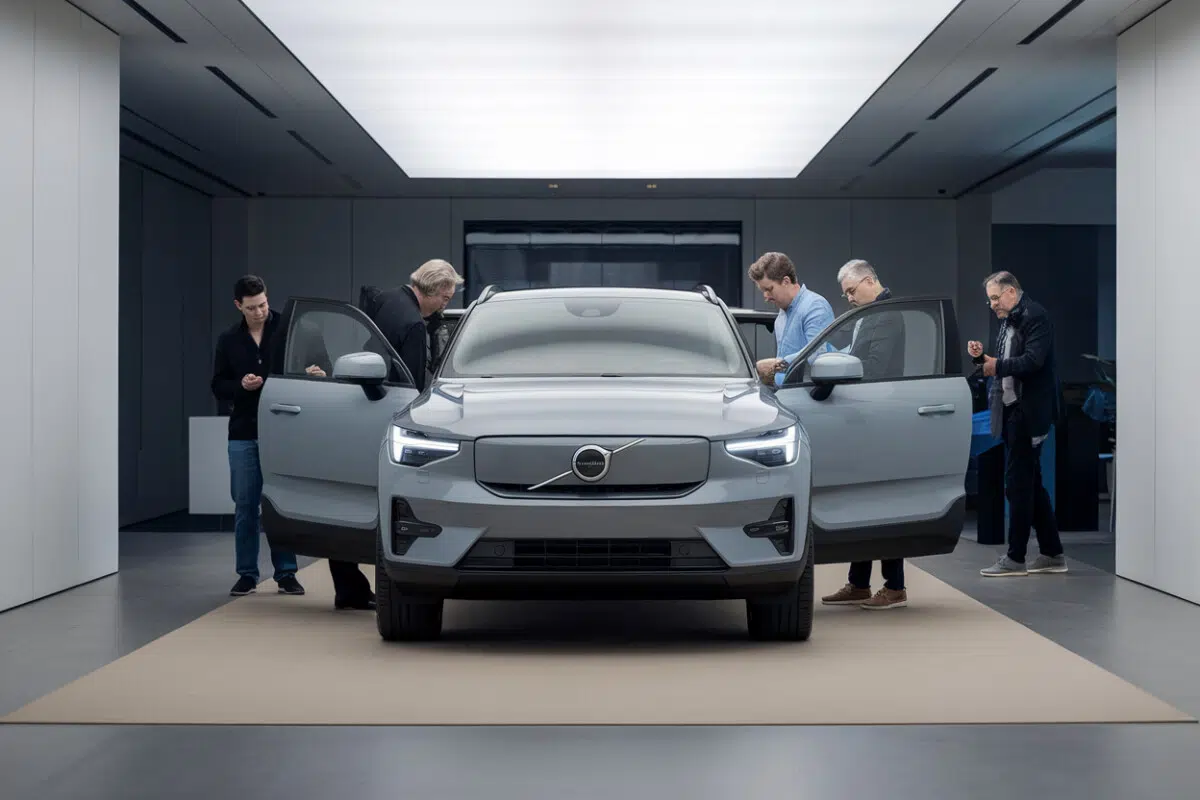
Volvo’s global sales slid 10% after U.S. tariffs made its Europe-built cars more expensive in America. But the company’s all-electric lineup is moving in the opposite direction—up 18% in the first quarter—underscoring where the Swedish automaker thinks the market is headed.
The split-screen performance is pushing Volvo to lean harder into EVs, including ramping up production of its new electric SUV, the EX60, starting in Europe this spring. Demand is especially strong in Germany, a key market for Volvo and one of Europe’s biggest car battlegrounds.
U.S. tariffs squeeze Volvo’s pricing—and its profits
Volvo has been caught in the crossfire of U.S. tariffs on European-made vehicles. The duty rate was initially raised to 27.5% before later being reduced to 15%, but applied retroactively starting August 1—an accounting and pricing headache that rippled through the supply chain.
For American shoppers, tariffs typically show up as higher sticker prices or fewer incentives. For automakers and dealers, they can mean thinner margins and tougher decisions about what to ship, what to discount, and what to delay.
Volvo has already been adjusting prices to stay competitive in a U.S. market that’s cooling from its post-pandemic highs and getting more crowded in the EV segment. The company’s latest quarter reflected the strain: profits fell 68%.
Even so, Volvo says it’s aiming for volume growth by 2026, betting it can ride out what it describes as a persistently difficult environment—tightening regulations, shifting consumer demand, and a trade landscape that can change quickly.
EVs are now a quarter of Volvo’s deliveries
While overall sales fell, Volvo’s fully electric models gained ground. The company said EV sales rose 18% in the first quarter, and battery-electric vehicles now account for about 25% of its total deliveries.
Volvo has also crossed a major milestone: more than 500,000 EVs sold worldwide. Much of that momentum has come from Nordic countries like Sweden and Norway, where EV adoption is among the highest on the planet thanks to incentives, charging buildout, and consumer demand.
The pivot is notable for a brand that, not long ago, was more cautious about going all-in on battery power. Improvements in battery tech, expanding charging networks, and tougher emissions rules across Europe have helped push Volvo toward a more aggressive electrification strategy.
The EX60 is the next big test—and it’ll be built in Europe
Volvo plans to start producing the all-electric EX60 in Sweden this spring, positioning the SUV as a centerpiece of its next wave of EV growth. Building it in Europe helps Volvo respond faster to demand in markets like Germany and reduces shipping and logistics costs.
The EX60 matters because electric SUVs are where the volume is—especially for families who want space and higher seating but don’t want to give up on performance or tech. It’s also one of the most competitive corners of the market, with legacy automakers and EV-first brands fighting for the same buyers.
Volvo says it intends to increase production capacity for the EX60 to keep up with demand. That’s a high-stakes move: ramp-ups are expensive, and the EV market is notoriously sensitive to pricing, incentives, and interest rates.
Charging, incentives, and new rivals complicate the EV push
Volvo’s EV ambitions run into the same obstacles facing the entire industry. Charging infrastructure remains uneven—robust in some regions, frustratingly sparse in others—and that reality still shapes what consumers are willing to buy.
Government incentives also vary widely by country, influencing demand in ways automakers can’t fully control. In the U.S., EV tax credits can depend on where a vehicle is assembled and where its battery materials come from—rules that can shift purchasing decisions overnight.
Meanwhile, competition is intensifying. Alongside established brands, a growing roster of EV-only companies is pressuring prices and accelerating product cycles. To keep pace, Volvo is investing in R&D to improve battery performance and bring costs down—essential steps if it wants EVs to be profitable at scale.
What Volvo’s split results say about the road ahead
Volvo is trying to manage two realities at once: a tariff- and margin-pressured global business, and an EV lineup that’s gaining traction even as the broader car market wobbles.
If the EX60 launch goes smoothly and demand holds, Volvo could strengthen its position in the EV race—especially in Europe, where emissions rules are pushing buyers toward electric faster than in the U.S. But with trade policy still unpredictable and price competition heating up, Volvo’s next year will likely be defined as much by politics and economics as by engineering.
Key Takeaways
- Volvo's global sales fell by 10% due to U.S. tariffs.
- Volvo's electric vehicle sales rose by 18%.
- Volvo plans to increase production of its EX60 electric SUV.
Frequently Asked Questions
Why did Volvo sales drop by 10%?
Volvo sales were affected by higher U.S. tariffs on European cars, which led to higher prices for American consumers.
What impact are electric cars having on Volvo?
Despite the overall sales decline, Volvo’s electric cars grew by 18%, highlighting how important electrification is to the brand’s future.
Sources
- Volvo Cars' sales fall 10% but EV sales jump 18% in Q1 – CBT News
- Volvo sales hit by US tariffs but fully electric cars shine – Reuters
- Volvo Sales Down 10% on Tariffs, China Slowdown
- Volvo Car USA reports sales of 26021 in the third quarter of 2025 …
- Volvo Hits 500K Electric Cars Sold, With Sweden and Norway Leading