

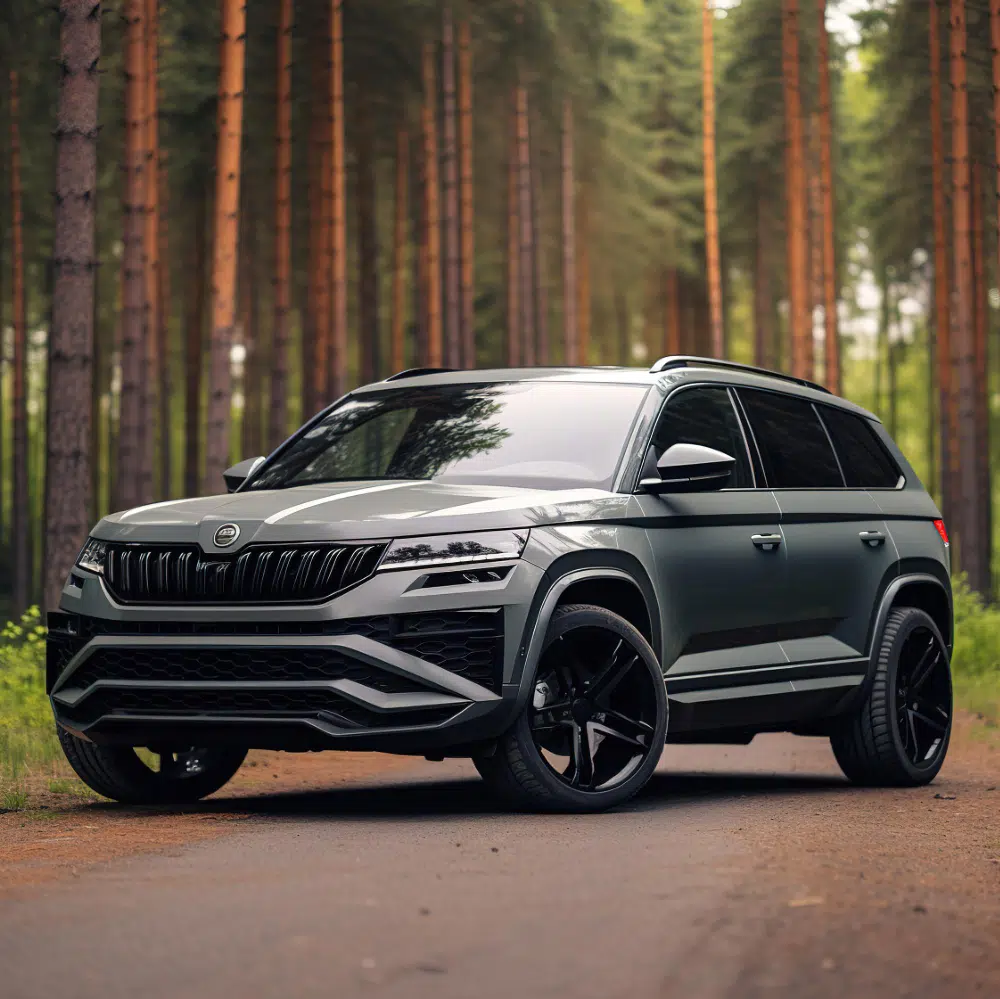
Kia is taking a big swing at its best-known three-row SUV. The 2027 Telluride returns with a new turbo-hybrid powertrain making 329 horsepower, a larger footprint, and a tech-heavy cabin aimed squarely at American families who want space without guzzling gas.
The headline change is under the hood: Kia is moving on from the old V6 formula and betting that a smaller, boosted four-cylinder paired with hybrid hardware can deliver the punch buyers expect—while pushing fuel economy as high as an estimated 35 mpg. The question is whether Telluride fans will embrace the trade-off.
The outgoing Telluride became a breakout hit in the U.S. by offering near-luxury space and features for mainstream money. For 2027, Kia isn’t just polishing the edges—it’s rewriting the playbook.
A new turbo-hybrid replaces the V6—and brings 329 horsepower
The 2027 Telluride’s new 2.5-liter turbo-hybrid makes 329 hp, about 38 more than the previous model’s output. On paper, that’s a meaningful jump, and in real-world driving it’s designed to feel quicker when you stab the throttle—merging onto the interstate, passing slow traffic, or climbing grades with a full load of passengers.
But there’s a catch that some early reviewers have flagged: the new four-cylinder can sound and feel more strained than the old V6 when it’s working hard, especially on long highway slogs or under demanding conditions. It’s the classic modern trade—more efficiency and strong torque, but less of that smooth, effortless V6 character.
For shoppers staring down high fuel prices, Kia’s estimated fuel economy of up to 35 mpg is the real attention-grabber. If the numbers hold up, that’s the kind of improvement that can change the math for families who rack up miles on road trips and daily commutes.
Bigger on the outside: longer wheelbase, taller stance
Kia also made the Telluride physically larger. The wheelbase grows by 3 inches, and overall height is up by 1 inch—subtle on a spec sheet, but enough to give the SUV a more commanding presence and, more importantly, free up additional interior room.
The exterior styling keeps the Telluride’s rugged, squared-off attitude, but with cleaner, more modern surfacing. Kia is also leaning into aerodynamics, a practical move that can help fuel economy at highway speeds.
Up front, the revised grille looks more aggressive, and updated LED lighting sharpens the Telluride’s face. Kia is also offering multiple paint colors, letting buyers dial in something that feels less rental-fleet and more personal.
In the U.S. market, the Telluride’s growth puts it in a more direct fight with family-haulers like the Toyota Grand Highlander—another three-row SUV built to swallow people, luggage, and weekend plans.
Inside, Kia doubles down on comfort and screens
The Telluride’s cabin has always been a major selling point, and Kia is clearly protecting that advantage. The 2027 model emphasizes long-haul comfort with supportive seating and upgraded materials, while the extra space should make third-row life a little less punishing.
Up front, the digital dashboard and connectivity suite are designed to feel modern and intuitive rather than gimmicky. Kia is also pushing premium touches down the lineup—heated and ventilated seats are available even on mid-level trims, a feature set that used to be reserved for pricier badges.
A premium audio system is part of the pitch, along with a familiar roster of advanced driver-assistance features, including adaptive cruise control and lane-keeping assist—must-haves now in a segment where buyers expect their SUV to help shoulder the workload on long drives.
How it drives: smooth power, stable handling, and 5,000 pounds of towing
Despite the shift to a four-cylinder hybrid setup, the Telluride is engineered to feel confident and easy to drive. Power delivery is described as responsive in everyday conditions, and the eight-speed automatic transmission is tuned for quick, clean shifts.
Steering is calibrated for the Telluride’s mission: stable and predictable rather than sporty. The suspension is set up to soak up rough pavement—exactly what families want when the back seats are full and the road isn’t.
Kia also keeps a key capability number intact: towing capacity is rated at 5,000 pounds. That’s enough for small campers, utility trailers, or a modest boat—real-world versatility that matters in suburban driveways across the country.
All-wheel drive remains available, giving buyers in snow-belt states or rainy climates extra confidence when conditions turn ugly.
Is it better than the old Telluride? Depends what you loved about it
Stacked against its predecessor, the 2027 Telluride looks like a clear upgrade in efficiency, tech, and overall packaging. The bolder styling and slightly larger dimensions build on what the Telluride already did well: space, comfort, and value.
The biggest emotional hurdle is the engine swap. Drivers who loved the V6’s smoothness—and the way it felt unbothered at speed—may need convincing. Kia’s bet is that most shoppers will take better mpg and stronger on-demand torque over old-school engine character.
If that bet pays off, the 2027 Telluride won’t just be a refresh. It’ll be Kia’s statement that the era of the big family SUV is shifting—toward hybrids, bigger cabins, and tech that makes long drives easier, not louder.
Key Takeaways
- The new turbo-hybrid engine improves fuel economy.
- The exterior design is roomier and more imposing.
- The interior offers comfort and cutting-edge technology.
- On-road performance remains strong despite the drop in power.
- The upgrades aim to keep the Telluride appealing in the market.
Frequently Asked Questions
What are the main improvements in the 2027 Kia Telluride?
The 2027 Kia Telluride offers a more fuel-efficient turbo-hybrid engine, a roomier exterior design, advanced interior technology, and improved on-road handling.