
Lyon, France’s second-biggest business hub after Paris, is in the middle of a manufacturing push. But the comeback is running into a familiar problem: not enough skilled people to staff the plants.
As companies modernize with automation, connected sensors, and data-driven production, recruiters say the hottest candidates aren’t just old-school engineers or managers. They’re hybrids, people who can troubleshoot machinery and also speak the language of software, analytics, and digital operations. That talent crunch is reshaping how industrial firms in the region hire, and it’s fueling demand for specialized search firms such as Lyon-based Bon Talent.
For American readers, think of Lyon as a Midwest-style manufacturing center, only set in southeastern France, where companies are trying to rebuild industrial capacity while competing for a limited pool of technical workers.
Lyon’s industrial boom is colliding with a talent shortage
The Lyon metro area remains one of France’s most active industrial zones, spanning advanced manufacturing, chemicals, logistics, and equipment suppliers. That momentum, is tightening the labor market heading into 2026.
Companies say recruiting has become a frontline competitiveness issue: the wrong hire can slow production, delay modernization projects, and weaken supply chains.
The hardest jobs to fill: maintenance, automation, production, supply chain
Industrial employers in and around Lyon report growing difficulty hiring for core technical and operations roles, especially the people who keep factories running day to day.
Roles under the most pressure include industrial maintenance technicians, automation engineers, production managers, supply chain specialists, and plant-floor leaders.
One driver is France’s broader “reindustrialization” push, an effort to bring some manufacturing back home after decades of offshoring. As more activity returns, competition for experienced talent is intensifying across the region.
In modern manufacturing, generalists don’t cut it
Recruiters say the era of the broadly defined “industrial manager” is fading. Companies increasingly want specialists who can master advanced industrial technologies, boost operational performance quickly, and lead organizational change inside complex plants.
Those candidates are scarce, and often already employed, pushing employers toward more targeted, relationship-driven recruiting.
Industry 4.0 is creating a new must-have: the hybrid profile
France’s version of “Industry 4.0” mirrors what U.S. manufacturers are chasing: smarter factories that use automation, real-time monitoring, and data to reduce downtime and increase output.
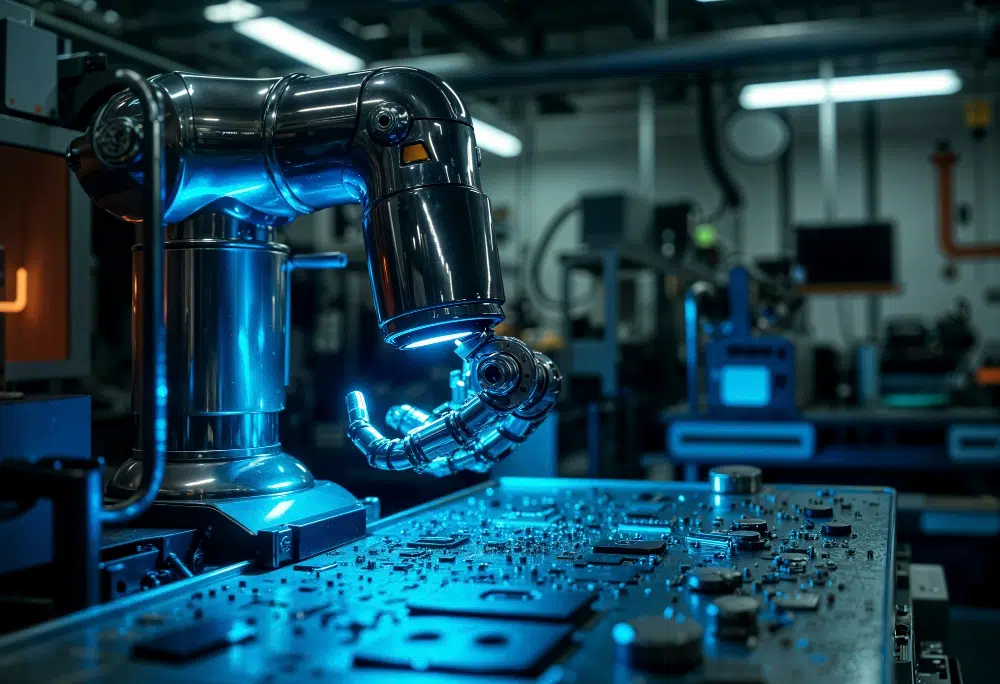
In Lyon, industrial sites are steadily adopting connected sensors, predictive maintenance, robotics on production lines, and digital control systems. The result: technicians and engineers are expected to pair hands-on technical expertise with digital skills.
As factories automate, human value shifts to judgment and problem-solving
In highly automated environments, companies say the differentiator is less about routine execution and more about analysis and decision-making.
Employers are looking for people who can solve complex problems, make fast calls under pressure, and interpret industrial data. That raises the bar for hiring, because recruiters must assess both technical ability and behavioral strengths.
Why companies are leaning on specialized recruiters instead of generalists
Generalist recruiting firms can blast job postings and sift large databases. But for high-stakes industrial roles, employers complain that broad approaches can miss the mark, especially when recruiters don’t fully understand plant operations or can’t validate technical competence.
That’s why more companies are turning to specialized industrial search firms that can identify rare profiles, including candidates who aren’t actively job-hunting.
Bon Talent’s pitch: fewer candidates, deeper vetting, higher-stakes roles
In Lyon’s crowded recruiting market, Bon Talent positions itself as a specialist focused on industrial leadership, technical engineering roles, supply chain and procurement, and transformation-linked positions tied to factory modernization.
The firm argues that instead of maximizing the number of resumes, it narrows the slate and starts with a strategic definition of the role, what the business actually needs the hire to accomplish, then applies deeper technical and behavioral evaluation before guiding the final decision.
Hiring industrial executives is risky, and the best candidates are often “passive”
Companies have little margin for error when hiring plant directors and other industrial executives. A misfire at the top can ripple through safety, quality, output, and labor relations.
Recruiters say the strongest leaders are rarely applying online. They’re typically already running operations elsewhere and must be approached directly, one reason specialized firms emphasize identifying “passive” candidates who don’t show up on traditional job boards.
Culture fit matters as much as technical chops
Beyond credentials, recruiters stress alignment between an executive and a company’s operating culture, how decisions get made, how change is managed, and whether leadership shares the same strategic vision for the industrial project.
That cultural match, they argue, is a key predictor of whether a high-level hire will stick and deliver results.
How companies are trying to reduce bad hires: psychometrics and technical proof
To lower the risk, industrial employers are increasingly using more advanced assessment tools, including psychometric testing and structured behavioral evaluations that measure personality traits, cognitive abilities, and stress responses.
Those tools are typically paired with deep technical interviews designed to verify real-world operational experience, such as fluency with industrial performance metrics, time on the plant floor, and the ability to manage complex situations.
What it means for Lyon, and for the broader manufacturing comeback
As factories modernize faster, recruiting is becoming a strategic lever, not an HR back-office task. Companies that land the right mix of technical expertise, digital fluency, and leadership can move quicker on automation and performance gains.
For Lyon’s industrial base, the message is blunt: the manufacturing revival will be won, or stalled, by who can find, evaluate, and keep the people capable of running the next generation of factories.