

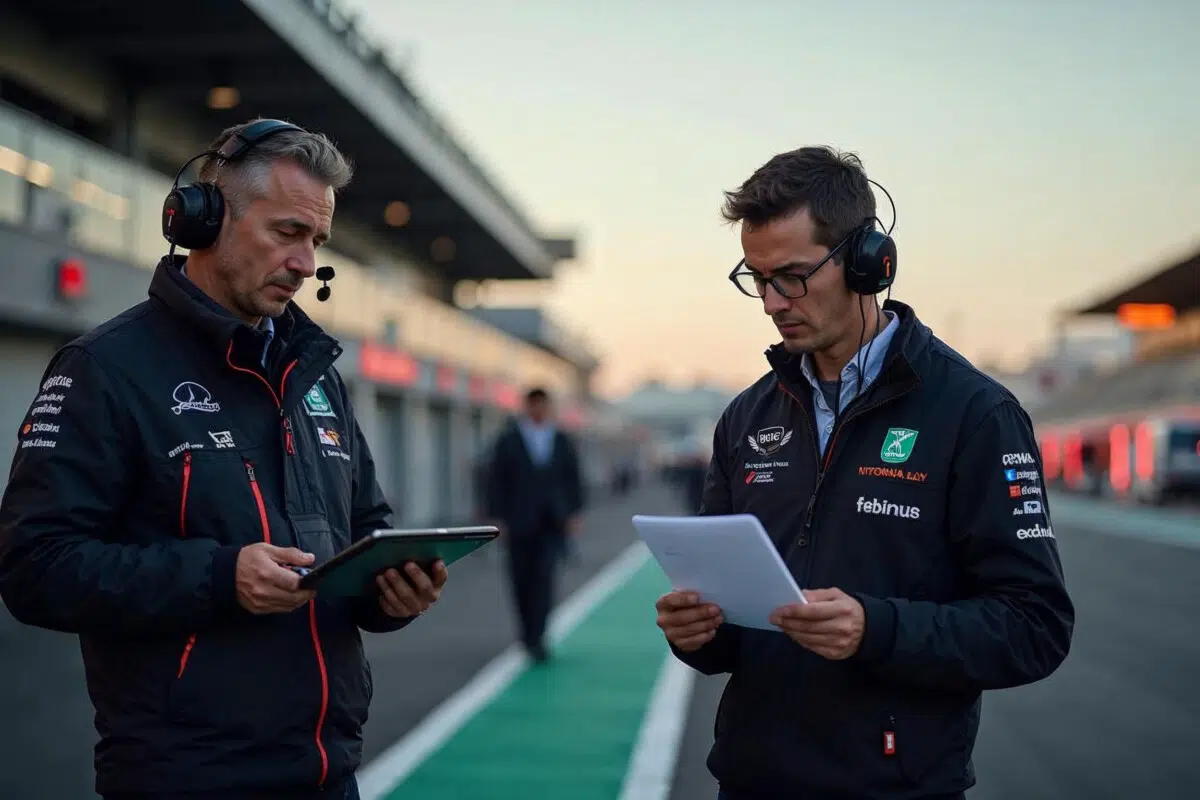
BYD, the Chinese electric-vehicle powerhouse, is weighing a move into Formula 1, and the clearest path isn’t building a team from scratch. It’s buying one.
With F1 team budgets now routinely pushing toward $500 million a season, and the grid tightly capped, industry chatter has shifted to which existing outfit BYD could realistically acquire to fast-track its way into the paddock.
The appeal is obvious: F1 is a global billboard with a tech halo, and the sport’s 2026 rules reset, more hybrid power, a bigger electric component, and fully synthetic fuel, lines up neatly with BYD’s battery-and-electrification messaging.
Why BYD wants F1: global reach, tech credibility, and the 2026 reset
BYD isn’t looking at F1 just to slap a logo on a car. The series has become one of the world’s most powerful sports-media platforms, drawing hundreds of millions of viewers and selling itself as a engineering contest.
That matters for an automaker locked in a worldwide EV arms race. Even in markets where BYD doesn’t sell passenger cars, Sunday exposure can still build brand recognition, and, crucially, the perception that the company belongs in the top tier of automotive technology.
The timing also works. In 2026, F1 will introduce new power-unit rules that increase the role of electrification and mandate 100% synthetic fuel. For a company that markets its battery expertise, it’s a cleaner narrative than the current era, where legacy and race-day results often overshadow the tech story.
But getting in is expensive and political. Running an F1 team can approach $500 million per year, and any new entry has to navigate approvals tied to the sport’s governance and commercial agreements. That’s why buying an existing team, factory, staff, licenses, and a guaranteed grid slot, looks far more practical than launching a brand-new operation.
Alpine keeps coming up, and Renault’s ownership structure fuels the buzz
The name most frequently linked to BYD is Alpine, the F1 team owned by France’s Renault Group. Renault controls 76% of the team, while investment firm Otro Capital holds the remaining 24%, a split that has helped spark speculation because a partially opened ownership structure can make outside investment easier.
Alpine also has a footprint beyond F1, including endurance racing. That matters because some reporting and paddock talk has floated the idea of a dual-track strategy, F1 for global spotlight, endurance racing as a technology lab, an approach automakers often use to tell a coherent performance-and-innovation story.
Performance is part of the equation, too. Alpine has endured seasons widely viewed as underwhelming, and in F1, results and internal stability directly affect a team’s valuation and attractiveness. If the on-track product doesn’t match the owner’s ambitions, selling all or part of the team becomes a more realistic conversation.
Still, buying Alpine wouldn’t be a clean slate. It’s a French-rooted organization with its own culture, expectations, and existing relationships. And there’s already reported interest around the Otro Capital stake from major paddock figures like Toto Wolff (Mercedes team principal and CEO) and Christian Horner (Red Bull team principal), a sign that any deal could get competitive, and expensive.
Haas and Williams are plausible targets, but their ties to rivals complicate independence
If Alpine isn’t available, or isn’t the right fit, two other teams often mentioned as “buyable” on paper are Haas and Williams. Neither has been a consistent front-runner in recent years, and both have been through rebuild cycles that could make a change in ownership more feasible.
The catch: both teams are entangled in technical partnerships. Haas is closely linked with Ferrari for key components and has also been associated in reporting with Toyota. Williams, meanwhile, runs Mercedes power. For BYD, that could mean buying a team but still relying on a direct competitor’s engine or hardware, hardly ideal for a car company trying to sell itself as a tech leader.
That forces a strategic choice. BYD could keep existing deals in place as a transitional step while it upgrades staffing and infrastructure. Or it could push for greater independence quickly, an approach that can trigger painful renegotiations and, in F1, cost years of competitiveness if the supply chain breaks at the wrong moment.
There’s also brand math. Williams is one of the sport’s historic names, which brings instant prestige, and intense pressure. Haas is newer and arguably more flexible, but carries less legacy value. For BYD, the question is whether to pay for heritage or for the ability to pivot faster.
Starting a brand-new 12th team looks slower, especially with Cadillac already on the way
BYD could try to enter as a brand-new 12th team, but that route looks tougher now. F1 has already announced a new entrant: Cadillac, backed by General Motors, a move that took years of negotiation and political wrangling.
In theory, a clean-sheet team offers maximum control, identity, hiring, partners, and technical direction. In reality, it’s a long, expensive slog: approvals, facilities, staffing, and multiple seasons of learning curves that can turn the global spotlight into a weekly highlight reel of failure.
And the money doesn’t get easier. Estimates for operating a full program can still climb toward $500 million per season depending on ambition and structure. That’s industrial-scale spending, not a marketing add-on.
F1 is also an ecosystem built on institutional memory, data, tools, processes, supplier networks. Buying a team means buying that accumulated know-how. Building from scratch means paying to learn it the hard way.
The marketing play: massive U.S. exposure even without selling cars here
For BYD, an F1 program is a brand bet. The sport’s popularity has surged in recent years, and it offers a shortcut to global name recognition that doesn’t require a dealership network in every country.
The United States is the clearest example. BYD doesn’t sell passenger EVs to American consumers, in part because of steep tariffs and political headwinds. But an F1 presence would still put the BYD name in front of millions of U.S. viewers, three races a year on American soil, plus wall-to-wall global coverage, without selling a single car.
There’s also talk in the auto press about using F1 to elevate BYD’s premium sub-brand, Yangwang, the way luxury automakers use motorsports to pull their entire lineup upmarket. The risk is just as obvious: if the team runs at the back, the “premium tech” story can collapse into a punchline.
That’s the core dilemma. In F1, you can pay a fortune to be seen, and even more to be respected. If BYD makes a move, the real question won’t just be which team it buys, but whether it can turn global visibility into on-track credibility when the 2026 era begins.
Key Takeaways
- BYD is considering entering Formula 1 and prefers buying an existing team.
- Alpine is frequently mentioned, with ownership split between Renault Group (76%) and Otro Capital (24%).
- Haas and Williams are alternatives, but their ties to Ferrari, Toyota, or Mercedes make independence more complicated.
- Creating a 12th team seems slower and politically more difficult after Cadillac’s announced entry.
- The 2026 regulations and F1’s global showcase increase the marketing and technological appeal of the project.
Frequently Asked Questions
Why would BYD prefer to buy an existing team rather than start its own F1 team?
Because an acquisition provides an immediate spot on the grid, plus facilities and staff that are already up and running. Building a team from scratch requires approvals, long lead times, and very high costs, with significant on-track risk for several seasons.
Why does Alpine keep coming up in rumors involving BYD?
Alpine is mentioned because the team is going through a turbulent period and its ownership is already split, with Renault Group at 76% and Otro Capital at 24%. That setup makes the idea of a new investor coming in seem plausible, even though no official decision has been announced.
Would Haas or Williams be easier to buy than Alpine?
Not necessarily. Even if those teams may seem more accessible, they have existing technical and industrial ties—Haas with Ferrari and Toyota, Williams with Mercedes. For a new entrant, those dependencies can limit strategic freedom in the short term.
What role do the 2026 F1 rules play in BYD’s interest?
The 2026 rules increase hybridization with a larger electric component and 100% synthetic fuel. For a manufacturer associated with batteries and electrification technologies, that shift makes F1 more aligned with its technology positioning.
Sources
- Quelle écurie de F1 le constructeur chinois BYD pourrait racheter …
- F1 : un géant chinois étudie un projet ambitieux pour …
- BYD a une nouvelle ambition : s'imposer en F1 parmi les écuries …
- Ce constructeur chinois spécialisé dans les voitures …
- La F1 veut une écurie chinoise : BYD explore l'option de se frotter à …