

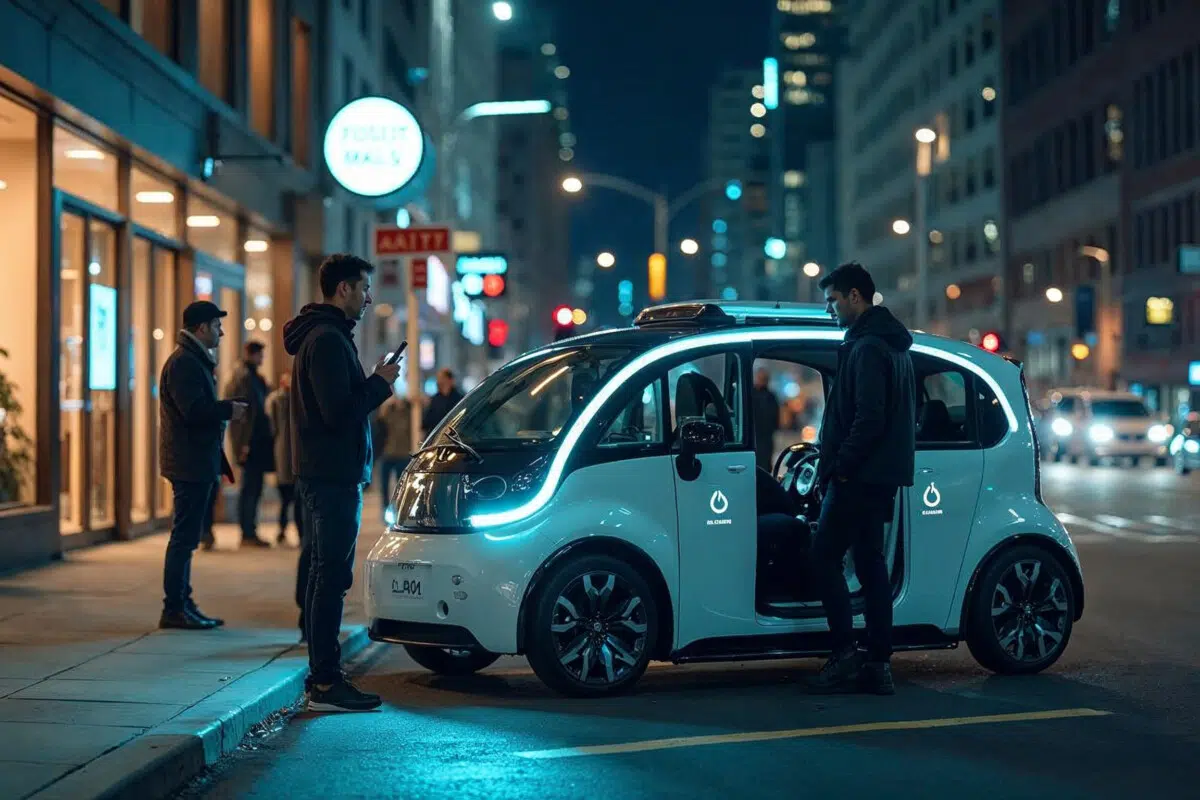
Lucid Motors just jumped into the robotaxi arms race with a sleek new concept called Lunar, an autonomous, two-seat EV designed to run all day, charge fast, and cost less to operate than rivals like Tesla’s planned Cybercab.
The headline-grabber: Uber is publicly aligned with Lucid on a plan to scale autonomous rides, targeting 20,000 Lucid vehicles equipped with self-driving tech from Nuro over the next six years. But Lucid also made a key admission, Lunar isn’t in active development yet, meaning the flashiest part of the reveal is still more roadmap than reality.
A concept car meant to signal strategy, not a showroom date
Lucid unveiled Lunar at an investor event in New York, with interim CEO Marc Winterhoff pitching it as a purpose-built robotaxi: two seats, no steering wheel, no pedals, and a layout optimized for constant commercial use.
Lucid says Lunar would be based on its upcoming “mid-size” vehicle platform, a future architecture meant to underpin more affordable models than today’s high-end Lucid Air. The idea is to share components across vehicles to keep manufacturing costs down, critical if robotaxis are ever going to pencil out at scale.
Then came the reality check. Lucid clarified it isn’t actively developing this dedicated robotaxi yet. Lunar, for now, is a concept meant to showcase direction and help conversations with partners, an important distinction in an industry where flashy autonomy demos often arrive years before real-world service.
Lucid still used the stage to highlight what it believes matters most for robotaxis: efficiency, uptime, and passenger experience. The company even floated the idea of in-car entertainment that could generate revenue, echoing Tesla’s long-running pitch that autonomous rides can double as a monetized media experience.
Uber’s big bet: 20,000 Lucid robotaxis, ordered through the Uber app
Uber’s involvement is the accelerant here. The company says it operates in 70 countries and handles about 34 million trips per day, exactly the kind of demand that could keep a robotaxi fleet busy enough to make money.
Under the plan, Uber wants to deploy 20,000 Lucid vehicles running Nuro’s autonomous driving system over six years. Riders would hail them exclusively through the Uber app, and the vehicles would be owned and operated by Uber or its fleet partners, not Lucid.
That structure matters. It lets Lucid avoid becoming a full-blown mobility operator, with all the messy logistics that come with it: cleaning, charging, repairs, customer support, and fleet rotation. Uber, meanwhile, gets a shot at locking in a large-scale autonomous supply chain with vehicles designed for heavy-duty ridehail use.
Uber also plans to invest “several hundred million dollars” in Lucid and Nuro. That’s not pocket change, and it signals Uber wants more than a pilot program. Still, the gap between a closed-course prototype and a profitable citywide fleet is where most robotaxi dreams go to die.
Lucid’s performance claims: 200+ miles in 15 minutes and up to 6.0 miles/kWh
Lucid is trying to win on the unsexy stuff: energy efficiency and charging speed. For Lunar, the company is targeting 5.5 to 6.0 miles per kilowatt-hour, well above what most EVs deliver in real-world driving, especially in stop-and-go city conditions.
It also claims Lunar could add more than 200 miles of range in 15 minutes on DC fast charging. If that holds up outside a lab, it would reduce downtime, one of the biggest cost killers for electric ridehail fleets.
Lucid says these advantages could translate into a 40% reduction in operating costs compared with today’s robotaxis. But the company didn’t provide detailed assumptions, and real-world costs depend on far more than electricity: tires, sensors, repairs, insurance, remote support, and how often vehicles get taken offline.
And that “200 miles in 15 minutes” promise comes with fine print even if Lucid doesn’t say it out loud: you need a high-powered charger that’s actually available. In many U.S. cities, fast-charging congestion is already a problem, and robotaxis would multiply demand.
Why two seats? Lucid is chasing airport runs and high-rotation trips
Lunar’s two-seat design is a gamble. Most people picture robotaxis as roomy pods that can carry families or groups. Lucid is betting that the bulk of urban ridehail trips are one or two passengers, and that cutting seats can improve efficiency and free up cargo space.
The company says Lunar would have a “large enough” trunk for luggage, clearly aiming at airport trips where bags matter as much as legroom.
On comfort, Lucid is touting more than 42 inches of rear legroom, stretch-out space that would be competitive even by American full-size sedan standards. Wider door openings are meant to make entry easier and improve accessibility.
The downside is obvious: a two-seater can’t handle three friends heading to dinner, a family with a car seat, or a group with multiple suitcases. Uber would need enough fleet variety, or enough spare capacity, to avoid turning away higher-paying rides.
The nearer-term play: Lucid Gravity robotaxis in San Francisco
Before Lunar ever becomes a real vehicle, Lucid’s more immediate robotaxi effort centers on the Lucid Gravity, the company’s upcoming SUV. Lucid says Gravity vehicles will be built with the necessary hardware integrated on the assembly line, with Nuro’s software added when the vehicle is commissioned for Uber service.
That approach is designed to avoid the clunky retrofits that have plagued earlier autonomy programs. It also points to a serious attempt at redundancy, extra layers of electrical and control systems that are widely viewed as essential for higher levels of autonomy.
Lucid has pointed to a launch on Uber’s network by the end of the year in the San Francisco area, one of the toughest environments in America for self-driving systems, with dense traffic, steep hills, fog, cyclists, and unpredictable pedestrian behavior.
Lucid also highlighted an EPA-estimated 450 miles of range for the Gravity, which could reduce charging stops and keep vehicles on the road longer. But the real test won’t be a range figure or a closed-course demo in Las Vegas, it’ll be whether the system can safely handle thousands of messy, real-world trips without a human behind the wheel.
Key Takeaways
- Lucid Lunar is a two-seat robotaxi concept with no steering wheel, unveiled in New York City.
- Uber is targeting 20,000 Nuro-equipped Lucid vehicles over six years through its platform.
- Lucid highlights 5.5 to 6.0 miles per kWh, 200+ miles regained in 15 minutes, and a targeted 40% cost reduction.
Frequently Asked Questions
Is the Lucid Lunar already in industrial development?
No. Lucid introduced Lunar as a concept and said there’s no active development of a dedicated robotaxi at this stage. The idea is to show a product direction based on the future mid-size platform.
What is Uber’s role in the Lucid Lunar project?
Uber is positioned as a deployment and scaling partner. The company expects the vehicles to be owned and operated by Uber or fleet partners, and to be available exclusively through the Uber app.
What efficiency numbers is Lucid claiming for Lunar?
Lucid is targeting 5.5 to 6.0 miles per kWh, with DC fast charging capable of adding more than 200 miles in 15 minutes. The brand also cites a goal of cutting operating costs by 40% compared with existing robotaxis.
Why isn’t a two-seat robotaxi too limiting?
Lucid is betting that a large share of urban trips carry one or two people. The two-seat layout increases cargo space and improves access, which is useful for airport runs, but it limits trips with three or four passengers.
When will we see the first Lucid robotaxis on public roads?
Lucid announced a robotaxi project based on the Gravity with Nuro and Uber, targeting a launch on the Uber network by the end of the year in the San Francisco area. Lunar, meanwhile, is presented as a longer-term concept.
Sources
- "We want to go global": Lucid partners with Uber to create 'anti-Tesla …
- Lucid Motors shows off robotaxi concept called 'Lunar' – TechCrunch
- Lucid Lunar Is A Robotaxi Concept Built With Uber | AutoGuide.com
- Lucid, Nuro & Uber Launch Robotaxis
- Lucid Motors Launches Lunar: The Future of Two-Seat Electric …