

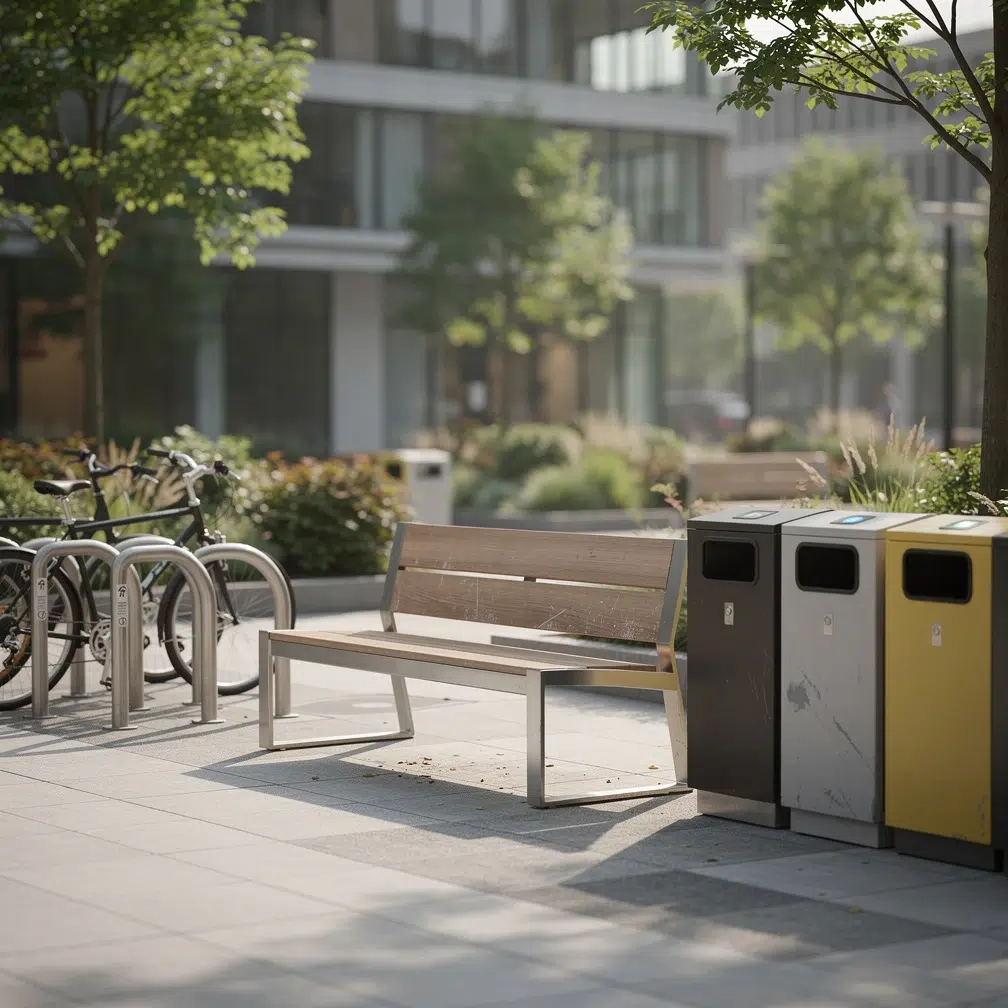
The next big battle over city life won’t be fought with skyscrapers or splashy stadium deals. It’ll be won on the sidewalk, one bench, one bus shelter, one trash can at a time.
Across Europe, city leaders are treating “street furniture” as more than background scenery. The thinking is simple: when public spaces feel comfortable, easy to navigate, and safe, people stick around. That draws shoppers, tourists, and investment. When they don’t, even a pretty plaza can turn into a place people avoid after dark.
Heading into 2026, the trend is clear: cities are betting on discreet upgrades, modular seating, secure bike parking, connected trash bins, smarter shelters, and better LED lighting, to make streets more welcoming and more functional for everyone, including seniors, families, visitors, and people with disabilities.
Why benches and bus shelters are suddenly a big deal
For decades, street furniture was treated like an afterthought: buy the cheapest bench, bolt it down, replace it when it rusts. Now municipalities, and the businesses that depend on foot traffic, are looking at these objects as frontline infrastructure.
A well-placed shelter can make transit feel usable instead of punishing. A clean, well-lit block can change how safe a neighborhood feels. And a public square filled with broken posts and overflowing bins sends a message no tourism campaign can fix.
The shift is also about accessibility. In the U.S., that conversation often runs through the Americans with Disabilities Act (ADA). In Europe, the article points to similar requirements: design spaces so people with limited mobility aren’t treated like an afterthought. Ramps, clear pathways, and seating that works for different bodies aren’t “nice-to-haves” anymore, they’re the baseline.
The 2026 wish list: modular benches, secure bike stations, and “connected” trash cans
The classic trio, bench, trash can, streetlight, is being replaced by equipment that does more than one job. Cities want pieces that can flex with how people actually use public space: solo commuters, families with strollers, older residents who need frequent places to rest, and remote workers hunting for a spot to sit outside.
Modular benches are leading the pack. Instead of a single fixed seat, they can be arranged for groups or individuals, sometimes with built-in charging ports or partial rain cover. Add Wi‑Fi kiosks and secure bike stations, and the sidewalk starts to function like a real “third place,” not just a corridor between parking and a storefront.
Then there are connected trash bins, containers that can signal when they’re full or flag hazardous waste. The pitch is efficiency: fewer overflowing cans, fewer unnecessary pickups, and cleaner streets with less labor.
Bus shelters are also getting a tech and comfort makeover: low-energy LED lighting, real-time arrival information, and materials designed to be easier to clean and harder to vandalize.
Safety is being designed in, sometimes invisibly
Public safety is shaping design choices in ways most people won’t notice unless something goes wrong. The article highlights discreet surveillance tools, like cameras integrated into modern streetlights, paired with a bigger emphasis on lighting that reduces dark pockets and improves visibility.
That matters because “safety” isn’t just crime statistics. It’s whether a parent feels comfortable waiting for a bus with a kid. Whether a student will walk home instead of paying for a ride. Whether a visitor lingers for dinner or leaves before sunset.
Better lighting is one of the most straightforward upgrades cities can make, and LEDs have become the standard because they’re brighter, more controllable, and cheaper to run over time.
Green materials are in, but cities are demanding proof they’ll last
The aesthetic is changing, too. The article describes a move away from bare steel and endless concrete toward more colorful, “living” streetscapes that incorporate greenery and recycled or bio-based materials.
But the new rule is practicality first. Cities are wary of eco-friendly products that look good in a brochure and fall apart in real weather, real crowds, and real vandalism. The priority list: durability, easy maintenance, and modular parts that can be swapped out instead of replacing an entire unit.
Materials getting the nod include galvanized steel, treated wood, recycled plastics, and tough composite blends designed to handle moisture and heavy use.
The article’s warning is blunt: buying without checking standards and long-term performance is a fast way to waste public money. Street furniture has to meet accessibility rules, safety requirements (including fire resistance in some cases), and environmental certifications, depending on the country and the project.
And then there’s the real-world stress test: storms, temperature swings, constant wear, and the everyday abuse of city life. A bargain bench that needs replacement in five years can end up costing far more than a sturdier option that lasts a decade or more, especially once labor and disruption are factored in.
Design matters, too. If furniture clashes with its surroundings, it can make a space feel chaotic. If it’s too minimal, it disappears and fails its basic job: guiding people, giving them places to pause, and making public areas feel intentionally cared for.
What this means for cities, and the people who use them
The big idea behind 2026’s street-furniture push is that small objects can shape big behavior. A secure bike rack can nudge someone out of a car. A clean, well-placed trash can can change how a block looks and feels. A bench in the right spot can turn a pass-through street into a place where people actually spend time.
For city leaders, the question is whether they’ll keep buying generic, one-size-fits-all fixtures, or invest in public spaces that feel designed for real life. The next wave of urban change may not come from a flashy megaproject. It may come from the humble bench, now with a USB port, and the trash can that tells the city when it’s full.