

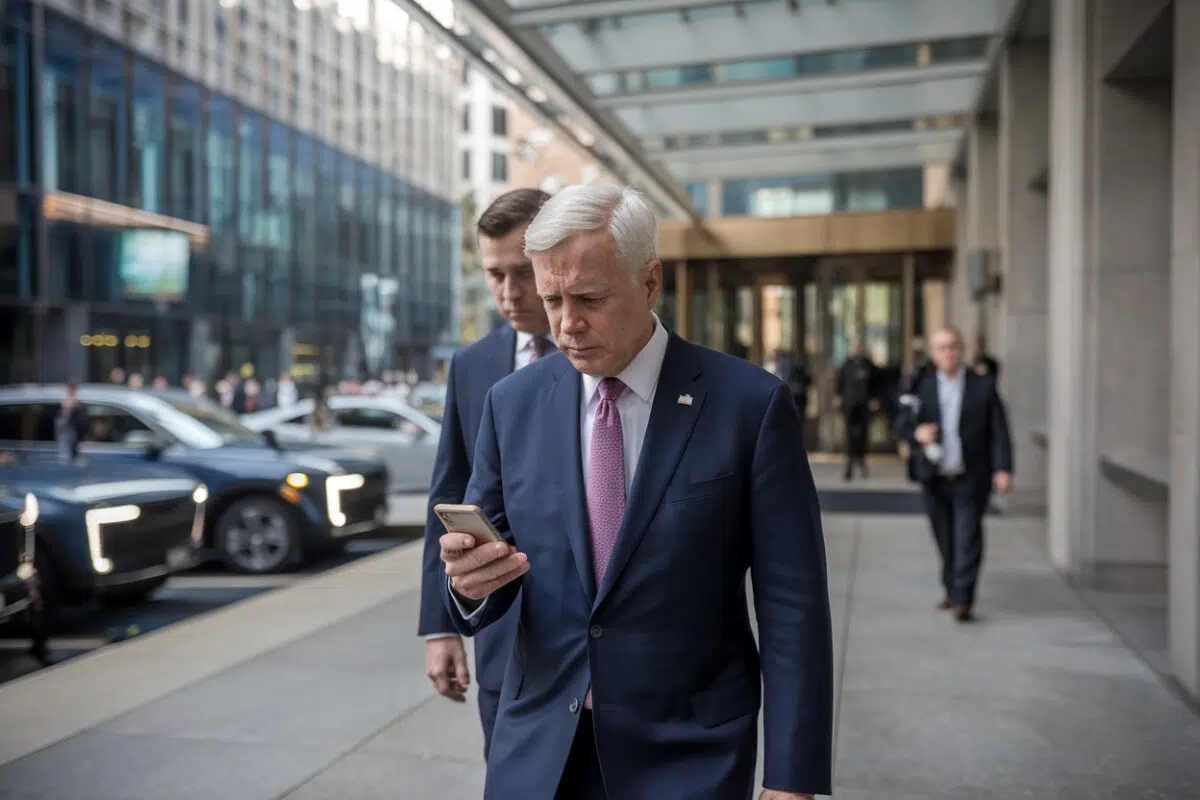
The Justice Department says Iran-linked hackers broke into FBI Director Kash Patel’s personal email account, then went public with what they claim are screenshots, photos, and documents pulled from his inbox.
Officials stressed the breach did not involve FBI internal systems. But the episode is still a serious security headache: a compromised personal account can expose contacts, travel details, and work-related threads that adversaries can weaponize for targeted phishing and influence campaigns.
A DOJ official said the material posted online “appears authentic,” lending credibility to the hackers’ claim even as major questions remain about how they got in, how much they stole, and what else they may still be holding.
What the DOJ confirmed, and what it hasn’t said
The most concrete fact so far is the DOJ’s confirmation that Patel’s personal email was compromised. That moves the story beyond a typical hacker brag and into a federal security incident involving one of the country’s most high-profile law enforcement officials.
At the same time, the government has not publicly described the method of access, the scope of the intrusion, or what steps have been taken to contain it. The FBI did not immediately respond to requests for comment.
The timing adds fuel: the breach surfaced as Patel has been in the spotlight on Capitol Hill, testifying in congressional hearings about global threats. That visibility can amplify the impact of any leak, especially one designed to look like a strike at the heart of U.S. law enforcement.
The group behind the leak is using a familiar playbook: steal, tease, pressure
The hackers calling themselves “Handala Hack Team” posted photos of Patel and documents online, including what they described as his résumé, along with other files they said came from the account. The goal appears less about dumping everything and more about proving access, then controlling the narrative through selective release.
This is a classic pressure tactic: publish easily understood, highly shareable items to drive attention and reputational damage, while keeping the rest of the haul as leverage. “Authentic” doesn’t mean complete, and it doesn’t mean the public is seeing the full context of any email thread.
Independent researchers cited in early reporting have emphasized a key distinction: this looks like a compromise of an individual’s private account, not a breach of classified FBI networks. That nuance matters, but it doesn’t make the incident harmless.
Preliminary reviews described a mix of private correspondence and messages with a professional tone, with samples dating roughly from 2010 to 2019. Some assessments suggest the timeline varies depending on which batch of files is being examined, an early sign the release could be partial, curated, or segmented.
In email leaks, the most valuable intelligence often isn’t a single embarrassing line. It’s the map: who talks to whom, how quickly they respond, what formats they use, which secondary addresses exist, and what attachments or calendar details reveal about routines.
That kind of pattern data can supercharge social engineering, messages that mimic a real tone and signature, or attachments that look plausible because they match past behavior. Even mundane details can help an adversary build a targeting profile.
Why Iran-linked cyber operations keep blurring hacking and propaganda
Handala presents itself as pro-Palestinian, and Western analysts have linked the persona to Iran’s broader cyber-intelligence ecosystem, one of several “front” identities used to muddy attribution while maintaining strategic consistency. Publicly proving those links can be difficult, but U.S. officials and outside experts have repeatedly tied similar operations to Iranian state-backed activity.
The group has also claimed responsibility for a recent attack on Stryker, a U.S. medical device company, alleging disruptions and data deletion. The mix of corporate and political targets fits a visibility-driven strategy: hit recognizable names, then use the publicity to project power.
Hackers often frame these operations as retaliation for geopolitical events, but those claims can be impossible to verify and may serve as post-hoc justification for campaigns already in motion. What’s clear is the effect: stolen data becomes raw material for online manipulation, selective editing, and narrative warfare.
The bigger risk: a personal inbox can become a gateway to wider targeting
Even if FBI systems weren’t breached, the director’s compromised personal email triggers a difficult security review: which contacts were exposed, what travel or scheduling details were revealed, and whether any attachments or work-related exchanges could be used to impersonate Patel in messages to colleagues, lawmakers, or partners.
That’s why personal-account breaches can be so dangerous for senior officials. Attackers don’t need classified files to do damage; they need enough credible detail to craft convincing lures and expand the intrusion outward.
The incident also puts a spotlight on basic cyber hygiene at the highest levels of government, multi-factor authentication, hardware security keys, strict separation of personal and work communications, and routine access audits. The lesson isn’t that the FBI is “hacked.” It’s that personal digital identities remain a soft target, even for people tasked with protecting everyone else.
Key Takeaways
- The DOJ confirms the compromise of Kash Patel’s personal email, claimed by the Handala Hack Team.
- Photos and documents were published, with sample exchanges dated mostly between 2010 and 2019.
- Analysts describe Handala as a front tied to Iran’s cyber ecosystem, pursuing a visibility-driven strategy.
- The hack targeted a personal inbox, but it could enable pivot attacks through contacts and behavioral patterns.
- The case puts pressure on the digital security practices of senior U.S. officials.
Frequently Asked Questions
Does the hack mean the FBI’s internal systems were compromised?
No. The available information concerns Kash Patel’s personal email. The analysts cited say the operation looks like a compromise of a private account, not an intrusion into the FBI’s classified networks, even if some work-related communications may be in the mailbox.
Which group is accused of hacking Kash Patel’s email?
The claim comes from Handala Hack Team, described as an Iran-linked group. Western researchers view it as one of the identities used by Iranian cyber-intelligence units, although a full technical attribution has not been publicly detailed.
What was published after the hack?
The hackers released photos of Kash Patel and documents, including a résumé presented as his, as well as excerpts and files taken from the inbox. A DOJ official said the published material appeared to be authentic.
What time period do the emails involved date from?
The samples reviewed describe a mix of personal and professional correspondence, mainly between 2010 and 2019. Other preliminary reviews cite slightly different time windows depending on the batches, suggesting a partial or segmented release.
Why is a personal email inbox sensitive for a leader?
Because it can contain contacts, travel itineraries, attachments, and communication habits. Even mundane information can be used to set up targeted phishing attacks, impersonate the victim, or map their network of relationships.
Sources
- Kash Patel's email hacked by Iranian-linked hacking group, DOJ …
- Kash Patel's email hacked by Iranian-linked hacking group …
- Iran-linked hackers breach FBI director's personal email – CNBC
- Iran-linked hackers breach FBI director's personal email … – Reuters
- Iran-linked hackers have breached FBI Director Kash …