

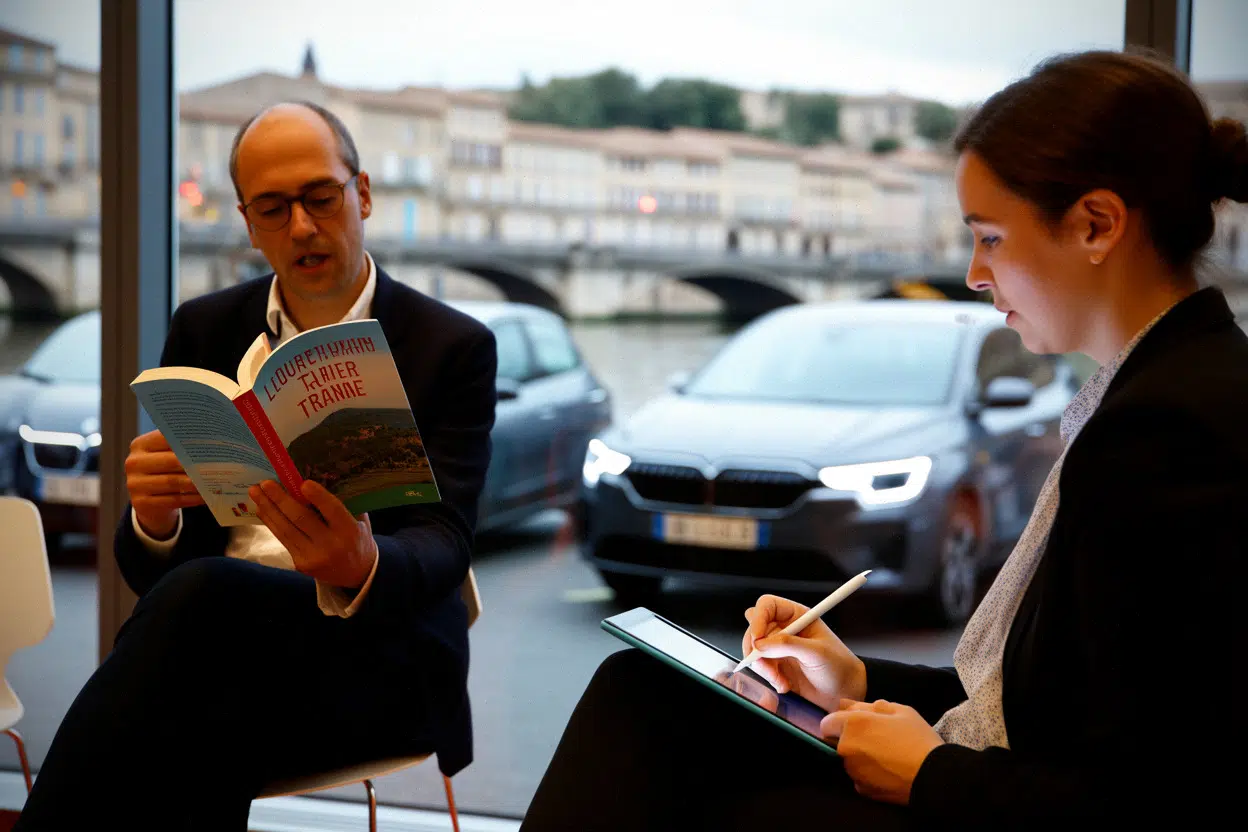
A French region best known for medieval brick towns and winding river valleys is betting that the fastest way into its identity isn’t a brochure, it’s a book.
An article published byLa Dépêche, a major regional news outlet in southern France, spotlights “Regards littéraires sur le Tarn,” a concept that invites people to explore the Tarn department by pairing real places with the writers and passages that describe them. The pitch is simple: read the landscape like a narrative, then go see it for yourself.
The idea lands in a moment when local governments across France are scrambling to keep smaller communities on the map, using culture as a magnet for visitors, residents, and civic pride. Tarn’s play is to make literature feel less like homework and more like a set of directions.
A map made of sentences, not highways
“Regards,” or “views,” signals what the project is aiming for: not one official storyline, but a collage of perspectives. A text becomes a doorway into a specific street, a riverbank, a market square, something you can point to, walk through, argue about.
For American readers, think of it as a literary road trip without the interstate: closer to following James Baldwin through Harlem or Steinbeck through California’s farm country than checking off a list of “top 10” attractions. The Tarn, roughly the size of a mid-sized U.S. county, about 2,200 square miles, lends itself to that approach because its towns and terrain change quickly from one valley to the next.
La Dépêcheframes the appeal as accessibility. You don’t need an academic background to connect a paragraph to a place. You just need curiosity, and maybe comfortable shoes.
Turning towns and rivers into “reading landmarks”
The power of a literary lens is that it can make a location feel like more than a photo stop. A bridge becomes a turning point. A narrow street becomes a mood. A river becomes a character.
That shift also changes how people travel. Instead of chasing “must-sees,” visitors can chase an atmosphere, a line that stuck, an image that won’t let go. And when what you see doesn’t match what the text describes, that gap becomes part of the story: villages evolve, storefronts change, landscapes get reshaped by economics and housing pressure.
In that sense, literature works like a living archive, less about preserving a place in amber than capturing how it felt at a certain moment, in a certain voice.
Libraries and community groups see a ready-made program
The article also points to a practical reason these literary routes matter: they’re easy to use. Local libraries (in France, “médiathèques” are public media libraries that often serve as community hubs) and cultural associations can pull excerpts for public readings, writing workshops, small exhibitions, or summer events.
Because the format is modular, organizers can build a program around one town, one valley, or one theme, rural life, industrial history, working-class memory, everyday routines. It’s culture that doesn’t require a blockbuster budget, just smart curation and a strong link between the passage and the place.
Teachers can use it, too. Pairing texts with familiar terrain gives students something concrete to analyze: point of view, description, the relationship between words and images, and how “local” can be a serious subject rather than background scenery.
A cultural tourism strategy built on identity, not souvenirs
Tarn’s broader bet is that modern travelers want more than landmarks, they want meaning in small doses. A quote at a scenic overlook, an audio reading on a walking route, a mapped itinerary built around authors: done well, it adds depth without replacing the basics like hours, transit, and accessibility.
Done poorly, it can feel forced, like slapping a famous line onto a spot that didn’t earn it. The article argues authenticity is the whole game: the text has to illuminate something real about local history, social change, architecture, or work.
There’s an economic ripple, too. Literary itineraries can steer people toward independent bookstores, regional publishers, used-book sellers, and small festivals. The feedback loop is familiar: you buy a book because you visited a place, or you visit a place because you read a book.
the piece frames “Regards littéraires sur le Tarn” as a signal flare, proof that a region doesn’t have to rely on big museums or splashy events to tell its story. It can do it the old-fashioned way: with words, memory, and a route you can walk.