

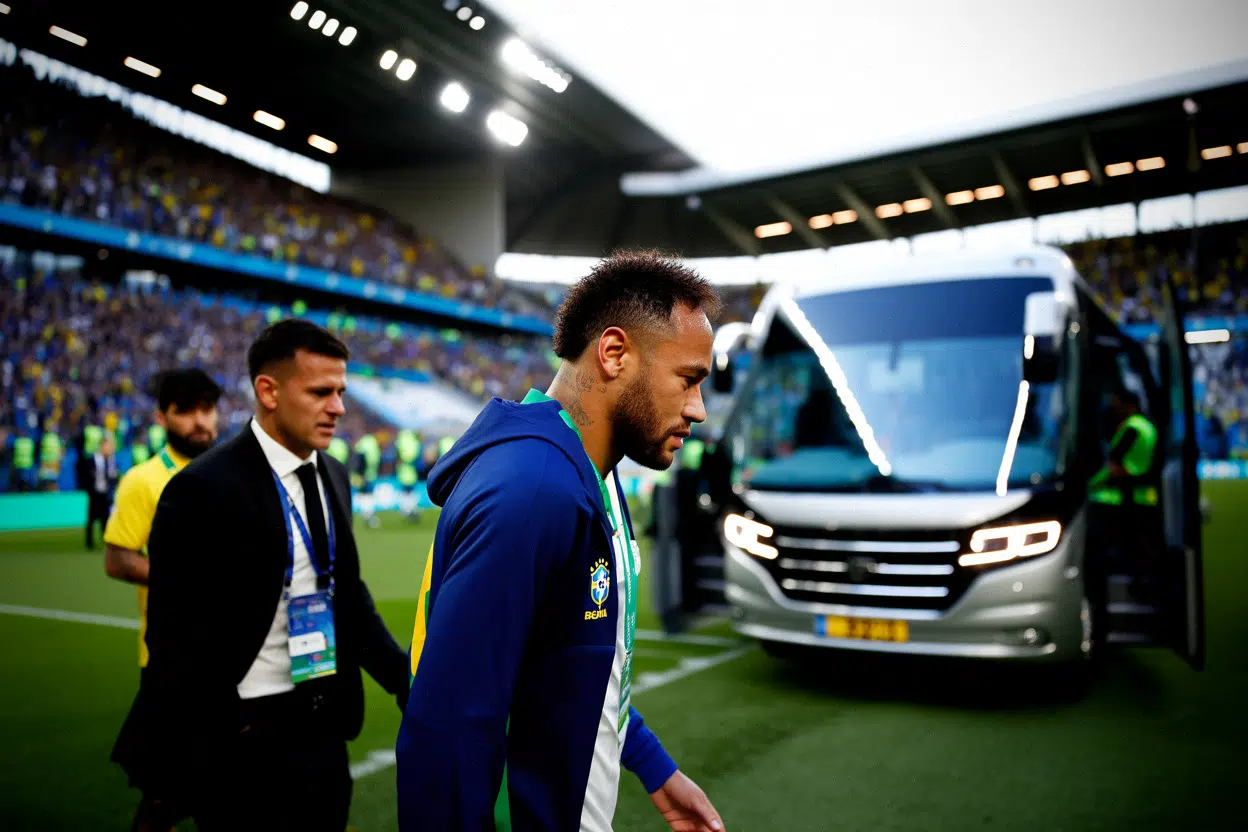
Neymar says his time wearing Brazil’s iconic yellow jersey is over.
A day after Brazil was knocked out of the 2026 World Cup, the global superstar told reporters, “Now it’s over,” according to France’sLe Figaro, a blunt line that reads like an international retirement announcement and instantly jolts Brazilian soccer into its next chapter.
If Neymar follows through, Brazil’s soccer federation will have to move fast. This isn’t just about replacing a playmaker. It’s about rebuilding the identity of the most famous national team in the sport, in a country where the national team is closer to a civic religion than a weekend pastime.
“Now it’s over”: Neymar signals an international goodbye
The phrasing was short, sharp, and hard to misread. In post-World Cup language, that kind of statement usually isn’t a temporary break, it’s a public decision that sets expectations for everyone around the team.
emotions run hot right after elimination. Players are exhausted, disappointed, and more likely to speak from the gut. But Neymar isn’t just any player. For more than a decade, he has been the face of Brazil’s project on the field and the lightning rod off it, praised as a genius, criticized as a symbol of unfulfilled promise.
Whether Brazil makes it official with a federation statement, a farewell match, or simply stops calling him up, the practical meaning is the same: Neymar would be stepping away from World Cup qualifiers, Copa América tournaments, and friendlies. That doesn’t mean he’s retiring from club soccer, just closing the national-team chapter.
Brazil’s federation faces a messy, high-pressure transition
For the Brazilian Football Confederation (CBF), the governing body that runs the national team, Neymar’s exit would trigger a three-front scramble: tactics, leadership, and image.
On the field, Brazil isn’t just losing a “No. 10.” Neymar has drifted across roles for years, creator, inverted winger, even a false nine depending on the coach and the moment. When he had freedom, the entire team shape bent around him, including defensive cover and transition patterns. Without him, Brazil could become more structured, and less capable of producing something out of nothing when games tighten.
Inside the locker room, the power structure changes overnight. Captains, spokespeople, and pecking order matter more than fans like to admit, especially in a program where every quote becomes a headline. The CBF and coaching staff will need to avoid a leadership vacuum that turns into a months-long identity crisis.
And then there’s the business side. Brazil will always draw eyeballs, but Neymar has been a global marketing engine. Without him, the story shifts to who’s next, and that takes time, big performances, and a clear plan that fans can believe in.
His numbers, and the trophy debate, will define the legacy fight
Neymar’s impact on Brazil is written in highlight reels and in hard stats: the set pieces, the one-on-one bursts, the ability to carry the ball under pressure. But the argument around his legacy has never been just about talent.
In Brazil, the harshest judgment is simple: did the era deliver the biggest trophies? World Cups are the measuring stick, and they tend to flatten nuance. A single missed chance or a single magical moment can rewrite the story, especially when a player announces the end immediately after the tournament.
That’s the risk of a post-World Cup goodbye. The last image can swallow the rest, unless Brazil, and Neymar himself, shape the farewell in a way that reminds people how long he carried the team’s hopes.
Why stars walk away now: the calendar, the body, and the mental toll
International retirement in modern soccer is rarely about one thing. The schedule is relentless: club competitions, long-haul travel, commercial obligations, and shrinking recovery windows. For elite players, the cumulative load becomes a career-defining issue.
There’s also the club factor. Whether or not Neymar changes teams, top players increasingly manage risk by trimming international duty, fewer flights, fewer high-intensity minutes, fewer chances for injuries that can derail a season. Neymar’s dribbling-heavy style has also made him a frequent target for heavy contact, and that wear adds up.
Then there’s the psychological weight. Playing for Brazil isn’t just playing for a team, it’s carrying a nation’s expectations and constant comparisons to legends. If Neymar is choosing to step away after 2026, it’s also a sign of how punishing the modern spotlight has become, even for the sport’s biggest names.
For Brazil, the implications are immediate: the next cycle won’t wait. Friendlies, Copa América, and the long road to the next World Cup will arrive quickly, and whoever inherits Neymar’s space will do it under instant, unforgiving comparison.