

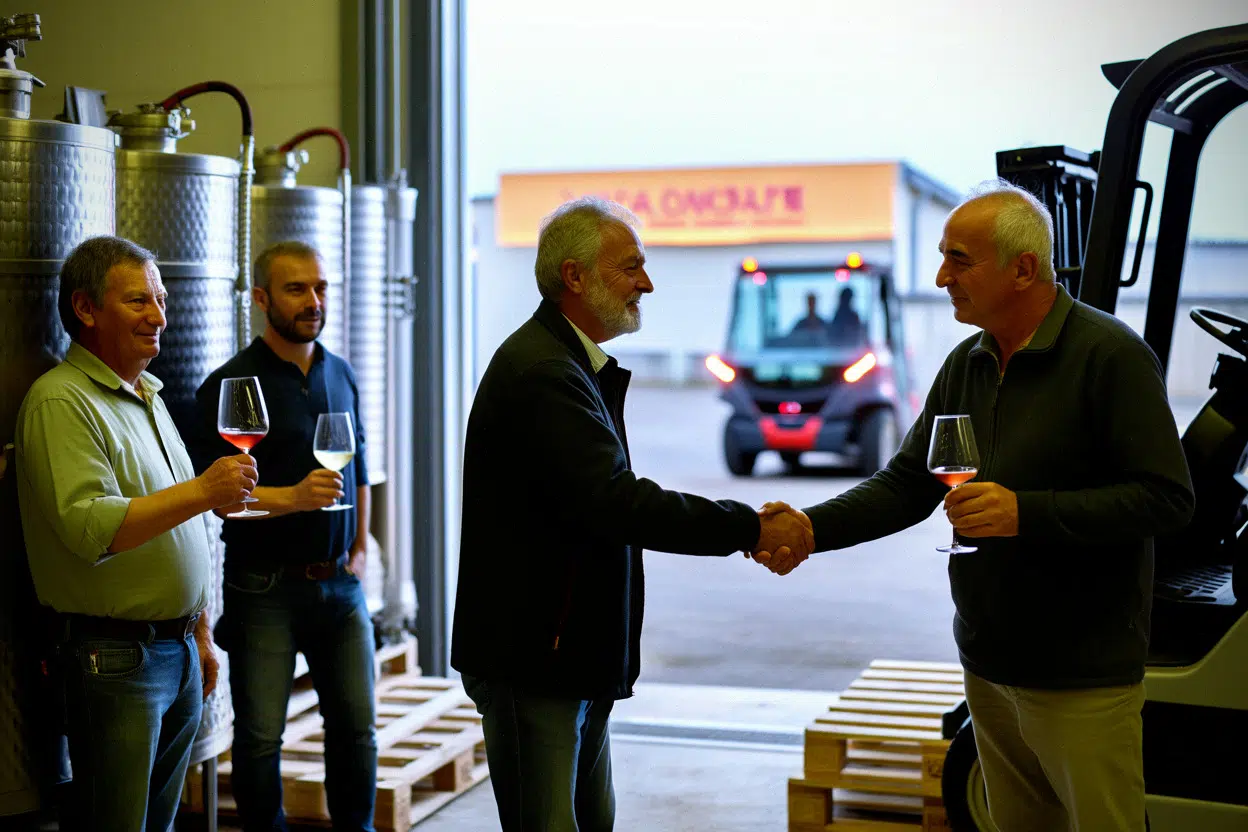
In Saint-Pantaléon-les-Vignes, a tiny wine village in France’s Drôme region, a retirement party at the local wine co-op drew growers, employees, and partners for speeches, handshakes, and a communal toast.
But in places like this, a send-off isn’t just sentimental. When one longtime worker steps away after decades, the co-op doesn’t just lose a colleague, it risks losing hard-earned know-how that keeps harvests running, tanks monitored, and wines consistent from year to year.
The gathering, held at the cooperative winery itself, doubled as a public reminder of how much rural economies, and entire winemaking communities, depend on these shared institutions, and on the people who quietly keep them operating.
A cooperative winery is the village’s engine
The Saint-Pantaléon-les-Vignes co-op functions as both workplace and decision-making hub for its member winegrowers. In the cooperative model, common across France, members deliver their grapes and vote on major choices, from equipment purchases to production strategy.
Employees, meanwhile, run the day-to-day operation: managing the cellar, maintaining equipment, handling paperwork, and preparing orders. The retirement ceremony put both sides in the same room, underscoring a basic truth of co-ops: the business only works when growers and staff move in sync.
In a small wine town, that relationship is personal. A cellar worker may spend years working with the same families, watching vineyards change, new grape varieties come in, and farming practices evolve. That continuity helps explain why a single retirement can feel like a village-wide event.
Why one retirement can disrupt an entire harvest
Winemaking knowledge isn’t fully captured in manuals. It’s built over seasons, reading grapes as they arrive, spotting early warning signs in a fermenting tank, knowing when a batch is drifting off course, and reacting fast when something goes sideways during the crush.
In a cooperative, that challenge is amplified because grapes come from many different plots with different elevations, ripeness levels, and conditions. The ability to manage that variability, and still produce a consistent lineup of wines, often lives in the instincts of experienced staff.
Then there’s the human side. Co-ops rely on constant communication with member growers: explaining sorting rules, discussing grape health, navigating tensions over yields and pricing. When a veteran leaves, the co-op also loses a web of relationships that has to be rebuilt, documented, and maintained.
Modern wine jobs are more technical than ever
The ceremony also highlighted how the work inside a winery has changed. Today’s cellar teams juggle stricter hygiene standards, traceability requirements, temperature control, lab analysis, and tighter regulation, along with growing pressure to adapt to hotter, drier seasons.
Co-ops help small growers keep up by pooling resources for equipment and quality controls that many individual vineyards couldn’t afford on their own. But that only pays off if the staff has the training to run the technology, and the credibility to explain those choices to growers who are staking their livelihoods on the results.
That’s why retirements can force urgent planning: overlapping roles for a transition period, formalizing procedures, updating tracking tools, and training replacements, often while the calendar barrels toward harvest.
The economic ripple effect in rural France
In the Drôme, cooperative wineries aren’t just places where grapes become wine. They’re local employers and economic anchors, buying supplies, hiring contractors, maintaining buildings, and keeping money circulating in small towns.
They also help secure markets for growers. Members deliver grapes in exchange for payment tied to volumes, results, and market conditions. The co-op model can cushion shocks, but it’s still exposed to shifting consumer demand, competition from other regions, and rising production costs.
That’s why staffing stability matters. Cellar and maintenance jobs require flexibility, seasonal hours, and deep familiarity with the facility. Replacing experienced workers can be difficult, especially in rural areas competing for skilled labor.
A toast to the past, and a test for what comes next
Speeches at winery retirements often circle back to harvest season: the long days, the late nights, the rush of deliveries, the constant cleaning, the pressure to make the right calls fast. It’s where teamwork is tested and where institutional memory matters most.
The tribute in Saint-Pantaléon-les-Vignes emphasized loyalty, rigor, and commitment, words that, in a cellar, translate into safety habits, quality decisions, and calm under pressure when the tanks are full and time is short.
Now the co-op faces the practical side of the celebration: reshuffling schedules, redistributing responsibilities, and making sure the next harvest meets the same standards, while the wine world demands more transparency, higher quality, and faster adaptation to climate stress.