

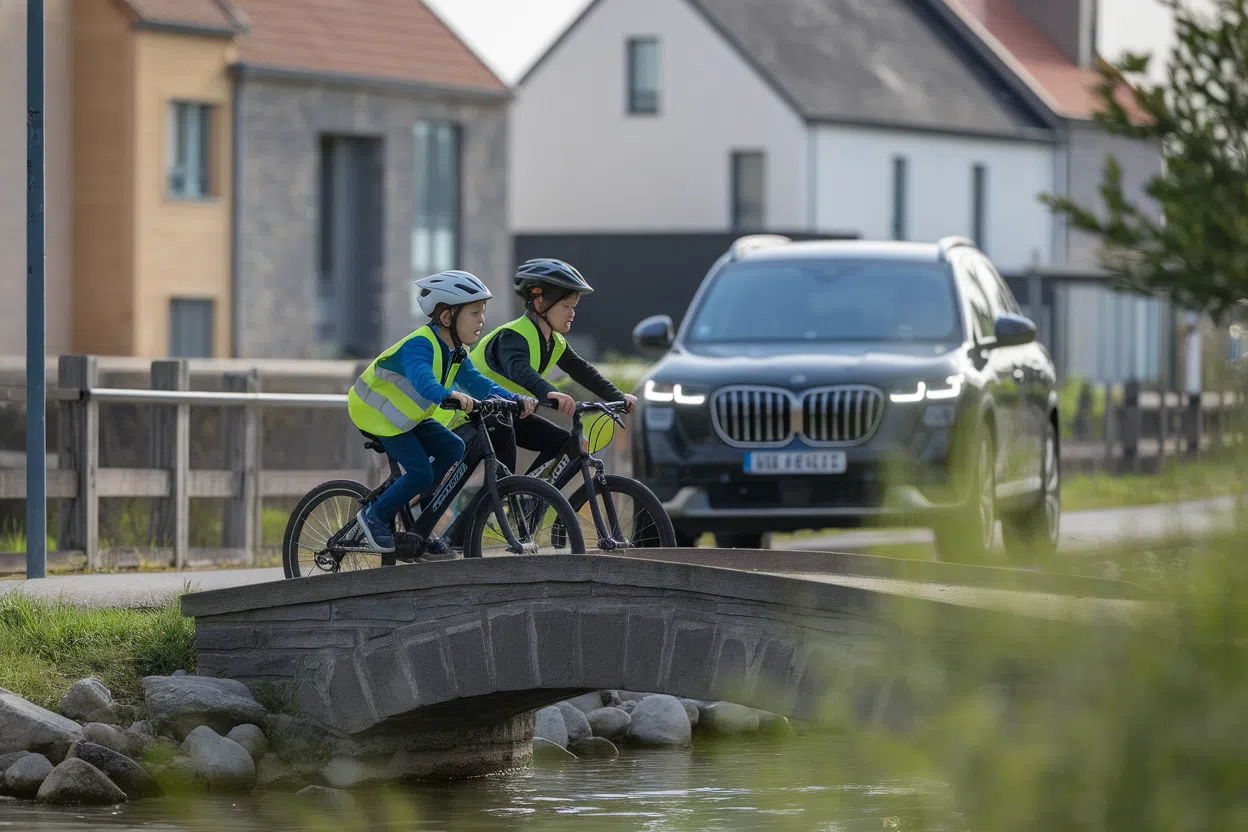
A group of elementary students in Pont-Aven, a small town in Brittany in northwest France, swapped desks for handlebars, riding about9 milesto study local history where it actually happened.
The school-led trip blended exercise with hands-on lessons in history, geography, and road safety. With adults riding alongside them, the students followed a pre-planned route with scheduled stops to examine the landscape and the town’s past up close.
A Field Trip Built Around Real Places, Not Just Worksheets
The goal wasn’t athletic bragging rights. Teachers designed the ride to help students connect classroom concepts to recognizable locations, turning abstract lessons into something they could see, point to, and describe.
Along the way, students practiced skills that don’t fit neatly on a test: following directions, managing their energy, staying aware of their surroundings, and explaining what they observed. The distance itself became part of the lesson, an age-appropriate challenge that made the day feel like an expedition.
Why a Bike Ride Works Better Than a Walk
Choosing bicycles wasn’t incidental. A bike lets a class cover more ground than walking while still moving slowly enough to stop, look around, and talk about what they’re seeing.
It also creates a natural setting for teaching traffic rules and group riding behavior, helmets and gear, spacing, signaling, and how to move safely as a pack. For American readers, think of it as a cross between a school “bike safety day” and a local-history scavenger hunt, except the town itself is the exhibit.
Pont-Aven’s “Heritage” Goes Beyond Monuments
Pont-Aven is best known in France for its cultural identity and scenic setting, part of a region that draws visitors for coastal views, old pathways, and deep local traditions. The trip framed “heritage” broadly, not just as famous buildings, but as everyday features: routes people have used for generations, viewpoints, traces of older work and industry, and how the town functions today.
That wider definition helped students see their environment differently, less like background scenery and more like a story written into roads, hills, and neighborhoods.
Riding together required structure: assigned roles, regrouping points, constant supervision, and clear expectations. Teachers and chaperones monitored the route, kept the group together, and made sure the educational stops stayed on schedule.
For the school, it meant careful planning, scouting the course, notifying families, checking bikes, and reviewing rules before departure. For students, it was a break from routine that still kept learning front and center.
A Model for Teaching Kids to Know Their Own Backyard
The biggest payoff was discovery. Students learned to “read” their town, spotting what counts as heritage and understanding what those details say about the place they live.
In a time when many schools are trying to get kids moving more while keeping academics strong, Pont-Aven’s ride offers a simple idea with staying power: make the community the classroom, and let students reach it under their own power.