

As United Nations Secretary-General António Guterres nears the end of his term, the behind-the-scenes contest to pick his successor is taking shape in New York—where the decisive hurdle isn’t public popularity, but whether any of the five permanent members of the UN Security Council decide to block a candidate.
French broadcaster CNews and other outlets have identified six figures positioning themselves for the job: Michelle Bachelet, Rafael Grossi, Rebeca Grynspan, Macky Sall, Mara Fernanda Espinosa Garcés, and Carolyn Rodrigues-Birkett. The process ultimately runs through the Security Council—where the United States, China, Russia, France and the United Kingdom hold veto power—before a final appointment by the UN General Assembly.
Public hearings in New York have become a now-expected stage of the selection process, offering a window into each contender’s priorities and political instincts. But the article’s central reality remains: the next secretary-general’s room to maneuver will depend as much on personality and coalition-building as on the red lines set by major powers.
Six contenders cited, from Michelle Bachelet to Carolyn Rodrigues-Birkett
Among the most frequently mentioned names is Michelle Bachelet, the former president of Chile who has held top international roles, including serving as the UN’s senior human rights official. Her record places her in a UN tradition focused on civil liberties and civilian protection—an approach that can appeal to many member states while also drawing resistance from governments accused of abuses and eager to limit institutional criticism.
Another prominent contender is Rafael Grossi, an Argentine diplomat known for work on technical and sensitive issues, including nuclear oversight. In a moment when international security dominates UN debates, a pragmatic, managerial profile may reassure some governments. But the job also demands command of broader portfolios—budgeting, peacekeeping, humanitarian response, and administrative reform.
Rebeca Grynspan of Costa Rica is cited for her economic expertise and focus on development. A candidacy like hers highlights inequality, debt, development finance and trade—core issues for many countries in the Global South. The challenge is making that agenda politically resonant inside a Security Council often consumed by war, sanctions and strategic rivalry.
Macky Sall, the former president of Senegal, represents a political profile from a major African country. The question of Africa’s representation in top international posts remains a recurring argument in negotiations, in part because the continent is a central theater for UN operations while also seeking greater institutional weight. But such a candidacy still faces the test of acceptability, as some states weigh multilateral experience, coalition-building ability, and how others view a candidate’s domestic political record.
Mara Fernanda Espinosa Garcés, a former minister with prior multilateral responsibilities, is also listed among the candidates. Her trajectory is often framed as a bridge between diplomacy, regional negotiation and the internal workings of institutions. Carolyn Rodrigues-Birkett rounds out the list cited in multiple tallies, bringing a diplomatic profile rooted in multilateral mechanisms. Together, the six names illustrate a competition where international experience alone isn’t enough—candidates also need alliances and a sharp read on power dynamics.
https://www.europe-infos.fr/actualites/10240/bourse-australienne-au-plus-haut-en-cinq-semaines-macquarie-prepare-le-depart-de-shemara-wikramanayake/
New York hearings put each candidate’s doctrine—and blind spots—on display
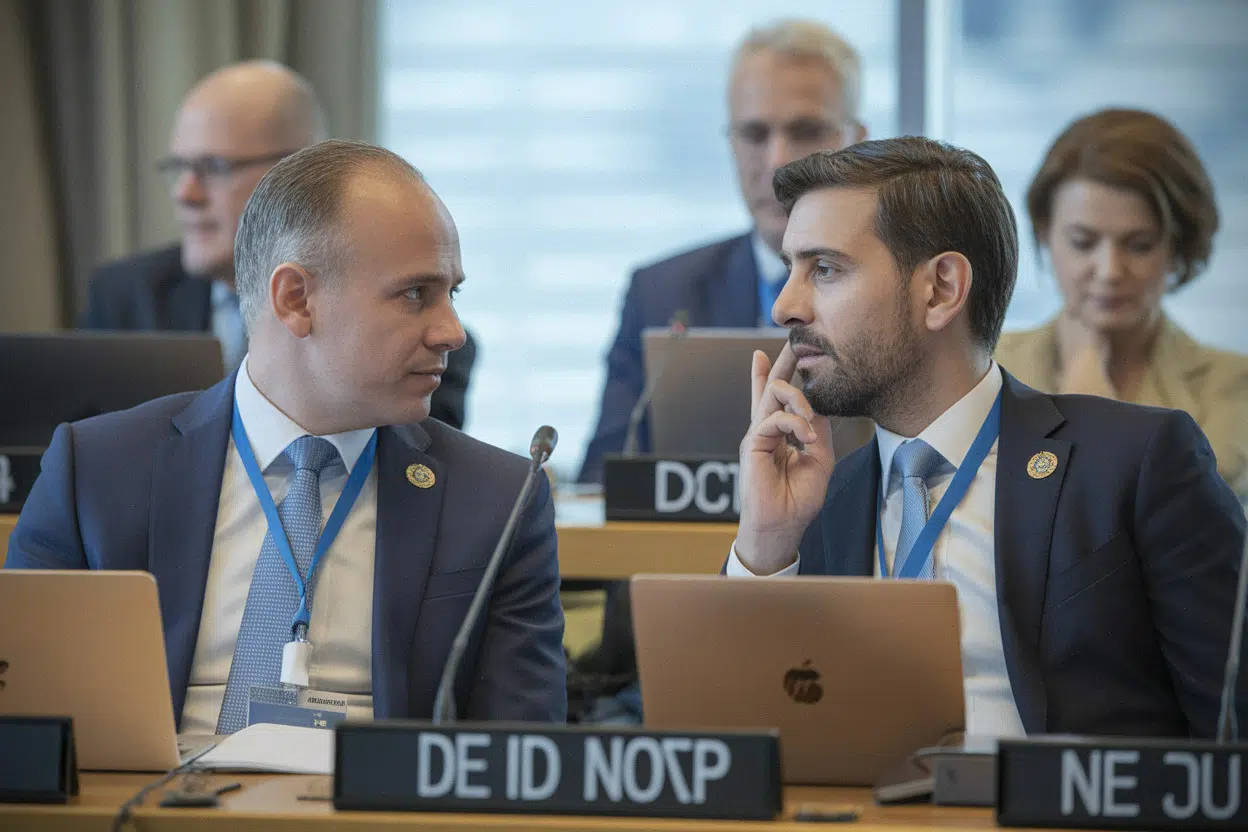
The public hearings held in New York have become a key checkpoint because they force candidates to spell out priorities in front of member states and civil society. In practice, the sessions are less about naming a winner than stress-testing the coherence of a platform, the strength of proposals, and a candidate’s ability to handle direct questions about ongoing crises.
Recurring themes include civilian protection, system effectiveness, conflict prevention and financing—along with the difficult balance between diplomatic neutrality and defending the principles of the UN Charter.
Delegations also judge candidates on realism. Promising sweeping Security Council reform can grab attention, but governments know such change requires a qualified majority and, ultimately, the consent of the permanent members. On the other hand, a message that sounds too technocratic can leave the impression of a secretary-general limited to day-to-day management, when many want a political voice able to warn, propose mediation and project moral authority—even without coercive power.
Humanitarian policy is another major test, since the UN coordinates, funds and deploys parts of emergency aid. That requires positions on humanitarian access, staff security, fighting impunity when aid workers are targeted, and relations with NGOs. Donor states demand transparency, while host countries emphasize sovereignty—two demands that often collide in the field.
Climate and the energy transition are also closely watched. Small island states and many vulnerable countries want an assertive secretary-general on adaptation, loss and damage, and financing. Major hydrocarbon producers tend to prefer more cautious language. The hearings therefore expose a question of method: how to set concrete goals without turning the role into an ideological platform that could shut down negotiation channels.
Finally, the New York stage is a test of style. The ability to answer without notes, manage contradictions, cite specific budget priorities, or acknowledge the organization’s limits can matter. A candidate who clearly states what the UN can—and cannot—do may appear more credible to delegations tired of broad promises.

The Security Council still holds the leverage, with veto threats shaping the field
The selection mechanism puts the Security Council at the center. The secretary-general is recommended by the Council and then appointed by the General Assembly. In theory, it’s a compromise; in practice, a candidate’s ability to avoid a veto from any of the five permanent members is decisive.
A firm “no” from Russia, China or the United States can sink a candidacy even if it has broad support elsewhere. But the calculus isn’t purely binary: a permissive abstention by a permanent member can allow a candidate to move forward if the others don’t object.
That reality pushes candidates toward calibrated messaging—firm on principles, but cautious on issues where a permanent member might argue its vital interests are at stake. Much of that calibration happens out of public view through bilateral meetings, signals sent to capitals, and close reading of recent votes on UN resolutions.
The constraint is especially strong on peacekeeping and sanctions. A secretary-general who is too critical of a military operation or of alleged violations tied to a permanent member’s ally risks long-term friction. Yet a profile seen as too accommodating can lose influence with the broader UN membership and public opinion, weakening the office’s political authority. The next leader will have to navigate those contradictions—speaking to the Council without alienating the General Assembly.
Budget politics deepen the dependence. A significant share of UN funding comes from a limited number of major contributors, and decisions on assessed contributions, peace operations, agencies and programs shape what the Secretariat can realistically do. Candidates who project a culture of management and oversight may reassure some governments, but they also must convince others they can defend the system’s independence—especially on senior appointments and mission evaluations.
In that context, the six cited names aren’t competing only on ideas. They’re being tested on whether they would become a source of institutional deadlock. The job requires getting states that barely speak—and sometimes sanction—each other to work together while preserving a minimum level of collective action. The eventual choice, the article argues, will be the candidate who, in the eyes of the permanent members, minimizes the risk of confrontation while still offering an acceptable level of initiative.
Regional representation, human rights and crisis management sit at the center of the decision
Regional representation returns in every succession. Some states argue for a better geographic balance, often favoring Africa or Latin America depending on the moment. The candidacies of Macky Sall, Michelle Bachelet and Rafael Grossi feed those debates because each, in different ways, carries expectations of visibility and influence for their region.
Human rights remain a fault line. A secretary-general seen as too aggressive can be viewed as a threat by contested regimes, while a quieter approach can be criticized as weakness. Yet the UN’s credibility is tied to that tension. Current crises demand a voice on atrocities, forced displacement and war-driven famine; without it, the organization risks being reduced to a logistical role. Member states are therefore judging whether the next leader can hold a line without isolating the institution.
Crisis management is another concrete yardstick. Governments want to know how a candidate would organize mediation, use special envoys, and respond when a UN mission is attacked. A diplomatic profile like Carolyn Rodrigues-Birkett may be seen as an asset of method, while a political profile like Macky Sall may emphasize experience with power dynamics and direct negotiation. Candidates with strong institutional experience, such as Mara Fernanda Espinosa Garcés, often stress knowledge of procedures, coalitions and internal balances.
The next secretary-general will also face a global public more focused on results than symbolism. The question is no longer only whether the UN can publish reports, but whether it can secure access, protect humanitarian corridors, mobilize funding and safeguard personnel. Member states—including those that support multilateralism—are demanding metrics: response times, inter-agency coordination, and streamlined field operations.
In the coming weeks, the gap between media visibility and diplomatic viability could narrow. Some names may dominate public discussion, but the decision will hinge on specific arrangements, the level of acceptance among the permanent members, and the ability to rally a majority of states around a figure seen as legitimate, operational—and able to speak to the world without triggering an immediate institutional crisis.
Key takeaways
- Six candidacies are being cited to succeed António Guterres as UN secretary-general.
- Public hearings in New York test doctrine, method and management credibility.
- The Security Council retains the advantage; a veto by any permanent member can block a name.
- Regional representation, human rights and crisis management are shaping the deliberations.
- Les candidats à la succession d'António Guterres …
- Succession de Guterres à la tête de l'ONU : « Grand oral
- Quatre candidats pour succéder à Antonio Guterres à la tête des Nations unies
- Secrétaire général de l'ONU | Qui pour succéder à António …
- ONU : qui sont les quatre prétendants à la succession d' …
Sources
Key Takeaways
- Six candidates are being mentioned to succeed Antonio Guterres as head of the UN.
- Public hearings in New York assess doctrine, approach, and management credibility.
- The Security Council retains the upper hand; a veto by a permanent member can block a nominee.
- Regional representation, human rights, and crisis management shape the decision-making.
Sources
- Les candidats à la succession d'António Guterres …
- Succession de Guterres à la tête de l'ONU : « Grand oral
- Quatre candidats pour succéder à Antonio Guterres à la tête des Nations unies
- Secrétaire général de l'ONU | Qui pour succéder à António …
- ONU : qui sont les quatre prétendants à la succession d' …