

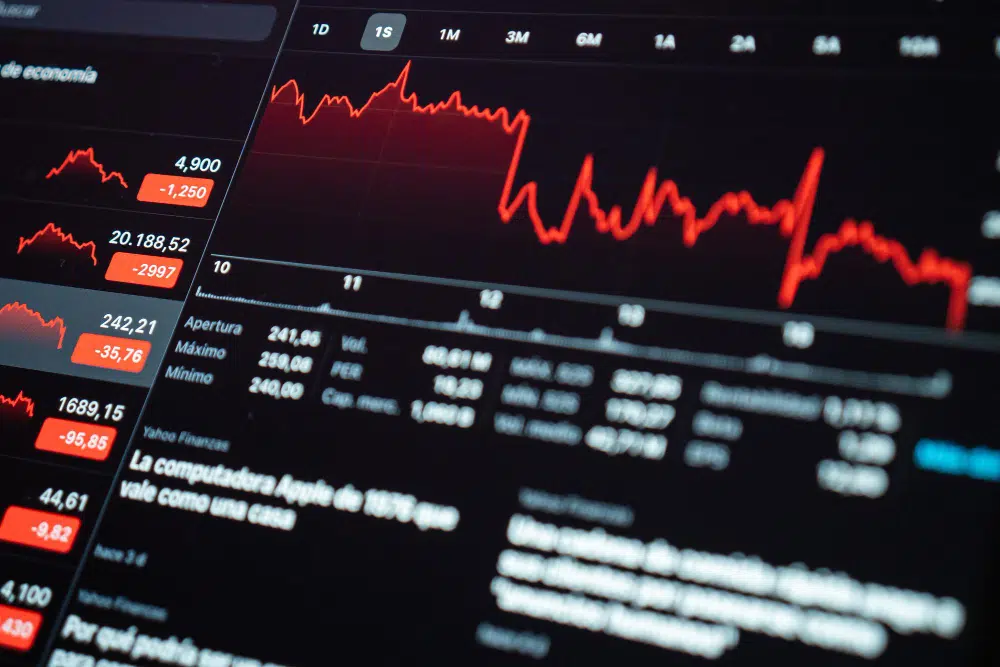
Hong Kong stocks opened with little direction on July 17, 2026, as investors weighed bargain-hunting against a continued global pullback in technology shares. Early trading was subdued, reflecting the familiar hesitation that sets in when the market’s most risk-sensitive sector—tech—keeps pressure on sentiment.
In the opening minutes, several large digital-economy names weighed on the market, while more defensive pockets helped limit downside. Shares of TCL Electronics stood out with a sharper drop after market-watched information, adding to caution around consumer electronics at a time when risk appetite is already fragile.
Traders looked outward for cues, with the prior day’s moves in major global tech benchmarks still shaping prices in Hong Kong, a market heavily exposed to internet and semiconductor flows. Volumes were described as restrained early on, a sign many managers were waiting for clearer signals before taking on more risk—especially given the region’s sensitivity to interest-rate swings and global growth expectations.
Hang Seng hovers near flat as tech weakness caps any rebound
Early action reinforced a pattern often seen when global technology stocks are in correction mode: the Hang Seng traded close to unchanged without a strong directional push, while pressure on digital-economy shares limited rebound attempts.
Because technology carries significant weight in Hong Kong, coordinated declines among sector leaders can quickly filter into the broader index—particularly when international flows thin out. In this kind of tape, hedging strategies, whether through derivatives or sector rotation, often take priority over long-term conviction.
Traders also watched the gap between growth stocks and yield-oriented names. When tech slides, more defensive areas—such as some financials, telecoms, or utilities—can cushion the blow, but not necessarily restart a sustained uptrend. The key question for investors remained where the tech correction finds a floor, since valuation multiples and earnings expectations can shift quickly with any change in outlook.
For now, the market’s pulse was in big-volume behavior among leaders. With buying still fragmented, momentum was hard to build, and investors appeared to be waiting for concrete catalysts—earnings releases, forecast revisions, or macroeconomic signals—before adding risk. Hong Kong’s role as a conduit for international allocations into greater China also kept attention on geopolitics and cross-border flows.
TCL Electronics drops sharply, reviving worries about consumer electronics demand
One of the most notable early moves was TCL Electronics, which fell markedly and fueled debate about how exposed consumer electronics stocks are in a market already on edge. When a name in this segment breaks lower, investors often reassess the broader chain—retailers, manufacturers, subcontractors, and companies tied to overseas demand.
That reaction can be especially intense because consumer electronics sits at the intersection of discretionary spending, margin pressure, fierce competition, and currency swings. With tech broadly under strain, companies tied to short product cycles—TVs, displays, connected devices—are often viewed as more vulnerable.
Markets can quickly price in a scenario of heavier discounting and weaker margins if demand slows or inventories build. In that sense, TCL Electronics’ early drop served as a reminder that even industrial names linked to tech can get hit when overall sentiment deteriorates.
Investors also tend to parse who absorbs price competition and who can protect premium segments, adjusting positions based on concrete factors such as regional sales trends, exposure to emerging markets, and the ability to pass through costs. The move in TCL Electronics became a broader signal of risk aversion, not just a company-specific story.
Investors favor liquidity, concentrating moves and lifting intraday volatility
Hong Kong’s flat open also reflected a common stress-period behavior: a preference for liquidity. International investors in particular often stick with positions that can be adjusted quickly, which tends to concentrate activity in mega-caps and related derivatives.
That concentration can mechanically increase intraday volatility, with sharper swings in a smaller set of heavily traded stocks while the rest of the market stays relatively quiet. It also shortens decision horizons, pushing more tactical trading over long-term fundamental positioning.
Uncertainty around external drivers—interest rates, monetary-policy expectations, and global growth indicators—adds to the volatility, especially for tech companies whose profits are expected further out. In that environment, a session that starts flat can flip quickly if overseas signals shift risk perceptions.
With no major local catalyst at the very start of trading, Hong Kong often takes its cue from global market direction and dominant themes—technology, consumption, real estate, and banks. The result was a cautious open that looked stable on the surface, but still showed nervousness through quick sector rotations.
July 17 calendar keeps traders cautious ahead of earnings and guidance signals
Positioning at the open was also shaped by the day’s calendar. On July 17, 2026, market participants were watching a busy slate of corporate follow-through and expected results across multiple venues, which helped curb immediate risk-taking.
Even when releases are not directly tied to Hong Kong, they can influence sector comparisons and global allocation decisions—especially in industrial and technology segments with worldwide supply chains. In sessions like this, investors often reduce exposure ahead of announcements or avoid adding until earnings visibility improves.
With tech already under pressure, results and outlooks tend to be judged more harshly. Market reactions often hinge not only on the numbers, but on management commentary, margin guidance, and order-book strength—one reason a flat open can coexist with a tense backdrop.
In the near term, the continued global tech correction remained the dominant force. The day’s calendar added to the wait-and-see posture, as investors favored decisions based on verifiable signals rather than a purely technical bounce—particularly across technology and consumer-linked names.
Key takeaways
- Hong Kong stocks opened near flat, held back by a continued global slide in technology shares.
- Large-cap tech names weighed on the Hang Seng and kept risk aversion elevated.
- TCL Electronics fell sharply, adding to caution around consumer electronics.
- Investors favored liquidity, concentrating moves and increasing intraday volatility.
- A busy July 17 calendar reinforced a cautious stance ahead of new earnings signposts.
- La Bourse de Hong Kong progresse ; TCL Electronics chute après une …
- La Bourse de Hong Kong ouvre sans grand changement face à …
- Hong Kong Market Eyes Continued Recovery in 2026 After …
- Hong Kong 2026 Investment Outlook: Embracing Reflation and … – FSMOne
- Zonebourse corporate earnings calendar: July 17, 2026
Sources
Key Takeaways
- The Hong Kong Stock Exchange opens near flat, held back by the global tech selloff
- Big tech heavyweights weigh on the Hang Seng and keep risk aversion elevated
- TCL Electronics drops sharply, fueling caution around consumer electronics
- Investors favor liquidity, concentrating moves and increasing intraday volatility
- The July 17, 2026 calendar reinforces a wait-and-see stance ahead of new earnings signals
Sources
- La Bourse de Hong Kong progresse ; TCL Electronics chute après une …
- La Bourse de Hong Kong ouvre sans grand changement face à …
- Hong Kong Market Eyes Continued Recovery in 2026 After …
- Hong Kong 2026 Investment Outlook: Embracing Reflation and … – FSMOne
- Zonebourse corporate earnings calendar: July 17, 2026