

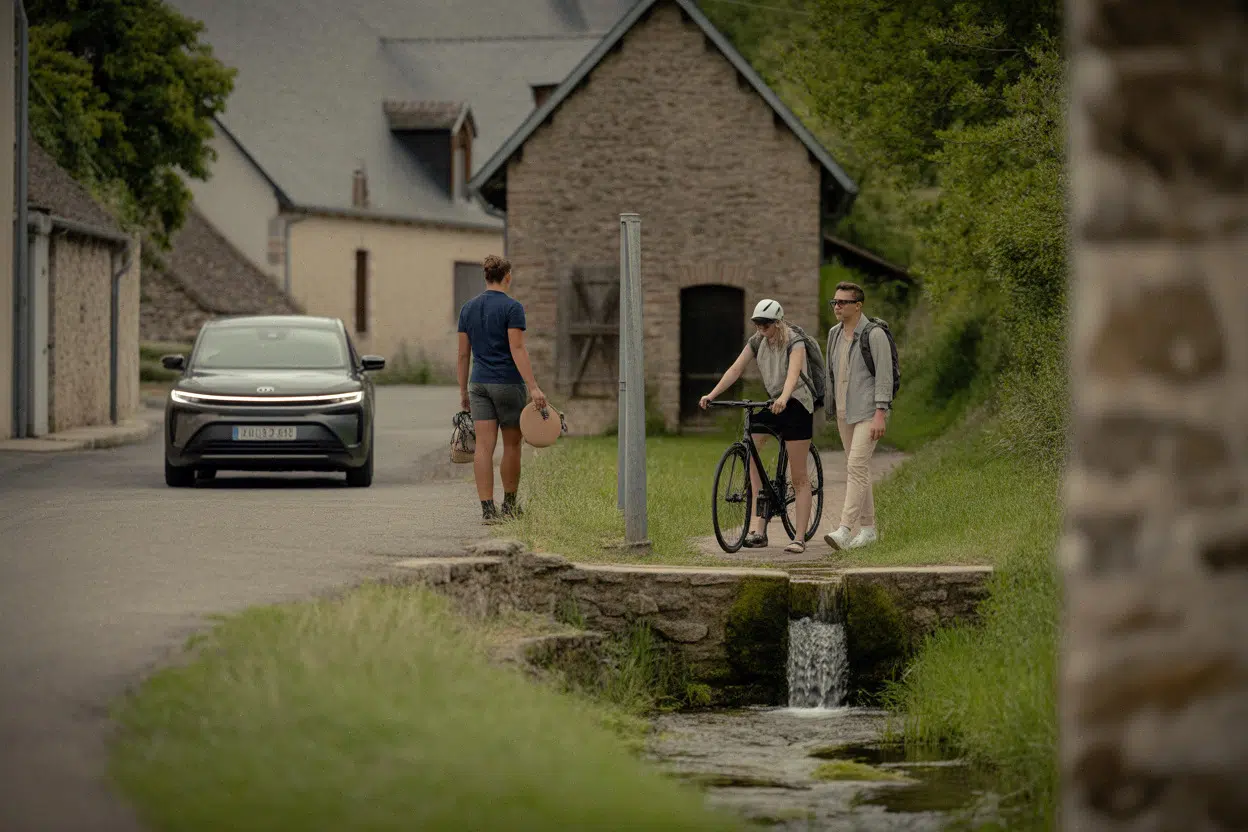
France’s tourism surge in 2026 isn’t being driven by bucket-list landmarks or endurance hikes. It’s being powered by short, flexible outings—walks and bike rides built around easy-to-understand waypoints like a waterfall, a cluster of old mills, a small sanctuary, or a roadside cross.
In the Bonnette Valley, those kinds of stops stitch together a rural story of water, stone, and older ways of life. At the same time, local media projects such as Mon beau village de Haute-Garonne (“My beautiful village of Haute-Garonne”) are elevating selected towns as departmental “pearls,” aiming to get people to come, stroll, look closely, and learn.
The appeal is simple: this is “proximity tourism”—low-friction, experience-first travel that favors meeting places and readable landscapes over athletic performance.
The Bonnette Valley links Livron’s sanctuary, roadside crosses, old mills—and a waterfall
The local formula is straightforward: move at your own pace, on foot or by bike, and stop often where the landscape offers clear heritage markers. In the Bonnette Valley, the commonly cited route strings together the Livron sanctuary, the Croix des Miracles (Miracles Cross), several mills, and a waterfall.
Together, the sites function like a tourism “spine,” with each stop naturally leading to the next while keeping logistics light. There’s no need for a major museum or big-ticket attraction—the setting itself does the explaining.
Residents often point visitors to these places because they carry stories. A sanctuary concentrates religious and social uses; a roadside cross recalls traditions of pilgrimage or symbolic protection. A mill points to a local economy once organized around waterpower, grain, and exchange.
In valleys like this, water isn’t just scenic. It helps explain where buildings were placed, how paths were laid out, why vegetation thickens in certain pockets, and why older diversions or small retention areas sometimes appear. The waterfall becomes the visual “payoff”—the spot where people linger, take photos, and picnic.
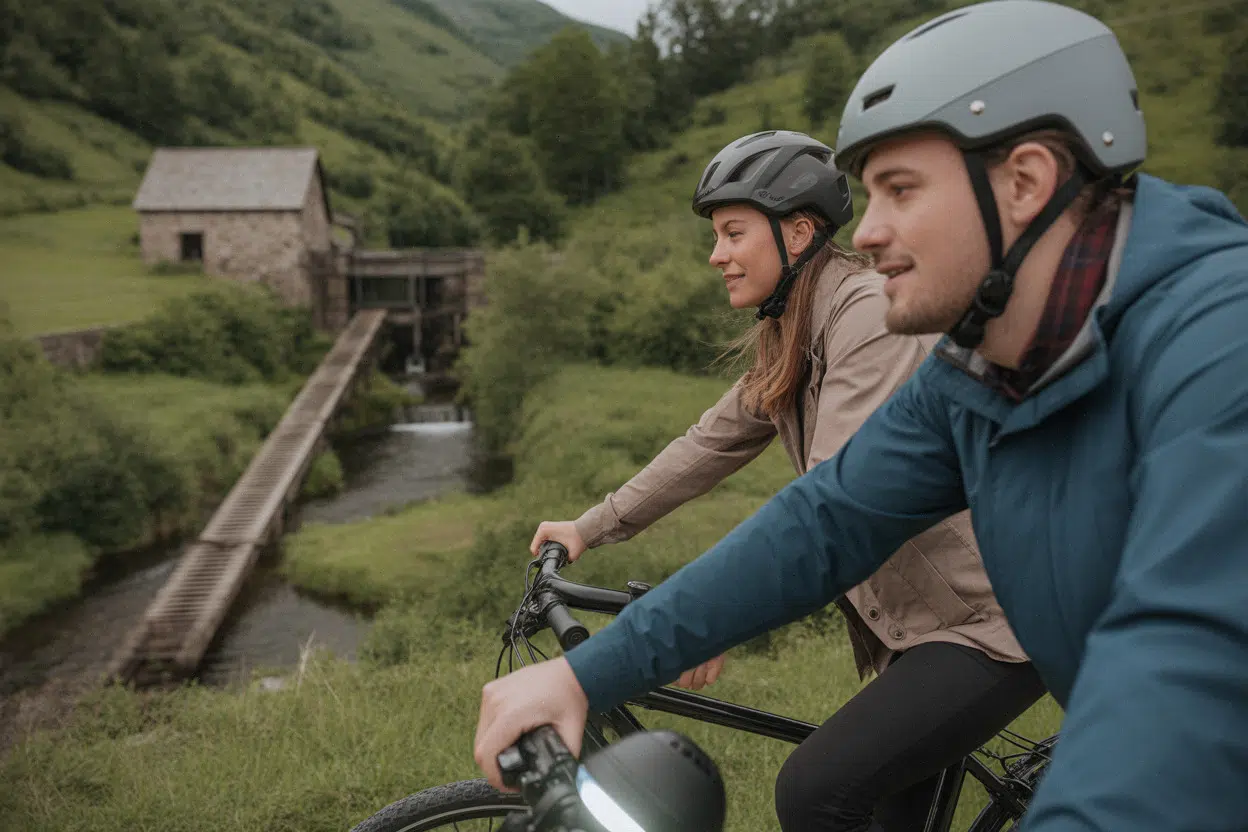
The “short outing” format also matches current demand for quick, adjustable trips. Families and friend groups want routes that can accommodate different fitness levels. Biking expands the radius without losing the heritage thread, while walking encourages close observation—stone textures, traces of old construction, and small-scale waterside landscapes.
Old mills add another layer of interest. Whether in ruins or repurposed, they tend to spark the same questions: Who worked here? What kind of power was used? What was produced? How did floods shape repairs and rebuilding?
These routes also bring practical pressures. Access along riverbanks, trail maintenance, safety near water, and crowd management become real issues for towns and local associations. A “secret” site isn’t necessarily remote—it’s often simply discreet and locally known, until articles, photos, and recommendations push it into a new level of visibility.
In the Bonnette Valley, the promise of a waterfall and old mills works as an immediate, widely understood draw—one that fits a more restrained, lower-impact style of tourism.
https://www.europe-infos.fr/actualites/10269/20-juillet-2026-code-publie-sur-github-sans-autorisation-bac-a-sable-contourne-ce-quopenai-doit-affronter-en-cybersecurite/
La Dépêche du Midi’s “Mon beau village de Haute-Garonne” series puts 12 towns in the spotlight
Village visibility is also being shaped by media campaigns. The regional newspaper La Dépêche du Midi is behind Mon beau village de Haute-Garonne, a project highlighting 12 towns presented as “pearls” of the Haute-Garonne department (an administrative area in southwest France).
The series isn’t just a feel-good feature. It builds a territorial narrative through selection, profiles, heritage angles, and a gradual discovery logic. For small towns, being included in a recognized series amounts to gaining a storefront—especially with a regional audience weighing the beach, the mountains, or a close-to-home day trip.
That kind of selection acts as a trust signal. Readers assume the town is worth a detour—that there’s a viewpoint, built heritage, a market, a café, or a walk that will pay off. The boost is also digital: each article extends through search engines, shares, and map listings.
Even modest towns can see more information requests, weekend visits, and summer foot traffic. The article notes the impact is hard to quantify precisely without tourism office data, but local actors recognize the momentum effect: a town that’s “featured” becomes an easy add-on stop in a day’s plan.
The effect is strongest when the offer matches what people want right now—authenticity, visible heritage, short routes, and photos that “work” without special staging. A waterfall, a mill, a shaded square, or a riverside path is instantly legible, lowering the barrier to entry.
But the attention also raises balance questions. Not every village has the same capacity for parking, restrooms, signage, crowd management, or trail upkeep. A fragile natural site can degrade if visits accelerate without regulation.
Municipalities are described as looking for practical fixes: encouraging biking, spreading visitors across multiple routes, favoring limited-size guided tours, or working with associations to mark trails. The implicit “beautiful village” label isn’t enough—organization has to keep up, especially on busy weekends.

Ordan-Larroque leans on flower-filled public spaces and a living Gascon identity
In the Gers department, Ordan-Larroque is cited in local reporting as a town betting on atmosphere and identity. The narrative emphasizes a sense of “well-being,” tied to flowered public spaces and a Gascon history still visible in buildings and village details.
This kind of appeal doesn’t depend on a single “star monument.” It relies on coherence—how streets, façades, plantings, viewpoints, and small-scale heritage combine into an experience.
Maintaining flowered spaces is a real investment. It requires labor, ongoing care, water during hot periods, and choices about which species to plant. In many towns, municipal teams and volunteers weigh aesthetics against restraint and climate adaptation.
For visitors, the payoff is immediate: more welcoming squares, pleasant routes, shaded breaks, and “natural” photos that then circulate online. In a tourism economy where images matter, a well-kept row of houses and a flowered street become concrete selling points—without feeling artificial if the upkeep fits the rural setting.
The second pillar is local history, described here as Gascon. It shows up in architecture, churches, houses, and traces of older agricultural uses. Towns that highlight it often rely on signage, guided tours, booklets, or anecdotes shared by residents.
This “close-to-home history” format matches a growing curiosity: where place names come from, why a building sits where it does, and how life worked before modern roads. Heritage isn’t just a postcard—it’s a story that can be passed along in an hour-long walk.
The approach also has an economic edge. Visitors spend locally—at cafés, bakeries, farm-product stands, small markets, and sometimes lodging. In rural areas, a few dozen extra visitors each weekend can help sustain fragile businesses.
That’s why towns try to extend stays by offering circuits that connect the village to a hiking path, a viewpoint, or a natural site. When a report stresses “well-being,” it often reflects a mix of shade, quiet, walkability, and readable heritage. The challenge is preserving that quality while welcoming a wider range of visitors.
In Cazères, the discovery offer is presented as a package: exhibits, hikes, walks, workshops, and guided tours. It’s a more programmed approach than a simple nature “spot,” designed to create regular appointments that can draw both local residents and pass-through visitors.
Guided visits are central because they provide structure—time, meeting point, and a promise of “secrets,” anecdotes, and details people might miss on their own.
The strategy reflects a common reality in small towns: heritage is often scattered—an interesting façade here, an old industrial building there, a church, a bridge, a developed riverbank, traces of older activity. Without interpretation, visitors can walk right past it. A guided tour turns ordinary elements into a narrative and gives the town center a clearer purpose.
Workshops add a hands-on layer—heritage, crafts, nature, and sometimes photography or drawing. For families, it’s a way to do something rather than only look, which keeps people in town longer.
Hikes and walks follow the same logic as the Bonnette Valley, but with more organization: identified routes, difficulty levels, planned stops, and sometimes a guide. The link between nature and heritage becomes a coherent tourism product—important at a time when visitors quickly compare outing ideas.
The pressure point is consistency and capacity. More events require staff, partnerships, clear communication, and attention to safety. Organizers also have to meet expectations—accessibility for all, shaded routes in summer, workable schedules, and practical information.
And when a town advertises “secrets and anecdotes,” the reporting notes, it has to deliver solid, sourced content without overdoing folklore. That quality—more than hype—drives repeat visits, recommendations, and the broader 2026 momentum behind close-to-home tourism.
Key takeaways
In the Bonnette Valley, the Livron sanctuary, roadside crosses, old mills and a waterfall set the rhythm for short walks and bike rides.
La Dépêche du Midi is boosting tourism visibility through its Mon beau village de Haute-Garonne series featuring 12 selected towns.
Ordan-Larroque is highlighted for flowered public spaces and a Gascon identity expressed through architecture and village details.
Cazères is developing a structured offering built around exhibits, workshops, hikes and guided heritage visits.
In 2026, proximity tourism is growing around short routes and local interpretation rather than big infrastructure.
Sources
à pied ou à vélo, ils ont découvert la vallée de la Bonnette
Les secrets enfouis de la cité
Cazères. Petits secrets et anecdotes pour découvrir le …
Key Takeaways
- In the Bonnette Valley, the Livron sanctuary, crosses, mills, and a waterfall set the pace for walks.
- "My Beautiful Village in Haute-Garonne" boosts the tourism visibility of selected towns.
- Ordan-Larroque is banking on flower-filled spaces and its Gascon identity to attract visitors.
- Cazères is developing a structured offering with exhibitions, workshops, and guided tours.
- In 2026, local tourism is growing thanks to short routes and local interpretation.