


In the small French town of Deyvillers, the retirement of Isabelle Limonier after a career with France’s Ministry of the Armed Forces is being treated as more than a personal milestone—it’s a moment of local recognition for a kind of public service most people never see.
Regional daily Vosges Matin reported the news, which has particular resonance in a community where individual careers often fold into a broader civic story shaped by volunteer life, public institutions, and a strong culture of remembrance.
It’s not a national headline in France. But in Deyvillers—near the city of Épinal in the Vosges department—the departure highlights the behind-the-scenes work that keeps major state institutions running, and how smaller towns mark life transitions that can reshape community life.
A retirement noticed in Deyvillers
Limonier’s retirement, after years at the ministère des Armées (France’s Ministry of the Armed Forces), has been relayed locally in Deyvillers as a point of reference in town life. In places like this, local news often centers on professional and family paths built over decades, with a strong sense of stability.
Careers in the French national civil service—including positions tied to the Armed Forces Ministry—often involve internal moves, shifts between departments, and a culture of confidentiality. That helps explain why the specifics of the work can remain largely absent from public discussion, even when the service itself is widely respected.
The fact that Vosges Matin carried the story reflects the role of regional press as a close-to-home record keeper. Retirements like this are common, but still represent a turning point—typically marked by modest ceremonies that bring together colleagues, family, and sometimes local elected officials.
In Deyvillers, residents often view these careers as a form of civic commitment even when the person never held elected office. The idea of public service is concrete here: reliability, procedure, and trust in institutions seen as foundational. For an administration like the Armed Forces Ministry, that trust is also built on discretion and dependability—work that isn’t visible but supports logistics, management, and personnel support.
The retirement also draws attention to how work shapes daily balance in the area. Deyvillers residents often commute, build careers outside the town, and maintain deep roots at home. Retirement opens a new phase—more time, more opportunities to pass on knowledge, and potentially deeper involvement in local associations that remain a key source of cohesion across many Vosges communities.

France’s Armed Forces Ministry relies on many jobs the public rarely sees
France’s ministère des Armées is not only about troops and operations. It depends on a wide range of administrative, technical, logistics, IT, legal, and other roles that make day-to-day functioning possible across a large institution.
Careers there unfold within a tightly regulated framework, with clearance levels, oversight procedures, and specialized professional language that can feel far removed from everyday life. That reality helps explain why tributes at retirement often focus on broad qualities—rigor, teamwork, and continuity of service—rather than operational details.
In towns and small cities, the state’s presence often shows up through stable jobs, long-term employment, and a network of sites and units tied to larger labor markets. Even when the work itself is based elsewhere, employees live locally, send their children to school nearby, and contribute to the local economy. That connection matters around an employment hub like Épinal, where many workers combine rural roots with jobs in administrative or hospital structures.
The question of recognition for support roles comes up regularly. In the public imagination, military institutions are associated with uniforms, ceremonies, and the field. But overall effectiveness also depends on management, procurement, maintenance, human resources, and budget preparation. Retirements can spotlight that chain because they force a transfer of knowledge—sometimes lengthy—especially when procedures are complex and know-how is embedded in long-standing routines.
For municipalities, these careers can also be a factor in social integration. Even a discreet state employee often participates in local networks—parent groups, clubs, and associations. Retirement can free time for those activities, but it can also require rebuilding daily reference points after a structured professional rhythm. How the community and social circle support that transition can affect well-being, with differences linked to health, pension level, and the strength of nearby ties.
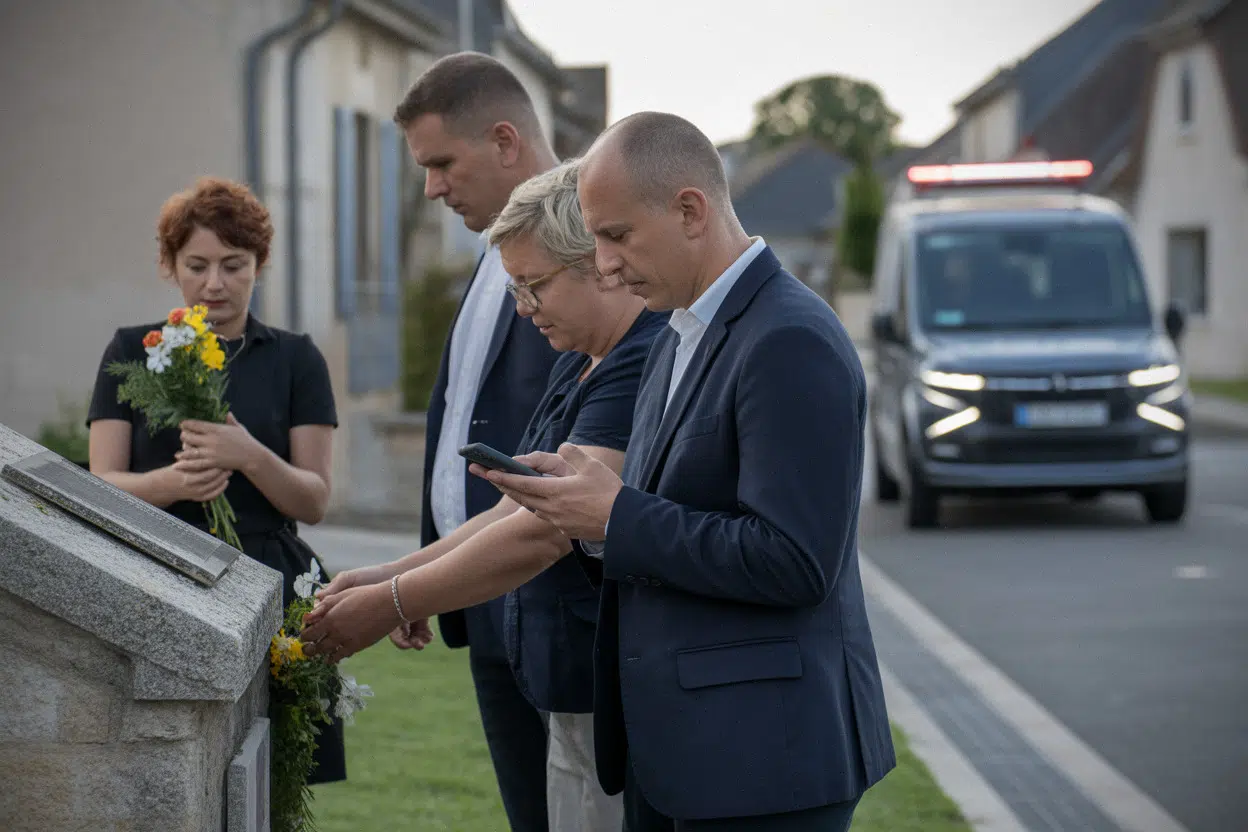
Local memory in Deyvillers, from liberation to commemorations
In Deyvillers, municipal life is often read against a backdrop of local memory attentive to dates and stories. Like many towns in the Vosges, the community’s history is marked by World War II, including references to the Liberation and events in the fall of 1944—a period recalled in regional press coverage.
Those reminders shape how residents think about service, the nation, and passing history down—through family stories as much as through official ceremonies. Commemorations are not just protocol: they bring together schools, veterans’ associations, elected officials, and residents, creating intergenerational meeting points.
In that context, the retirement of someone tied to the Armed Forces Ministry can carry symbolic weight, fitting into a longer continuum of relationships between civilians, defense institutions, and national memory. Defense in local communities is not only about units on the ground, but also about civil servants and staff who carry out long-term missions.
Regional journalism also serves as an archive. By documenting anniversaries, ceremonies, obituaries, and everyday municipal life, it helps build a shared narrative. Precise dates, places, and names allow residents to situate personal histories within a wider frame—something especially strong in the Vosges, where villages and wartime routes remain part of a living memory landscape.
Many towns try to involve residents in remembrance through exhibits, readings, wreath-laying, and educational walks. Family testimonies—diaries, letters, photos—still circulate and feed local initiatives. That attention to traces reinforces the idea that commitment, military or civilian, is often measured over a lifetime through steadiness and responsibility rather than media visibility.
After a career, local government and civic groups become the next anchors
In Deyvillers, retirement is not only an individual step; it interacts with the local fabric of associations, events, and mutual aid that offers ways to stay engaged. The town, in France’s Vosges department within the Grand Est region, is shaped by everyday municipal services—planning, schools, facilities—and regular gatherings where residents reconnect. For new retirees, those spaces often become supports for maintaining a social rhythm.
The shift into retirement brings concrete changes: more free time, budget adjustments, health considerations, and sometimes caregiving for relatives. Towns, for their part, often see residents looking to get involved but seeking flexible formats—occasional volunteering, joining a committee, helping at events.
People coming from administrations like the Armed Forces Ministry can bring skills in organization, management, and procedural discipline that can help associations—without necessarily reproducing a hierarchical workplace culture.
Access to information also matters. Seniors and younger retirees increasingly use digital channels—official websites, online municipal bulletins, mutual-aid platforms—while some residents remain attached to paper and local notices. Department-level services aimed at seniors, including in-person help desks and social services, reflect that mix of habits. In areas where travel can be limiting, access to transportation, health care, and administrative services strongly shapes quality of life after work ends.
Finally, life transitions can reactivate community ties. Local pages—including obituaries—underscore the fragility of life paths and the importance of neighborly solidarity. In that setting, a retirement is also a moment when networks are reshaped: one collective workplace is left behind, and others are joined. For a town, those passages can strengthen continuity—so long as meeting spaces exist and local initiatives remain accessible across generations.
Key takeaways
- Isabelle Limonier is retiring after a career with France’s Ministry of the Armed Forces.
- The news has been noted in Deyvillers as a marker of local life, according to Vosges Matin.
- The ministry includes many civilian roles that are often invisible to the public.
- Deyvillers’ civic memory—especially tied to the Liberation of 1944—continues to shape local commemorations.
- Retirement often opens a new chapter of involvement in municipal and association life.
Sources
https://www.europe-infos.fr/actualites/9908/article-1583-offre-dachat-acceptee-vente-deja-parfaite-sans-notaire-ce-que-vendeurs-et-acheteurs-risquent-en-cas-de-rupture-inattendue/
Key Takeaways
- Isabelle Limonier is retiring after a career at the Ministry of the Armed Forces.
- Her departure is noted in Deyvillers as a local milestone.
- Jobs at the ministry include many civilian roles that are often little known.
- Local collective memory, tied in particular to the 1944 Liberation, shapes commemorations.
- Retirement often opens up a new role in community and municipal organizations.