

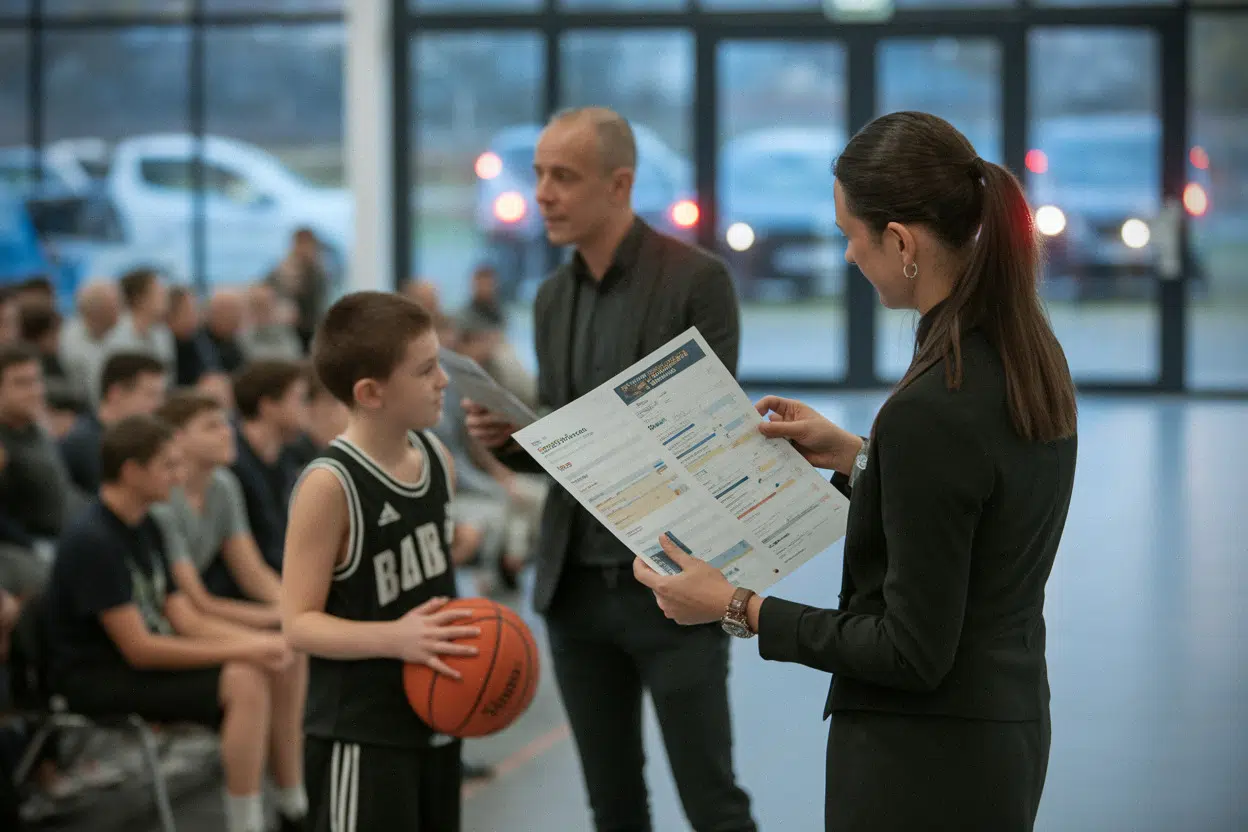
BORDÈRES-SUR-L’ÉCHEZ, France — In the multipurpose Roger-Paul hall, the amateur JAB Basket club gathered players, parents and local partners for its traditional end-of-season general assembly, laying out a 2026 snapshot that mixed pride in its people with a blunt look at tightening finances.
Club leaders described an organization held together by daily logistics—training schedules, game-day staffing, travel and equipment—while emphasizing a single guiding idea: continuity. The priorities, they said, are training and long-term financial stability at a moment when costs tied to travel, gear and energy are weighing more heavily on local sports associations.
A packed Roger-Paul hall doubles as a health check for the club
The Roger-Paul hall—JAB Basket’s regular home venue—hosted a well-attended meeting, with the bleachers filled. For an amateur club, leaders framed that turnout as more than enthusiasm; it’s an internal barometer of the organization’s health, because family involvement and volunteer support can matter as much as wins and losses in getting through a full season.
The agenda followed a familiar structure: a moral report, sport-by-sport-category reviews, an update on officiating, then the financial picture. Organizers also pointed to the role of the town of Bordères-sur-l’Échez and the importance of securing practice time in a heavily used facility—an issue that can directly shape training quality and whether younger players stick with basketball amid competition from other after-school activities.
Leaders used the meeting to spotlight the human machinery behind the scenes: coaching, the scorer’s table, concessions, transportation and jersey management. They stressed the need for steady communication between coaches and parents to manage packed weekends, tournaments and school-break periods when rosters fluctuate—work that often goes unseen but determines whether home games run smoothly.
Looking ahead, the club laid out practical next-season goals: strengthen the welcome for beginners, maintain a development pathway for teenagers, and lock down key organizational roles. The message was straightforward—category managers, an officiating point person and administrative support are specific jobs assigned to specific people, and without them the club can quickly grind to a halt.
Beyond the numbers, the assembly served as a rallying point to thank regular contributors and remind families that stability in an amateur club comes from accumulated, concrete help: showing up for duty shifts, getting kids to games, and pitching in at events. In Bordères-sur-l’Échez, the Roger-Paul hall remains the symbol of that local sports life—basketball exists because a group of people keeps giving time every week.
https://www.europe-infos.fr/actualites/10088/seo-en-2026-zero-clic-resumes-ia-et-extraits-enrichis-les-nouvelles-regles-de-visibilite-que-personne-nattendait/
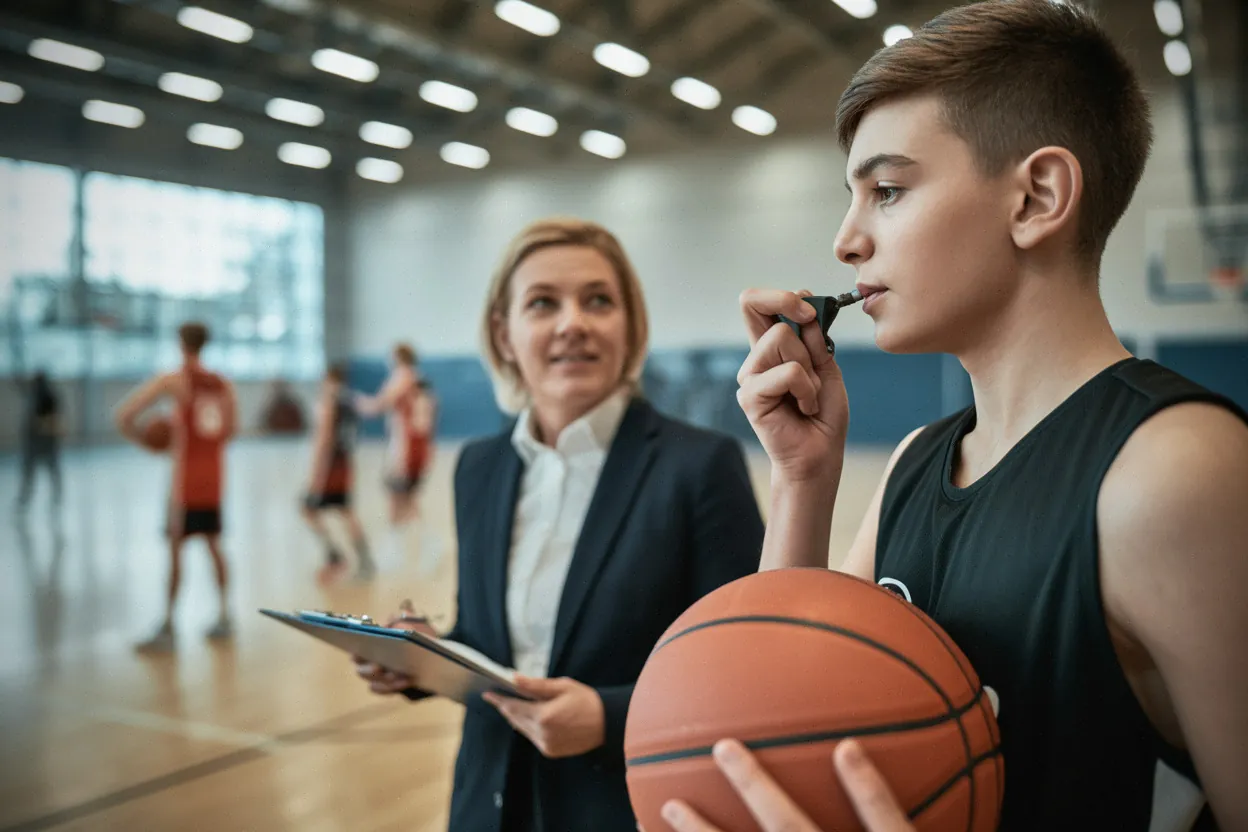
Naïs and Tom represent the club’s next generation of referees
The club highlighted the training and involvement of young referees, including Naïs and Tom, presented as faces of that next wave. In amateur basketball, officiating is a practical pressure point: without trained referees, games can be rescheduled, tensions rise, and the player experience suffers.
Leaders emphasized that learning to referee goes beyond memorizing rules. It includes managing tempo, communicating clearly, holding posture under disagreement, and working as a two-person crew—often while officiating adults who may have uneven knowledge of the rulebook. The club said keeping teenagers on the whistle requires real support: mentoring, debriefs and a designated reference person to prevent drop-off after a few difficult outings.
The club also pointed to the role of families, citing the involvement of mothers—team officials and close-at-hand supporters—as part of keeping that pipeline going. The dynamic is familiar in community sports: the teen referee makes time on weekends, families handle transportation, and the club provides structure. When that network holds, it becomes a durable resource; when it weakens, clubs quickly feel the strain in assigning officials.
On the court, trained referees also raise the quality of home games by reducing situations where officiating is improvised at the last minute—sometimes handed to a willing parent, with a higher risk of disputes. JAB Basket framed referee development as a priority on par with player development, arguing that the game-day experience depends on the balance of training, officiating and organization—not just the final score.
In Bordères-sur-l’Échez, publicly recognizing young referees is also a signal inward: the club wants to spark vocations and show the role is valued. The stated goal is to secure every competition weekend while giving young people a responsibility-building learning track—making officiating less something the club endures and more something members choose.
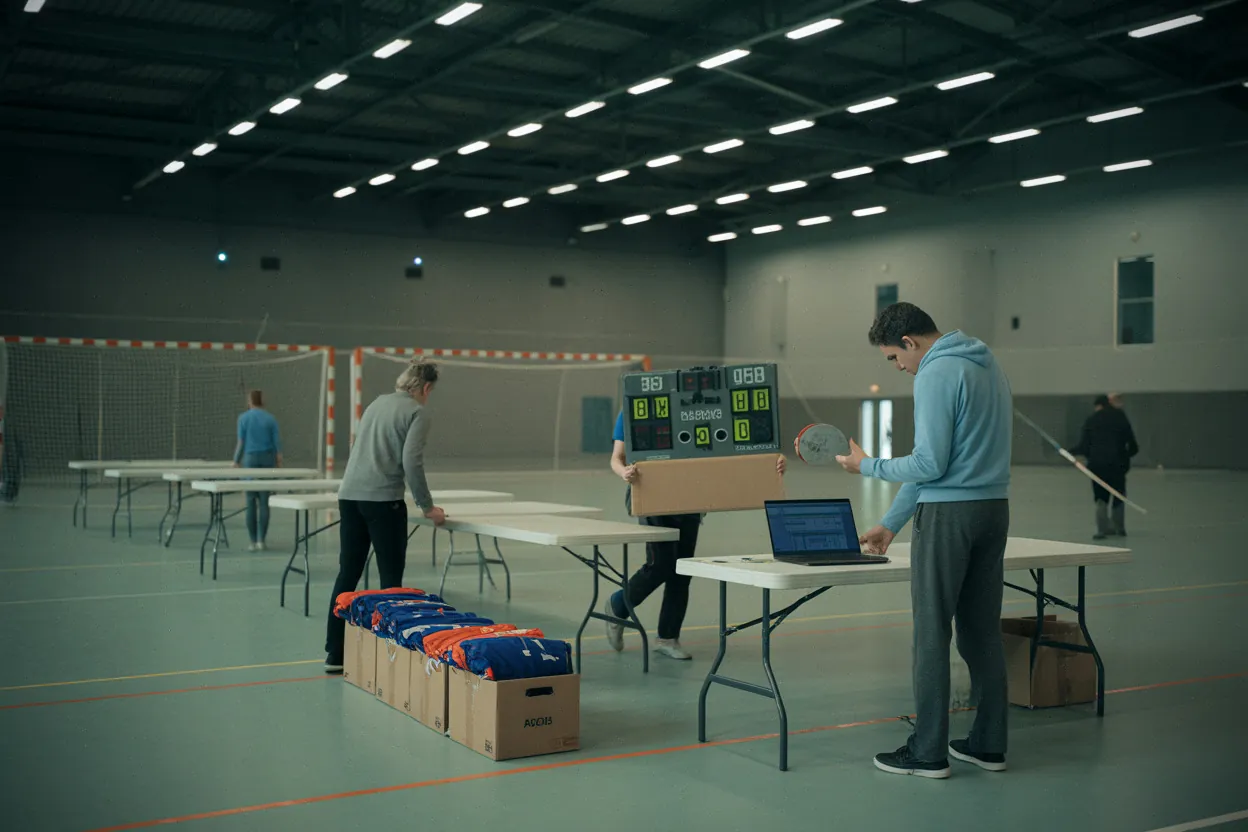
The phrase “unwavering investment” summed up a club that runs largely on volunteer labor. At JAB Basket, the task list discussed at the assembly sounded like a small event operation: staffing the scorer’s table, setting up the gym, welcoming visiting teams, coordinating concessions, managing game sheets, and washing and redistributing uniforms. Each home game requires a minimum crew, and every absence is felt immediately.
Travel is another major lift. Amateur basketball schedules mean regular trips—sometimes Saturdays, sometimes Sundays, with shifting start times. For families, that translates into carpools, availability and sibling logistics. For the club, it means anticipating call-ups, avoiding too few vehicles, and limiting late cancellations that hurt the team and the club’s reputation with opponents and league officials.
Club leaders urged a wider sharing of the workload, encouraging new parents to take on occasional assignments. The challenge, they said, isn’t just recruiting volunteers—it’s keeping them. Fatigue, work constraints, kids’ injuries and schedule changes can break continuity, so stable clubs rotate duties and document tasks so know-how doesn’t live in the heads of one or two people.
JAB Basket also stressed that club life extends beyond games. The Roger-Paul hall hosts social events that both raise money and build identity—tournaments, bingo nights and concession stands. Those gatherings support the club’s cash flow and serve a social role in town by creating an intergenerational meeting place, a point the club said matters in conversations with partners.
Day-to-day operations also include administrative responsibilities—registrations, licenses, medical certificates, relationships with the league and committee, and insurance. Less visible but demanding, those tasks require rigor and continuity because they determine player eligibility and compliance. In Bordères-sur-l’Échez, the club described volunteer mobilization as its main form of capital, and said the goal is to protect that human resource so the sport doesn’t depend on too small a handful of people.
The 2026 budget relies on dues, public support, and event revenue as costs climb
The financial segment was presented as a balance point that needs close monitoring. Like many amateur clubs, JAB Basket said its budget typically rests on three pillars: membership dues, public aid and event revenue. Leaders warned that costs are rising—fuel, officiating, equipment, basketballs, first-aid kits and maintenance—and that even small increases can quickly hit cash reserves.
At the same time, the club said it wants to keep basketball accessible rather than automatically passing every increase on to families. Event income—such as the “vide-greniers,” a community rummage sale held in the Roger-Paul hall—was described as a key source of funds. These events require heavy volunteer staffing but can finance concrete needs like replacing uniforms, buying training gear, covering tournament participation or helping with exceptional travel.
The club also emphasized relationships with private partners—local tradespeople, businesses and shops—who often support the program through signage or targeted contributions. With budgets under pressure, leaders said sponsorship requires a structured approach: a clear proposal, reasonable benefits and consistent communication. They argued that stable partnerships depend on ongoing relationships and a serious image—another reason smooth operations at games and events matter.
Public support—from the town and other programs—remains essential to maintaining participation levels, the club said. In smaller communities, access to facilities, the cost of using gyms, and partial coverage of certain expenses can be decisive. JAB Basket noted that those supports depend on local budget choices, and that demonstrating social value—youth supervision, inclusion and community activity—can influence decisions.
For the coming season, the club’s stated line is pragmatic: hold the budget without shrinking the sports offering, and invest where the impact is immediate—training, safety and supervision. Leaders described 2026 finances as constant adjustment, warning that a single unexpected bill or a drop in event participation can show up fast in a fragile treasury, and saying they want to avoid abrupt decisions that could weaken family engagement.
Key takeaways
- JAB Basket brought members and families together at the Roger-Paul hall for its 2026 season review.
- Referee training—highlighting Naïs and Tom—was presented as central to continuity.
- The club depends on steady volunteer labor for game operations, travel and hosting.
- The budget blends dues, public aid and event revenue, including a rummage sale at Roger-Paul.
- The club says its priority is keeping basketball accessible while controlling rising costs.
Sources
Key Takeaways
- JAB Basket brought together members and families at the Roger-Paul gym for its 2026 review.
- Referee training, with Naïs and Tom, is highlighted as a key driver of continuity.
- The club relies on steady volunteer support for the scorer’s table, travel, and hosting.
- The budget combines membership dues, financial aid, and event revenue such as the community yard sale.
- The stated priority is to keep basketball accessible while keeping costs under control.