

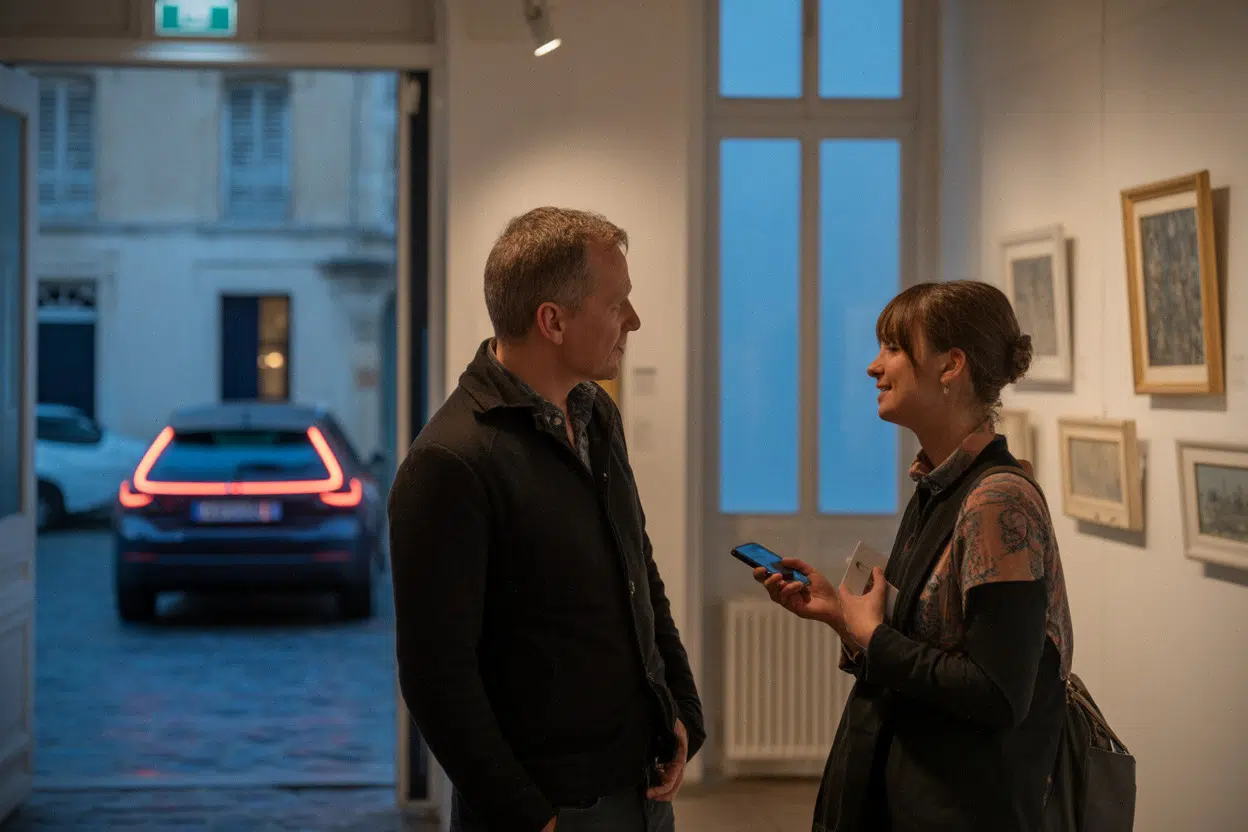
In the French seaside town of Mesquer, a small heritage venue is drawing big summer crowds with a simple pitch: one group show, six artists, six visual worlds.
The exhibition is on view at the Maison du patrimoine, a municipal “heritage house” that functions less like a commercial gallery and more like a public-facing cultural space rooted in local history. In July, as vacationers swell the population along France’s Atlantic coast, the show has become a go-to indoor break from beaches, markets, and walks through the surrounding wetlands.
Organizers are leaning into variety—moving from figurative work to abstraction and mixing techniques—while keeping the experience approachable for tourists and year-round residents alike in this Loire-Atlantique community near Saint-Nazaire.
A heritage venue that anchors Mesquer’s summer cultural calendar
The Maison du patrimoine holds a distinctive place in Mesquer’s cultural life. Unlike a commercial gallery, it’s built around public access and interpretation, with temporary exhibitions designed to fit a historic setting. That role becomes most visible in summer, when demand for cultural activities rises beyond the area’s outdoor staples.
A group show helps the venue reach different audiences at once. A solo exhibition can cater to dedicated art lovers, but a mix of styles encourages browsing, comparison, and curiosity—especially among vacationing families and casual visitors.
The local setting matters, too. Travel guides describe Mesquer—set between marshes, estuaries, and the Atlantic shoreline—as a Pays de la Loire destination known for coastal activities, including oyster and mussel farming. Many visitors come for the port, trails, views, and sea air; a centrally located exhibition can nudge people to slow down and step inside after time on the dunes or in the marshes.
For organizers, the balancing act is accessibility without lowering standards. A heritage site can reassure visitors, but it also brings constraints—lighting, circulation, hanging systems, and protection of the space—that shape curatorial choices. A successful summer program often comes down to clear formats, straightforward interpretation, and visitor-friendly hours, while still presenting the work with enough care to feel credible to both locals and passersby.
In that context, “six artists, six worlds” serves as a showcase: a way to reinforce the Maison du patrimoine as a stable cultural stop that can refresh its offerings, and to support a broader coastal push to make summer feel like more than beach consumption.
https://www.europe-infos.fr/actualites/10097/2026-5-hectares-de-parc-visites-culture-et-chantiers-au-chateau-du-thiolent-comment-lasso-veut-louvrir-au-public/
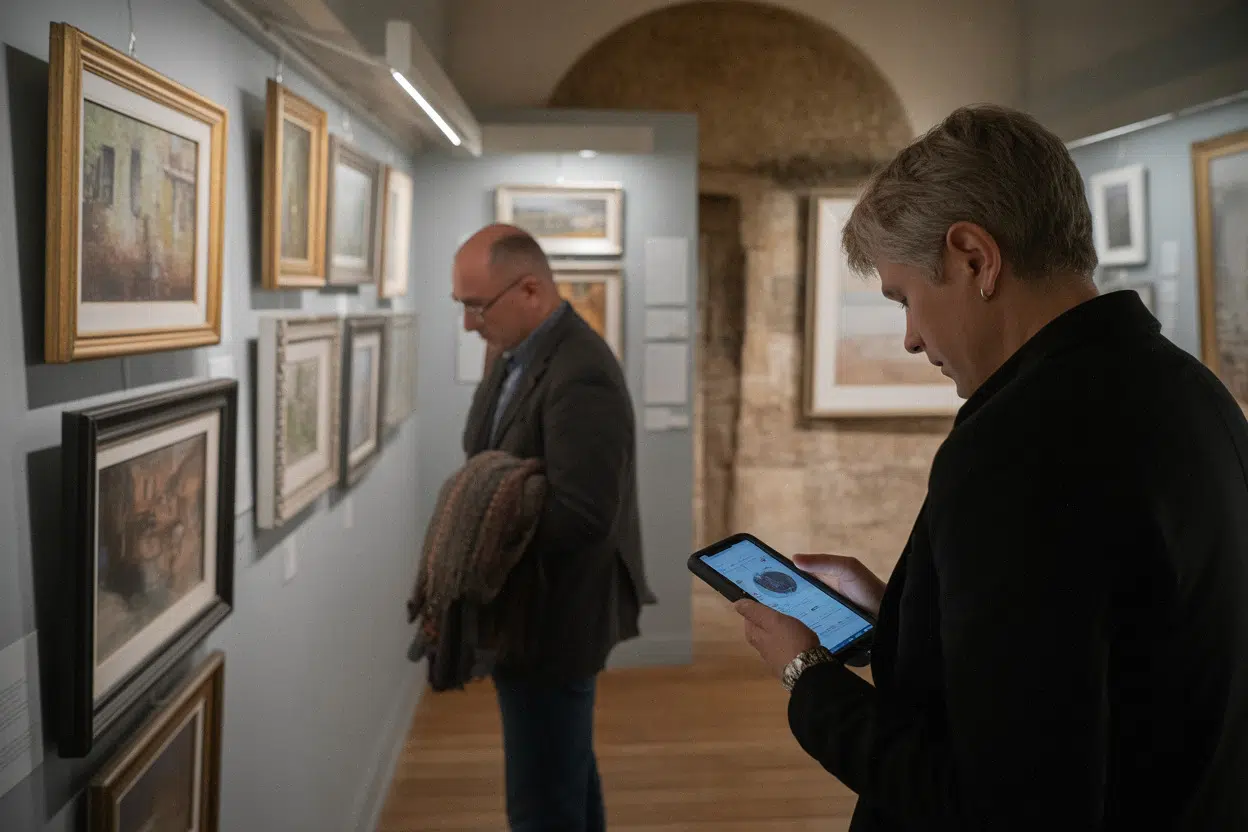
Six artists, six approaches—without forcing a single theme
The exhibition’s throughline is deliberately straightforward: bring together six artists and present six distinct visual universes without trying to smooth out their differences. Visitors move room to room like flipping through a travel sketchbook, with sharp shifts in style, scale, and material.
Group exhibitions can risk feeling scattered, but organizers aim to avoid a “catalog” effect by building visual connections. Recurring motifs—sea and marsh landscapes, shifting light, port silhouettes—sit alongside more intimate subjects such as objects, faces, and everyday scenes. Even when the work doesn’t explicitly depict the area, the coastal imagination shows up in palettes, textures, and approaches to transparency and vibration.
The range of techniques is part of the draw: painting, drawing, printmaking, collage, and photography. A large canvas can hit with immediate impact, while a series of smaller pieces slows the pace and pulls viewers in close. Summer audiences—often families—tend to appreciate concrete anchors like titles, series groupings, and clear formats.
The article notes that when artists are present for scheduled hours or informal meet-and-greets, interest rises because visitors can connect the finished work to the maker’s process and choices.
The show also reflects a practical reality of tourist towns: there’s demand for affordable works, easy-to-carry formats, one-of-a-kind pieces, or limited editions. While a municipal heritage venue isn’t primarily a sales floor, exhibitions can still spark contacts, commissions, and workshop sign-ups—visibility that can matter for artists’ year-round stability.
Quimiac and Kercabellec visitors mix with locals inside the gallery
Attendance at a summer exhibition in Mesquer depends heavily on who’s in town: year-round residents, second-home owners, and tourists. The nearby areas of Quimiac and Kercabellec concentrate much of the vacation life, with beaches, small roads, and access to ports. Rental platforms and travel guides frame the area as family-friendly, with easy bike routes and plenty of outdoor activities—making an indoor exhibition a natural add-on during windy or rainy days, or when visitors want a cultural pause.
The visitor mix is often striking. Art enthusiasts come to compare approaches across multiple artists. Families may move faster, gravitating toward color and recognizable subjects. Locals sometimes show up to see what’s happening, run into neighbors, and support a homegrown cultural calendar.
That social dimension matters: a small-town exhibition can become a meeting point, with conversations in front of the work, recommendations, and talk about other cultural events along the coast.
For the town, the payoff is twofold. The event adds to overall summer appeal alongside markets, local festivals, and water sports. And it strengthens the identity of the town center beyond peak season. Heritage sites can carry a “frozen in the past” image; hosting contemporary creation offers a counterpoint and signals that local memory can coexist with current artistic practice.
Mesquer’s natural setting—marshes, estuaries, and shoreline—also shapes expectations. Visitors often arrive wanting to see the sea. The exhibition doesn’t need to function as a postcard album, but the article suggests it benefits from acknowledging that desire for place. Works that engage with light, horizons, and mineral or plant textures tend to resonate quickly; more distant approaches may land better with clear wall labels or explanations of intent.
Success here isn’t typically measured through detailed public figures, the article notes, but through visible signals: comments in a guestbook, information requests, repeat visits with friends or family, and exchanges with artists when they’re on site.
A small exhibition with an outsized role in the coastal summer economy
The article frames a local exhibition as more than “culture” in the narrow sense. It also plugs into a coastal economy built on restaurants, retail, lodging, and services. Towns along the shore try to lengthen stays and diversify activities because weather and crowd surges can make a beach-only offering feel insufficient.
A show at the Maison du patrimoine fits that strategy as a low-impact activity that works with walking and biking—an easy addition to a day’s itinerary.
The “six artists” structure also has a practical advantage: it reaches multiple networks at once—friends of the artists, associations, studio communities, collectors who follow a name, and tourists who stop in because they recognize a technique. That helps information spread organically through word of mouth, local posters, and municipal channels. In places where local media plays an outsized role, coverage can reinforce a narrative of a lively town with a structured cultural program and attention to residents.
Funding sits in the background. Municipal venues often rely on a mix of support: providing the space, logistics, communications, and sometimes insurance or staffing, alongside artists’ involvement in installation and on-site presence. The economic return is hard to quantify precisely, but the article argues the effect shows up in image and nearby commerce—an exhibition visit that turns into a coffee stop, a market purchase, or a browse in a craft shop.
At the same time, cultural programming has to navigate competing expectations: some visitors want a highly guided, educational experience; others prefer to look freely without heavy interpretation. Artists want autonomy. The venue’s job is to ensure a high-quality hang, a coherent route, and basic tools for reading the work—titles, short texts, simple plans—without turning the show into a lecture.
In Mesquer, the maritime identity and marsh landscapes provide a natural backdrop that feeds curiosity. The group exhibition draws on that context without being limited by it, offering a calm pause in the summer rush—and reinforcing the idea that a tourist destination can also be a place where contemporary creation is visible, varied, and locally rooted.
Key takeaways
- Mesquer’s Maison du patrimoine is hosting a summer group exhibition bringing together six artists.
- The show emphasizes variety—different techniques and distinct visual “worlds,” from figurative work to abstraction.
- Visitors include locals, second-home owners, and vacationers from Quimiac and Kercabellec.
- The event supports both summer tourism appeal and the town’s year-round cultural identity.
Sources
Key Takeaways
- The Mesquer Heritage House is hosting an exhibition bringing together six artists.
- The exhibition highlights a diversity of techniques and visual worlds.
- The audience includes locals, second-home owners, and vacationers from Quimiac and Kercabellec.
- The event contributes to summer appeal and local cultural life.