

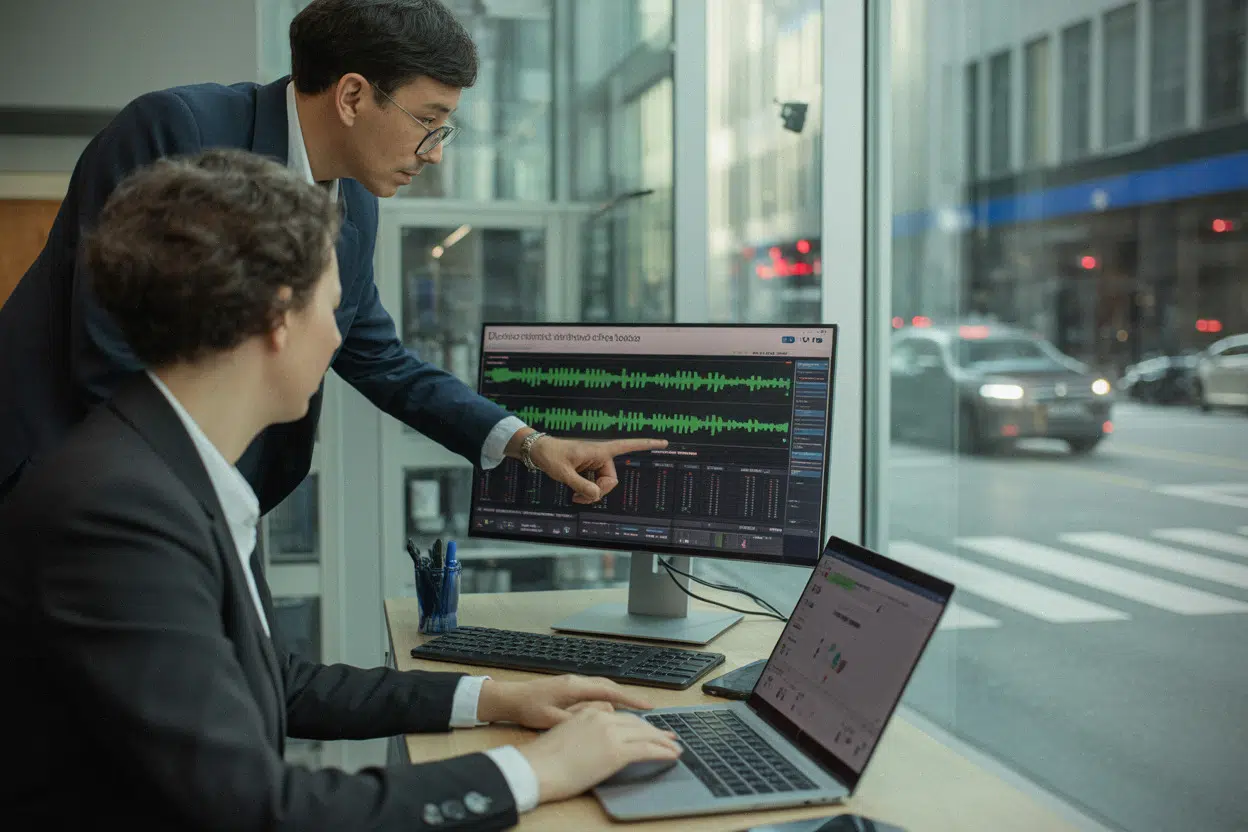
SOCAN, the Canadian organization that collects and distributes royalties to music creators, is ramping up its anti-fraud efforts in 2026 as AI-generated and AI-manipulated tracks flood digital distribution channels.
The group says it is seeing more reports tied to misleading metadata, impersonated artist identities, and attempts to collect royalties for works with disputed authorship. With digital distribution making it possible to publish songs in minutes, SOCAN says mass-produced catalogs created with generative AI are making oversight harder and disputes faster.
SOCAN targets suspicious registrations and manipulated metadata
SOCAN’s first line of defense is the moment a work enters the royalty-collection system. The organization says identification is the core issue: a track registered with false metadata, a pseudonym that closely resembles a real artist, or inconsistent split information can be enough to send royalties to the wrong place.
In an automated ecosystem, SOCAN warns, a mistake—or a fraud—can spread quickly as it gets replicated across distributors’ databases, streaming platforms, and sister collecting societies internationally.
Reported tactics span several scenarios. Some operators register very large volumes of short tracks—sometimes nearly identical—aiming to capture a share of streaming-driven revenue flows. Others mimic an artist’s name and visual identity to create confusion and benefit from accidental plays. SOCAN notes that generative AI can now produce convincing packaging—cover art, titles, descriptions, even biographies—making surface-level checks less effective.
In response, SOCAN says it is strengthening verification around signals it considers atypical: mass registrations, frequent changes in rights holders, contact details that overlap across multiple entities, or splits that concentrate most rights in an opaque structure. In problematic cases, SOCAN can temporarily freeze payments, request supporting documentation, or launch deeper analysis before distributing royalties—steps meant to prevent money from being paid out and then becoming unrecoverable if a recipient disappears.
The tougher posture can also create friction with legitimate creators, especially those who release music frequently, such as producers of background or production music. SOCAN says the challenge is filtering better without slowing real creative output, refining criteria that combine administrative checks with technical signals to distinguish professional high-volume work from automated output aimed primarily at financial optimization.
https://www.europe-infos.fr/actualites/10165/rachat-de-credit-immobilier-et-consommation-ce-quil-faut-verifier-avant-de-signer/
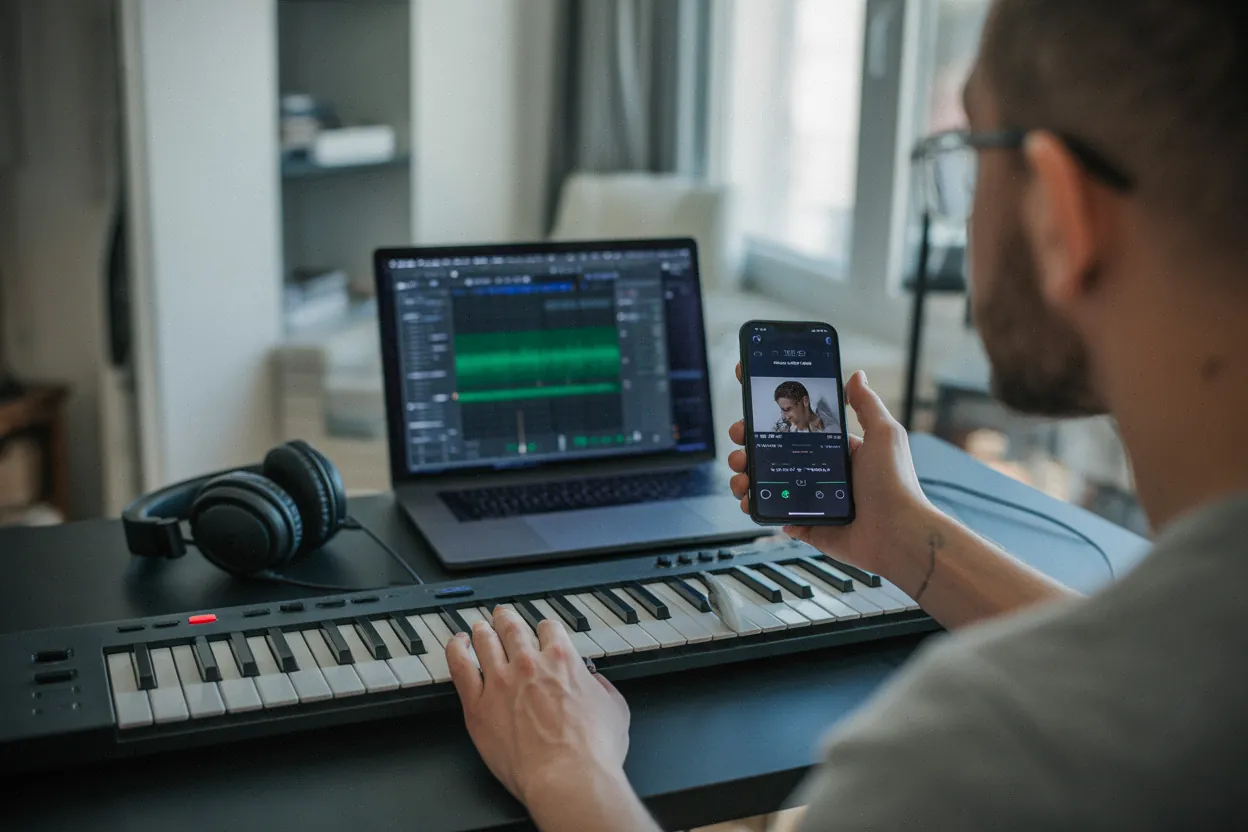
Streaming platforms become a key choke point for blocking royalty fraud
SOCAN’s ability to act depends in part on cooperation from platforms and distributors. Most listening happens on services that aggregate millions of tracks, and collecting societies rely on usage reports from those companies to calculate payouts. When a fraudulent track goes live, SOCAN says it can generate tiny amounts of revenue spread across a large volume—an incentive that keeps fraud attractive.
That makes platforms a critical filter, SOCAN argues—especially for verifying who is uploading, controlling duplicate content, and detecting artificial listening. Fraudsters sometimes pair AI-generated content with “listening farms” to inflate numbers. In those cases, SOCAN says the issue extends beyond copyright to the integrity of the metrics used to pay creators, with each statistical anomaly turning into a potential dispute and administrative burden.
The fight also hinges on faster takedown procedures. When a creator says a track uses their voice, style, or a preexisting work without authorization, a quick removal can limit harm and reduce the distribution of contested royalties. But takedowns raise another risk: wrongly removing lawful content. SOCAN notes that platforms are increasingly demanding proof, which can slow timelines and discourage some rights holders—especially independent creators.
Operationally, SOCAN says it is trying to streamline information-sharing so alerts can be correlated more quickly—for example, matching a suspicious registration with a recent upload, identity-impersonation reports, and a history of metadata changes. Platforms often have internal recognition and similarity-analysis tools that can support investigations, SOCAN says, but priorities can clash as services balance fast publishing against tighter controls.
The dynamic is reshaping leverage in the music ecosystem. Platforms, as the gatekeepers to audiences, sit at the center of decisions about innovation versus protection. Collecting societies, SOCAN says, want to prevent AI music from becoming a mass entry point for content with uncertain ownership—an outcome that could erode member trust and the quality of royalty distribution.

Beyond fraudulent registrations, SOCAN points to a growing problem: impersonation of artistic identity, especially voice replication. Tools that can mimic a vocal timbre or performance style have lowered the technical barrier, SOCAN says. A song can circulate with a fake “featuring” credit, or a viral clip can be attributed to a well-known artist even though it is fabricated.
For rights holders, SOCAN says, the harm goes beyond lost royalties to reputation, audience relationships, and sometimes contracts.
Legally, SOCAN notes, proof can be more complicated. Copyright traditionally covers the work—lyrics, music, arrangement—more than “style.” When AI produces a track in the spirit of an artist without copying an identifiable melody, classification becomes harder. Disputes may shift to other grounds, including neighboring rights, rights to image or voice, unfair competition, or contract clauses. SOCAN, as a royalty-collection organization, does not decide those conflicts on its own, but it can end up on the front line when it comes to suspending or correcting a distribution.
In practice, SOCAN says cases often rely on a body of clues. Creators compare harmonic structures, progressions, rhythmic patterns, or sonic signatures, then look for traces of a source. Specialists may also use spectral analysis to spot generation artifacts or acoustic inconsistencies. But SOCAN cautions that these methods do not always produce certainty that can be used decisively—especially as AI tools evolve quickly and fraudsters learn to smooth out defects.
That makes authorization central. SOCAN notes that an artist may agree—under a specific contract—to train a model on their voice, making some uses lawful. Problems arise when permission is missing, vague, or overtaken by secondary uses. SOCAN says that for collecting societies and members, that reality increases pressure to clarify licensing clauses and define what is allowed, such as studio use, advertising use, or large-scale generation to feed catalogs.
In that context, SOCAN says traceability matters: the more creation and exploitation details are documented, the easier it is to correct payment errors and limit improper appropriation. The fight often turns on concrete details—who registered the track, when, with what information, and who gets paid—giving investigations an administrative dimension as well as a technical one.
Audio detection and internal audits: SOCAN adjusts its methods in 2026
To respond to the rise in disputed content, SOCAN says it is adjusting its control methods in 2026 with a focus on better tools—strengthening detection and investigative capacity without destabilizing routine royalty distribution. That includes more frequent internal audits for certain categories of registrations and prioritizing reports seen as high financial impact, such as content that quickly captures large listening volumes.
Technology is playing a bigger role. SOCAN points to audio-comparison systems that can flag similarities between tracks, helping identify duplicates, minor variations, or disguised re-releases. Other tools focus on acoustic fingerprints that can indicate an excerpt comes from an earlier recording even after modifications. SOCAN says these techniques do not solve everything—AI can generate music “from scratch” without direct copying—but they remain useful against opportunistic fraud and reuploads.
SOCAN also leans on behavioral signals. A network that publishes hundreds of tracks with the same metadata patterns, the same durations, the same credit structures, and only minimal variations can become identifiable over time, SOCAN says. Audits can lead to requests for justification or payment suspensions. Controls also look at financial movement—when royalties quickly concentrate in a small number of accounts, or when rights-holder changes appear shortly before a payout.
At the same time, SOCAN says it must preserve member trust. A songwriter using assistive tools—such as demo generators or composition-help plugins—does not want to be treated like a fraudster. The line between creative assistance and automated production designed to capture revenue remains sensitive. SOCAN is under pressure to communicate its criteria while keeping some confidentiality so it does not hand fraudsters exact thresholds and signals.
SOCAN frames the crackdown within a broader reality: music, more than many sectors, lends itself to high-volume production. Upload costs are low, tracks can be very short, and the business model runs on streams. As long as the gap between production effort and potential payout remains, SOCAN says, the pressure will stay high—meaning the response will have to evolve over time through technology, documentation checks, and platform cooperation as fraud tactics adapt.
Key takeaways
- SOCAN is strengthening checks in 2026 on suspicious registrations and questionable metadata.
- Streaming platforms are becoming a central choke point for blocking royalty fraud.
- AI voice impersonation is complicating proof and multiplying disputes.
- Audits, payment freezes, and audio-detection tools are shaping SOCAN’s response.
Sources
Key Takeaways
- In 2026, SOCAN is tightening its checks on submissions and suspicious metadata.
- Streaming platforms are becoming a central choke point in the fight against royalty fraud.
- AI voice impersonation makes proof harder and increases the number of disputes.
- Audits, payment freezes, and audio detection tools are shaping the response.