

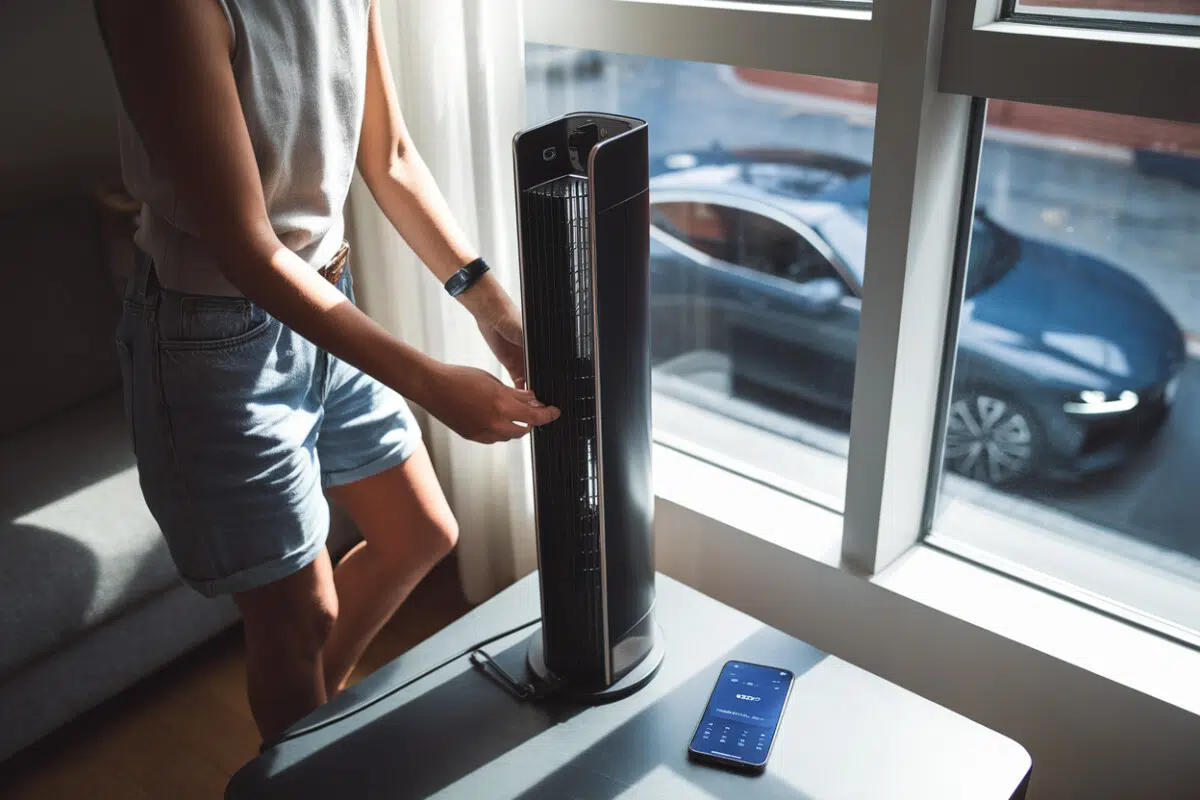
As heat waves push temperatures higher, shoppers are hunting for fast relief that doesn’t involve installing an expensive air conditioner. On Amazon, one product keeps surfacing at the top of searches and shopping lists: the Dreo Nomad One tower fan, marketed as slim, quiet, and strong enough for a bedroom or living room.
The big selling point isn’t just the tall, space-saving design, it’s the sheer volume of customer feedback. Across Dreo’s best-selling fan listings, some models rack up more than 50,000 reviews and average around 4.6 out of 5 stars, a standout rating in a category where “good enough” often wins. Add limited-time discounts, and the fan’s popularity has surged.
Amazon’s deal machine is pushing the Dreo Nomad One during the heat
Dreo has become highly visible in Amazon’s cooling aisle, with product pages showing heavy monthly sales. Some listings display badges like “5K+ bought” in the past month, an indicator of how quickly these fans move when the forecast turns brutal and people want something that can arrive in a day or two.
In recent shopping roundups, the Nomad One is framed as the practical middle ground: more convenient than a bulky portable AC unit, and often cheaper upfront. That matters because portable air conditioners can cool a room, but they also cost more, take up floor space, and typically require venting through a window.
Pricing is part of the momentum. Dreo tower fans are often listed around $99.99, but limited-time deals have dropped some models to roughly $69.96, about $70, making the purchase feel easier to justify when the heat is immediate.
One caveat: Amazon lists multiple Dreo fans, tower fans, air circulators, pedestal models, and review totals vary by exact model. The “50,000 reviews” figure generally reflects Dreo’s biggest best-sellers, not every single unit. For most rushed buyers, though, the checklist is simple: in stock, fast shipping, quiet enough for sleep, and strong enough to feel.
With tens of thousands of reviews, Dreo has become a mainstream best-seller
In the fan market, crossing into the tens of thousands of reviews puts a product in rare territory. One Dreo tower fan listing shows 46,709 reviews with a 4.6/5 average rating, while other Dreo models clear 30,000 reviews.
That volume becomes a shortcut for shoppers making a quick decision during extreme heat. People scan comments for specifics: How loud is it at night? Does it actually help in a closed room? Are the controls easy? Bedroom performance is the make-or-break test, because a powerful fan that keeps you awake isn’t much of an upgrade.
The 4.6-star average suggests broad satisfaction, but the reviews also show predictable friction points. Some buyers call the remote basic. Others complain about a bright display at night. And a recurring theme: unrealistic expectations. A fan moves air; it doesn’t lower the room temperature the way an air conditioner does.
One reviewer described choosing Dreo after comparing “dozens” of listings, prioritizing quiet operation and effective oscillation over raw power. The fan improved comfort in a hot upstairs bedroom, the buyer wrote, but didn’t perform miracles when the outside air stayed hot.
The “20 dB” quiet claim targets sleepers and work-from-home households
Dreo highlights a low-noise mode rated at 20 decibels, an attention-grabber for anyone sensitive to sound. The company ties that claim to a DC motor and multiple settings designed for overnight use, where noise often matters more than maximum airflow.
The pitch also fits the work-from-home reality. A loud fan can be distracting on video calls, especially in smaller apartments where your “office” is also your living room. A tower fan’s slim footprint helps, and running it at a lower setting can reduce the feeling of air blasting directly at your face.
Depending on the model, Dreo advertises multiple speed steps and modes, often 8 speeds and 3 modes on some units, or 9 speeds and 4 modes on others, so users can fine-tune airflow instead of choosing between “off” and “wind tunnel.”
But buyers also point out the fine print: the 20 dB figure typically applies to the lowest setting under ideal testing conditions. In real rooms, especially at higher speeds, the fan becomes more noticeable. One reviewer said it was impressively quiet on the minimum setting, but clearly audible once pushed into the upper speed range.
90° oscillation and 28 ft/s airflow: what that means in a living room
Beyond quiet operation, Dreo emphasizes wide coverage. Some Amazon listings cite 90-degree oscillation and airflow speeds up to 28 feet per second, about 19 miles per hour, aimed at pushing air across a room rather than creating a narrow stream.
In a medium-size living room, oscillation can make the airflow feel more evenly distributed, reducing the “one person gets all the wind” problem. It doesn’t drop the thermostat reading, but it can improve comfort by boosting convection and helping sweat evaporate faster.
Practical features also show up repeatedly in listings, including a remote control and a 12-hour timer. For many households, that’s the difference between falling asleep comfortably and getting up at 2 a.m. to shut the fan off. A timer also helps avoid running it all night once outdoor temperatures finally dip.
Still, reviewers stress the limits. In a sun-baked room with big windows, a fan can’t undo hours of heat buildup if blinds are open all day. The fan works best as part of a broader heat strategy, closing shades early, ventilating at night, and using airflow to make the indoor heat feel less punishing.
How it stacks up against a Rowenta fan or a portable AC
Dreo’s surge comes in a crowded market that includes pedestal fans, tower fans, ceiling fans, and portable air conditioners. French business outlet Capital recently highlighted the Rowenta Turbo Silence pedestal fan at about €89.99 (roughly $97) instead of €99.99 (about $108) on Amazon, an example of the kind of brand-name alternative shoppers compare against.
The choice often comes down to room layout and how you use it. Pedestal fans can deliver a more direct blast of air, useful when you walk in overheated and want immediate relief. Tower fans like the Dreo tend to win on footprint and aesthetics, especially in tighter spaces.
Portable AC units remain the heavy hitter because they can actually lower a room’s temperature. But they bring tradeoffs: higher prices, more noise, more bulk, and the hassle of venting hot air through a window. Many shoppers start with a higher-end fan, then reconsider if the heat becomes a long-term problem.
One final reality check: Amazon pricing moves fast. Deals can disappear, and similar-looking models can have different specs. Buyers who want to avoid regret should confirm the exact model, check return terms, and compare the features that matter most, noise level, timer, oscillation range, and speed settings, rather than relying on a “deal” badge alone.
Key Takeaways
- The Dreo tower fan is being featured on Amazon during heat waves.
- Some Dreo models have over 46,000 reviews and an average rating of around 4.6/5.
- The advertised 20 dB noise level is aimed mainly at bedrooms and working from home.
- 90° oscillation and a 12-hour timer meet practical everyday needs.
- The comparison with Rowenta and a portable AC depends on your budget and your actual cooling goals.
Frequently Asked Questions
Does a Dreo fan cool a room like an air conditioner?
No. A Dreo fan circulates air and makes you feel cooler, but it doesn’t lower the room temperature like an air conditioner. The benefit is immediate comfort, with fewer installation hassles and often simpler day-to-day use.
What does the 20 dB claim mean on a Dreo fan?
The 20 dB figure usually refers to the lowest setting, measured under favorable test conditions. At higher speeds, the perceived noise increases. For nighttime use, the idea is to stick with a gentle, steady setting.
Why do you see “50,000 reviews” for Dreo when some models have fewer?
That number typically refers to the brand’s biggest best-sellers and to product listings that may show different review totals depending on the specific model. Check the review count and rating for the exact model at the time of purchase.
What should you look at before buying a tower fan on sale?
Check the stated noise level, the number of speeds and modes, oscillation, whether it has a timer and remote control, and the return policy. A sale is only a good deal if the fan fits the room and how you’ll use it—daytime or overnight.