

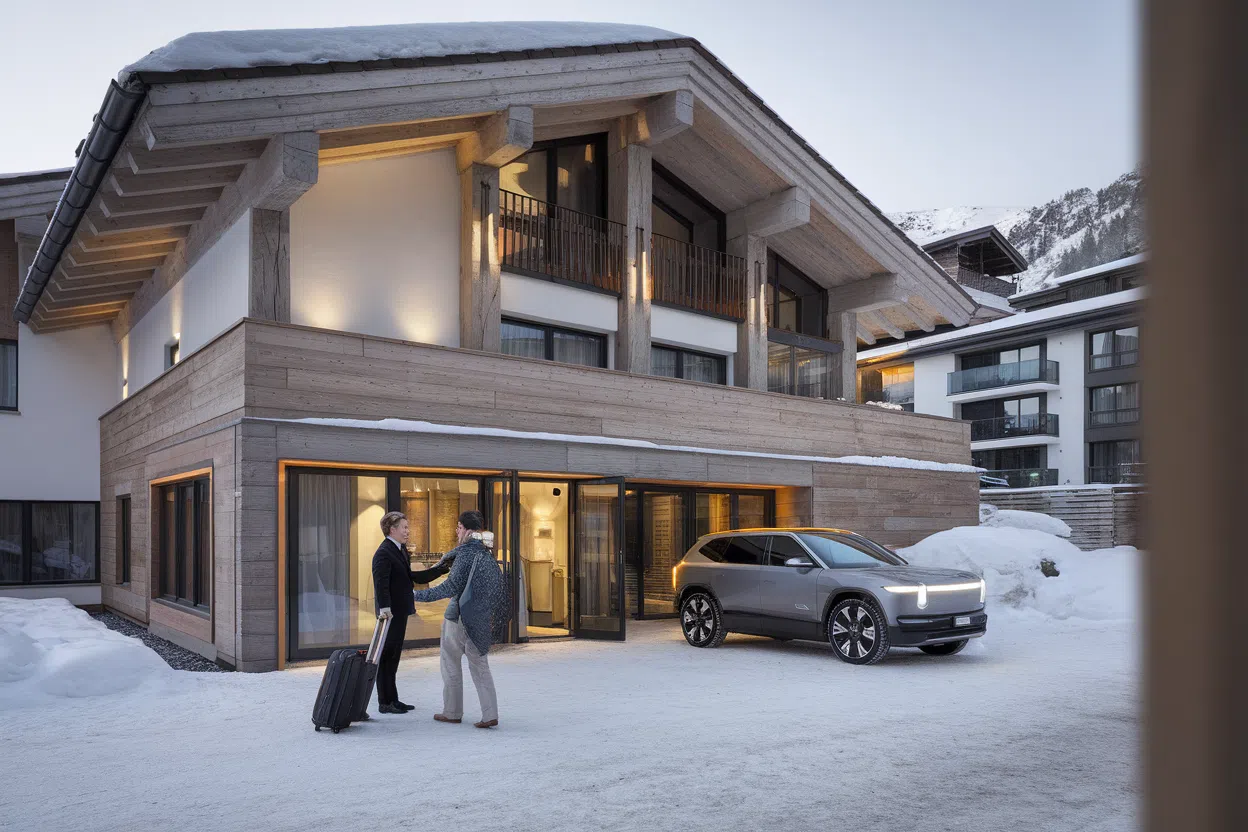
St. Moritz, Switzerland, is the kind of place Americans associate with fur coats, five-star lobbies, and eye-watering room rates. Now a small hotel called Waldhuus Bellary is trying something that feels almost rebellious in this rarefied ski town: keeping a traditional Alpine chalet intact while selling a simpler, “economy” stay.
The pitch is straightforward, skip the excess, protect the architecture, and deliver the basics travelers actually care about. It’s a response to a real shift in mountain tourism across the Alps: more two- and three-night getaways, more pressure on housing for seasonal workers, and a growing slice of visitors who want a clean, well-located room without paying luxury prices that can easily run hundreds of dollars a night.
Industry outlet Hospitality ON flagged the project as a sign of where high-end destinations may be headed. The challenge is threading the needle: preserve the Engadin Valley chalet look, wood, proportions, and a strong connection to the landscape, while running the place efficiently with streamlined check-in, tighter layouts, and only the services guests use.
A renovation-first approach in a town where every square foot matters
Instead of tearing down and building new, Waldhuus Bellary is leaning into renovation, an important signal in St. Moritz, where land is scarce and development is tightly controlled. Reusing an existing building cuts the disruption of heavy construction, reduces the carbon footprint tied to major structural work, and keeps a piece of local identity standing.
But renovating an old chalet isn’t a simple facelift. Modern insulation, updated wiring and plumbing, fire safety rules, and soundproofing can clash with older structures, ceiling heights, window placements, and original beams. The real work is in the details: what you preserve, what you replace, and how you modernize without sanding off the building’s character.
There’s also a financial reality. An economy hotel doesn’t have luxury-level margins to absorb overruns. The strategy is to spend where guests feel it, comfortable beds, quiet rooms, solid bathrooms, and reliable heating, while trimming back on low-value square footage and rarely used amenities.
For a destination like St. Moritz, best known in the U.S. as a playground for Europe’s wealthy and a frequent host of elite winter sports, an accessible product isn’t just a cheaper option. It subtly reshapes who can visit and when, potentially widening the town’s appeal without changing its high-end core.
Short stays are driving demand for simpler, well-run rooms
Mountain travel is increasingly built around quick trips: long weekends, event-driven visits, and fast in-and-out itineraries by train or car. In that world, some travelers would rather spend on lift tickets, gear rentals, and restaurants than on a suite.
“Economy” doesn’t mean low standards. Expectations have shifted toward the fundamentals: dependable Wi-Fi, smooth check-in, a quiet room, smart storage, a strong shower, and good sleep. The model, common in big U.S. cities, has been moving into resort markets, with one key difference: even budget-minded guests still want that “mountain refuge” feel and a sense of place.
Pricing clarity matters, too. Alpine destinations swing wildly between peak season and shoulder season. A well-calibrated economy hotel can act as a pressure valve, an entry point during slower periods, without forcing a race to the bottom on rates.
There’s a practical angle beyond tourism. Event crews, contractors, and local businesses often need rational lodging options. In many resort towns, housing for seasonal workers is tight and expensive; hotels can’t solve that crisis, but they can provide limited relief during high-demand stretches.
Modern Alpine design, without the kitsch
The aesthetic risk is obvious: go too rustic and you end up with a themed set, antlers, faux-vintage props, and “cabin” décor that ages fast. Go too sleek and the place could feel like an airport hotel dropped into the mountains. Hospitality ON describes Waldhuus Bellary’s approach as restrained and contemporary, using materials and textures that still read as Alpine.
In an economy property, design has to work hard. Lighting, room flow, durability, and ease of cleaning matter as much as the look. The “Alpine” cues can be practical, wood tones, warm but simple textiles, a few crafted details, without turning every corner into a postcard.
Comfort is where older buildings often fail first. Guests will accept a smaller room; they won’t forgive noise or cold. That makes soundproofing, window quality, ventilation, and moisture control central to whether a renovation succeeds, especially in a ski town where wet gear and steamy bathrooms are part of daily life.
Common spaces can carry the story without adding a lot of square footage. A lobby, breakfast room, or reading nook can create atmosphere and community, crucial in a place where travelers compare photos and reviews instantly and where reputation travels fast.
A lean operating model built around targeted services
The economy promise lives or dies in operations. That usually means lighter front-desk staffing supported by digital tools for arrival, plus housekeeping schedules built for weekend turnover, an especially intense rhythm in mountain destinations.
Services are meant to be the ones guests actually use: a quick, reliable breakfast; ski storage; clear transit information; and partnerships with rental shops or guides. The luxury becomes functionality, hot water on demand, a place to stash equipment, and a setup that makes it easy to dry clothes after a day outside.
Staffing remains a pressure point across the Alps, where recruiting is complicated by high housing costs. Tech can streamline tasks, but it can’t replace a well-trained team. For a hotel like this, execution is the brand: spotless rooms, fast maintenance, and crystal-clear communication about what’s included, and what isn’t.
If Waldhuus Bellary pulls it off, it could do more than fill rooms. It could broaden who gets to experience St. Moritz, support local restaurants and shops beyond the ultra-luxury circuit, and offer a template for how iconic resort towns modernize without bulldozing the buildings that made them famous in the first place.