

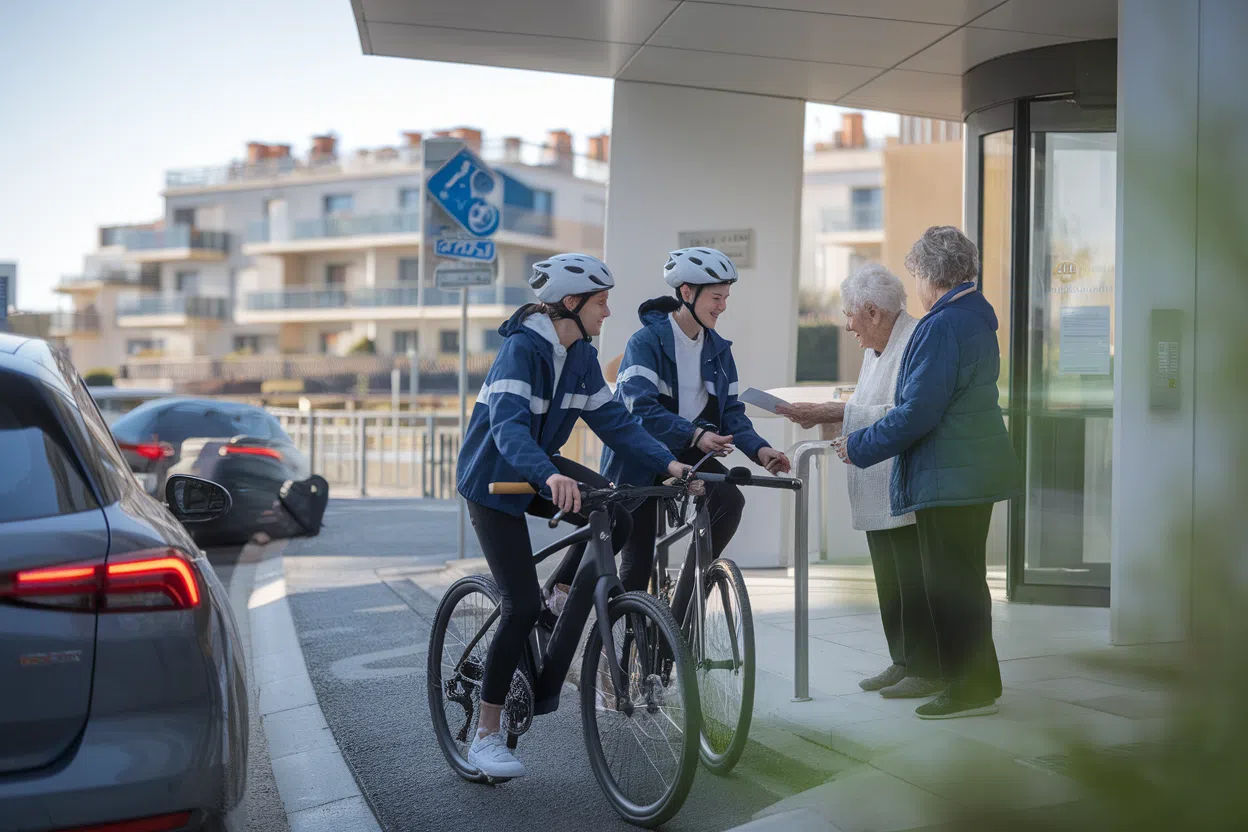
A group of young cyclists is turning a long-distance ride across western France into something more personal than a charity stunt: they’re hand-delivering letters to older adults living in nursing homes, then sticking around to talk.
Setting out from the Atlantic port city of La Rochelle, the teens, nicknamed the “little messengers”, are riding north and west toward Brittany, a rugged coastal region known to Americans as a bit like Maine: windswept, proud, and far from Paris. The project, run by a nonprofit called Eole, is built around a simple idea with real weight in an era of loneliness: a letter hits differently when it arrives with a face, a voice, and a few minutes of human time.
Instead of dropping mail into an impersonal system, the riders deliver each envelope directly to residents in long-term care facilities, then pause for conversation, sometimes long enough to hear the letter read aloud. Organizers say the point isn’t just the miles. It’s the connection.
Eole, the association behind the effort, planned the multi-day route from La Rochelle to Brittany and coordinated visits with nursing homes along the way. The ride isn’t treated like a straight shot on a map; it’s a schedule of stops, meetings, and deliveries that forces the group to balance daily riding with being present for the people they came to see.
The letters are collected ahead of time and addressed to residents. Some come from family members. Others are written by students or volunteers who want to offer encouragement to people they’ve never met. Either way, the delivery changes the moment: the envelope doesn’t just arrive, it’s carried in by a tired teenager in a helmet who can explain where it’s been and why it matters.
Organizers frame the project as a two-way exchange. For residents, it’s a response to isolation, a problem nursing home staff and families regularly raise, especially when visits become rare. For the young riders, it’s a real-world test of commitment: weather, safety, logistics, and the emotional intensity of meeting people who may be frail, grieving, or simply starved for conversation.
The project also puts the spotlight back on the written word. A letter forces someone to slow down, choose words, and address a specific person. Staff members say letters often become keepsakes, saved, reread, and sometimes shared with caregivers or other residents.
Why the bike matters
The bicycle isn’t a prop. It shapes the entire experience. Rolling into a facility courtyard as a group, saddlebags, helmets, visible fatigue, turns a delivery into an event. For residents, that arrival alone can break the day’s routine before a single envelope is opened.
Traveling at bike speed also makes the mission feel grounded. The riders pass through small towns, stop to navigate, ask for help, and experience the geography in a way a car can erase. Eole’s leaders see that as part of the lesson: community isn’t built through grand gestures, but through repeated, modest acts done on purpose.
When the letters are handed over, the focus shifts from movement to relationship. The teens introduce themselves, explain the project, and then step back. Sometimes a resident reads the letter out loud; sometimes staff help. The riders become witnesses to the immediate impact, smiles, tears, questions, silence. It’s not symbolic. It’s tangible.
And it can continue. A letter can prompt a reply, or spark an ongoing correspondence. Facilities often encourage that kind of follow-up because it creates a reason to look forward, a new routine that isn’t medical or administrative.
Nursing homes look for fresh ways to fight isolation
For nursing homes, the visit offers a different kind of activity, one that doesn’t require residents to exert themselves physically. It combines an object (the letter) with a presence (the messenger), and it can happen in a common room or quietly in someone’s bedroom depending on their health.
Staff who work with older adults often describe isolation as more than a lack of visitors. It can be a feeling of being cut off from the outside world, losing familiar reference points, or struggling to keep regular conversations going. A personalized letter can act like proof of life: someone took time to write, to ask, to remember.
Facilities also have to manage these moments carefully. Some residents are eager to engage; others are exhausted or disoriented. Staff may stay nearby to protect privacy, help with reading, and gauge how long a conversation should last. The teens learn quickly that connection can’t be forced, and that sometimes the most respectful response is simply listening.
Beyond the emotion, intergenerational visits can stimulate memory and storytelling, and even nudge residents toward other activities like writing groups or reading circles. Some facilities use the letters as prompts, helping residents craft responses or, with permission, sharing meaningful passages with others.
A crash course for the teens: independence, safety, and empathy
For the riders, the trip is a layered education. First comes independence: packing, pacing themselves, keeping to a schedule, and dealing with the grind of consecutive days on the road. A ride from La Rochelle to Brittany means varied roads, shifting coastal weather, and accumulating fatigue, far from a casual weekend spin.
Then there’s safety. Group riding requires discipline, spacing, signaling turns, watching traffic, and adjusting speed for whoever is struggling. Adult supervisors reinforce the rules daily, turning repetition into habit.
The final lesson is emotional. Delivering a letter becomes real when you meet the person receiving it. The teens have to manage their own reactions to illness, loneliness, and hard life stories. Organizers provide space to debrief so the experience doesn’t end at the facility door.
Eole hopes the momentum lasts beyond this ride, through ongoing letter exchanges and future projects focused on older adults. For nursing homes, the appeal is simple: social ties strengthen when they’re repeated, recognizable, and rooted in real encounters, not just good intentions.