

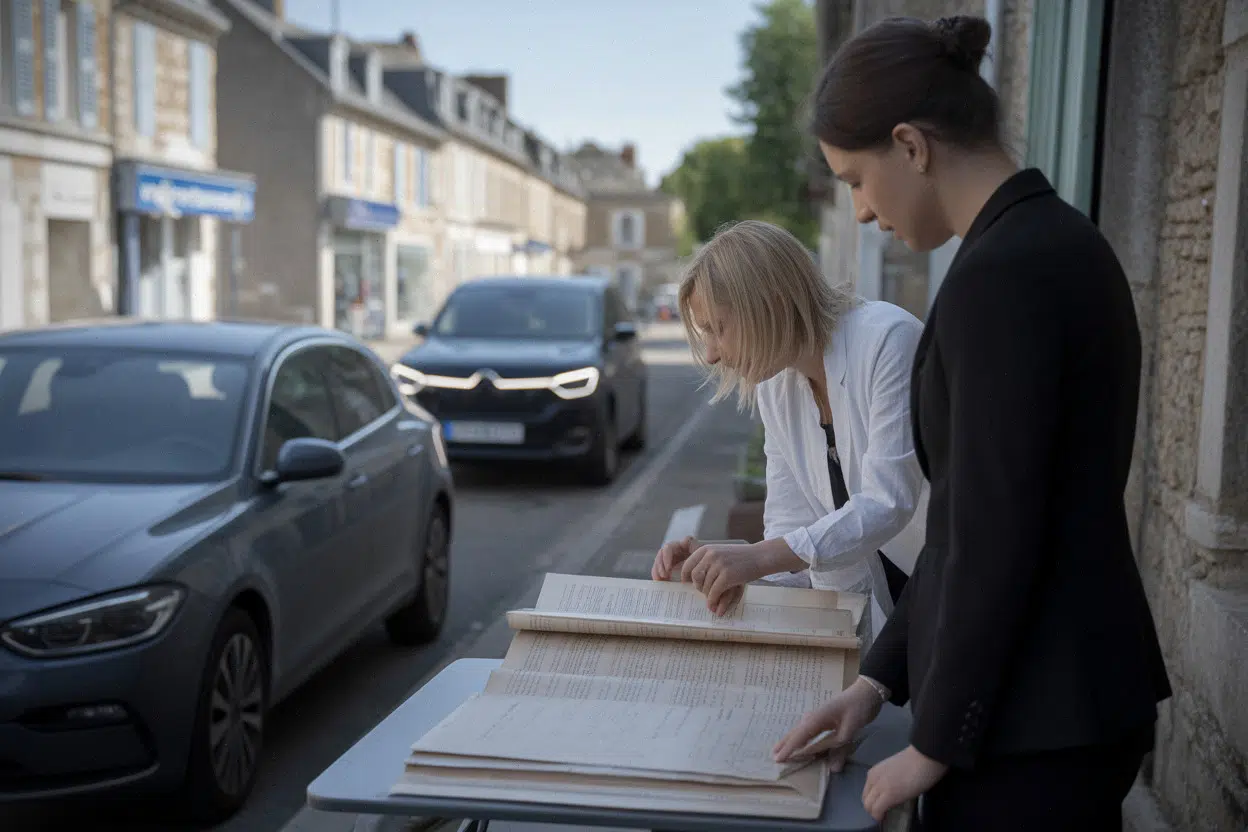
In Rochechouart, a small town in France’s Haute-Vienne department, a volunteer association called Vieilles Pierres et Patrimoine has quietly become one of the area’s most important engines of local historical research. The group says it has completed more than 60 studies on the town and nearby communities—work that now feeds exhibitions, publications and regular public events.
The project has taken on added relevance in 2026, as many French towns look to cultural tourism and historic downtowns to strengthen their appeal. In Rochechouart, the association’s research—built from archives, family records and on-the-ground observation—aims to turn scattered information into narratives that are both understandable and verifiable.
That question comes up repeatedly in conversations with residents, elected officials and visitors: how do you transform an accumulation of facts into a story people can trust? The association’s answer has been to produce themed, dated studies backed by concrete evidence—creating a growing body of work that helps anchor a local memory that can otherwise be fragmented.
A growing archive: more than 60 studies on Rochechouart and its surroundings
Vieilles Pierres et Patrimoine says its 60-plus studies cover a wide range of topics, from the evolution of buildings and architecture to social history, urban change and the memory of specific places. The number is more than a longevity marker, the group argues—it reflects a steady research process with an emphasis on sharing results, whether through exhibitions, talks or materials for guided visits.
The work relies on multiple sources: archival research, private document collection, direct field observation and cross-checking. In a modest-size town, information is often scattered across public collections, family keepsakes, postcards, notarial records and local newspapers. The group’s role is to gather, sort, date and provide context—trying to avoid reducing “heritage” to anecdotes while still keeping the results accessible to non-specialists.
Public outreach is central to the strategy. A study only matters, the association argues, if it’s shared, debated and reused. The group often times presentations around the European Heritage Days—a nationwide annual event in France that opens historic sites and promotes local history—using the moment to broaden its audience.
Local press archives cited in the article report that past exhibitions have drawn several hundred visitors, including about 700 visitors during one previous edition—an indicator, the group says, that curiosity rises when research is presented in a clear, educational format.
The studies also function as an informal reference point when buildings are restored, repurposed or debated. The association positions itself as support—without replacing public institutions—by supplying documented historical facts. Over time, the accumulation of research also highlights what hasn’t been studied yet: less-documented periods, everyday heritage and more recent architectural traces that can be overlooked because they feel “too new” to matter.
https://www.europe-infos.fr/actualites/9684/hericraft-saison-2-mobilise-des-influenceurs-pour-valoriser-le-patrimoine-du-centre-val-de-loire/

European Heritage Days 2025 spotlights interwar Art Deco architecture
The European Heritage Days 2025 gave the association a concrete platform to highlight a specific theme: interwar architecture and the Art Deco influences visible in Rochechouart. The choice was deliberate, framed as an effort to rebalance what gets attention. In many towns, heritage programming tends to focus on medieval, classical or religious sites, while 20th-century buildings—often less dramatic—can deteriorate without recognition.
By focusing on the period between World War I and World War II, the group aimed to give visitors tools to read a kind of heritage that still sits in everyday streetscapes. The research looks for identifiable markers—gable shapes, facade composition, materials, geometric lines and decorative elements—and, when archives or testimony exist, even interior organization.
The association’s approach is to place those clues into a timeline that links architecture to economic history and social change. A house, in this telling, doesn’t just signal a style; it can reflect access to credit, ambitions of modernity, expectations of comfort and the technical environment of the era—water, heating, electricity and roads.
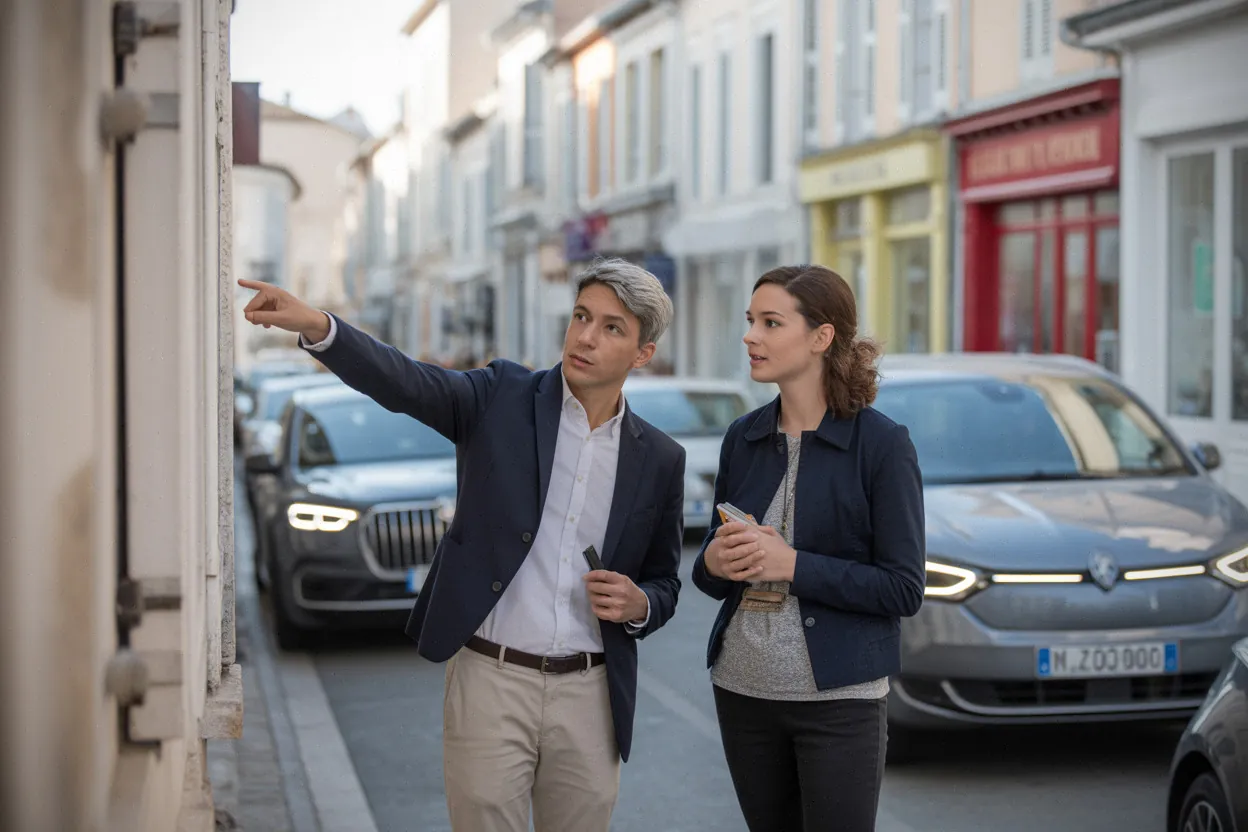
During Heritage Days, the group’s public-facing work relies on walking routes and close-up explanations of details people might otherwise miss—standing a few feet from a cornice, ironwork or entryway. The association also stresses that local Art Deco doesn’t necessarily copy big cities; it adapts to local means and nearby businesses, showing how architectural trends travel and change.
The programming also aligns with a broader municipal goal: giving people reasons to visit beyond the town’s best-known monuments. For Rochechouart, the heritage weekend becomes a real-world test—can an exhibition, guided route or printed materials attract a mix of residents, passersby and history enthusiasts, and does the format actually work?
The interwar theme also connects to current debates about energy retrofits, respectful restoration and tradeoffs between preservation and use. Once an architectural element is identified and explained, the association argues, it becomes harder to remove without discussion—helping establish a shared vocabulary as the town considers changes to its center.
Exhibitions that pull in hundreds—and turn documents into a public story
The Rochechouart experience suggests local heritage gains visibility when it’s embodied through exhibitions. One press archive cited in the article reports attendance of about 700 visitors over two days for an exhibition in the town—strong numbers for a community of its size.
The figure points to a broader lesson: demand exists, but it depends on whether research is made legible. Visitors aren’t coming simply to “see old things,” the association argues; they come to understand, compare and place familiar streets and buildings into a structured history.
A successful exhibition, as described in the article, is built on specific materials—plans, old photographs, postcards, cadastral excerpts and sometimes stories collected from residents. The association acts as a bridge, linking documents to recognizable places and answering basic questions: What did this street look like before? Why did a building change uses? Where did a place name come from? What events shaped a neighborhood?
That kind of turnout can also legitimize the work. For a volunteer group, a sizable audience can help attract partners, secure venues, obtain document loans and recruit new volunteers. The workload is heavy—digitizing, sorting, writing and verifying—and public success becomes an argument for sustaining the formats, even as the effort remains dependent on volunteer time and a crowded local events calendar.
In 2026, Rochechouart continues to host community events, including local festivals highlighting artisans and other local stakeholders. While not strictly about historic buildings, the events feed the same dynamic: attracting visitors, projecting a lively image of the town and creating opportunities to tell local history. For the association, that can mean staffing a booth, presenting a study, collecting testimony or identifying family-held documents that might otherwise stay private.
The ongoing challenge is maintaining rigor while adapting to short formats. An exhibition can’t hold the full depth of a study; it has to select, simplify and sometimes drop details. The association is left balancing precision and accessibility—because broad audiences want clear guideposts, while history enthusiasts expect sources and dates.
Heritage research as part of the town’s tourism and revitalization strategy
Rochechouart promotes its historic and natural assets in public communications, presenting itself—according to local publications cited in the article—as a small town aiming to remain attractive while planning for the future. In that context, the work of Vieilles Pierres et Patrimoine fits into a larger chain linking heritage, close-to-home tourism, cultural programming and local commerce.
Practically, the association’s studies can feed visitor materials, urban walking routes, interpretive signage and educational articles. They can also support documentation when a building is slated for work. Local governments often need historical files to seek funding, justify restoration choices or guide redevelopment—so having a structured local knowledge base can save time and improve coherence.
The article also flags a risk in turning heritage into tourism: the temptation to oversimplify, reducing history to a set of images or slogans. A research association’s role, in that view, is to keep complexity in the story without discouraging the public—through dating, citing sources, distinguishing hypothesis from certainty and acknowledging less flattering chapters such as abrupt changes, demolitions or economic shifts.
Audience matters, too. Cultural tourism isn’t only about outsiders; residents are a central public because they live with heritage daily and influence local decisions. An exhibition, talk or guided walk can change how a street or neighborhood is perceived—and shape how people respond to a project. In that sense, heritage becomes a tool for civic discussion, not just memory.
In rural or semi-rural areas, the article notes, long-term transmission depends on renewing volunteers and securing archives. Digitizing, indexing, storing and making materials accessible require skills and equipment. The production of more than 60 studies signals a high level of commitment; what comes next will depend on how the work is preserved, shared and carried forward—by new members, schools or institutional partners building on that foundation.
Key takeaways
Vieilles Pierres et Patrimoine says it has produced more than 60 studies on Rochechouart and nearby areas; European Heritage Days 2025 highlighted local interwar Art Deco; past exhibitions have drawn about 700 visitors in a weekend; the research informs public interpretation and debates over older buildings; and heritage promotion ties into the town’s tourism and attractiveness goals.
Sources
Le Populaire du Centre (“Vieilles pierres” : le patrimoine au cœur); Vieilles Pierres et Patrimoine Rural – Rochechouart (Facebook); Le Populaire du Centre (Rochechouart célèbre en rouge et blanc…); Le Populaire du Centre (Rochechouart, une petite ville repensée pour demain); Le Populaire du Centre (Rochechouart page d’actualités).
Key Takeaways
- Vieilles Pierres et Patrimoine claims to have conducted more than 60 studies on Rochechouart and the surrounding area
- The 2025 European Heritage Days highlighted local Art Deco architecture
- Heritage exhibitions have already drawn about 700 visitors over a weekend
- The association’s research serves as a foundation for interpretation and discussions about historic buildings
- Historic preservation efforts align with the town’s tourism and local attractiveness goals