

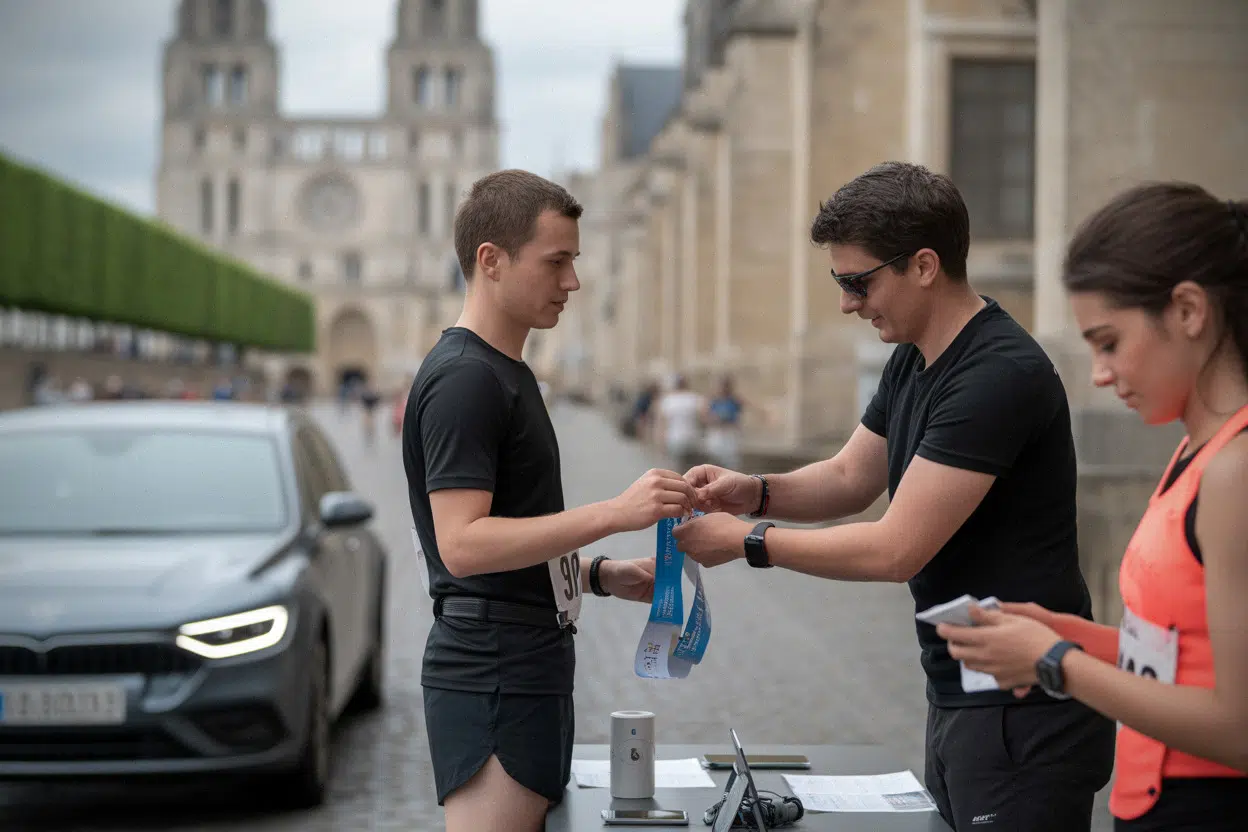
With a little more than a month to go before the start, the Foulées de la Cathédrale in Chartres—about 55 miles southwest of Paris—remains one of the most in-demand running events in the Eure-et-Loir area. Organizers set the cap at 2,500 bibs, and registrations moved so quickly that many runners came away thinking the race was permanently sold out.
But the field isn’t locked. Bibs have been steadily reappearing on the event’s official “bourse d’échange,” a controlled exchange platform designed to manage resales and let runners claim spots legally. Organizers say it’s the channel to use because it secures transactions, helps prevent fake bibs, and preserves the administrative tracking required for a timed race.
Recent updates from organizers indicate a handful of bibs are still visible for purchase—closely watched by runners who missed the initial rush. The demand, they say, reflects the race’s reputation, the setting around Chartres’ cathedral, and an event atmosphere that goes beyond pure performance.
An official exchange aims to stop fake bibs and risky side deals
The bib exchange for the Foulées de la Cathédrale is built around a simple reality: some registered runners drop out, while others are still hunting for a spot. Rather than letting uncontrolled, direct resales spread across classifieds and messaging groups, the organization offers an integrated system that centralizes supply and demand.
The goal is first and foremost security. A bib is assigned to a specific person and tied to essential information such as the runner’s identity and—depending on the race format—any required documentation to participate.
Organizers point to two practical benefits. The official channel reduces fraud because transfers happen inside a system where the race maintains control over bib assignment. It also protects runners from payments with no guarantee—common in informal listings—where a “spot” in a popular race can quickly become a target for scams.
Availability can swing hour to hour because bibs are posted in waves. A bib may appear and vanish quickly as would-be buyers refresh the page. Organizers warn against purchases outside the official framework, noting that start corrals, timing, and race insurance depend on a properly registered entry.
Why the 2,500-bib cap matters for a city-center race
The Chartres event is operating with a stated cap of 2,500 bibs—a sizable field for an urban race in the heart of a mid-sized city. Organizers frame that number less as marketing than as a function of safety, traffic management, and the ability to host runners.
That means barriers, course marshals, a traffic plan, start and finish zones, and medical resources. As runner density rises, supervision requirements rise with it.
Organizers say the past several weeks have shown a fast start to sales, with a registration “rush.” They attribute the momentum to a mix of a straightforward course, a downtown atmosphere, and a date that fits well into club calendars and recreational runners’ schedules. The race also benefits from its setting: running near a landmark cathedral is a tangible draw, including for participants traveling from other French departments.
High demand has a predictable side effect: scarcity increases the perceived value of a bib and fuels attempts at informal resales. That’s where the exchange platform is meant to restore transparency, channel demand, and keep registrations properly tracked as runners adjust training plans—and, for those coming from farther away, transportation and lodging.
August 23, 2026: a timed 10K through downtown Chartres
The race is scheduled for August 23, 2026, with a timed 10K as the marquee event. The distance remains a staple for runners looking to chase a benchmark time without the training load of a half marathon, drawing both competitive club athletes and amateurs who want a manageable test.
A city 10K often means frequent accelerations and pace changes due to turns, narrower sections, and shifting surfaces. Late-summer weather can also shape race-day strategy—heat and humidity, or a cooler morning—affecting hydration and clothing choices.
Because the event is timed, organizers emphasize strict procedures: start protocols, safety instructions, and rules that protect the integrity of results across the chain of bib assignment, chip timing, and line controls. Runners who secure a bib through the exchange are urged to make sure their identity is correctly updated, or timing could be affected.
For spectators, the 10K’s appeal is its clarity: a concentrated start, easy-to-spot viewing points along key streets, and a downtown finish that supports a lively atmosphere. The event also brings traffic restrictions that require advance communication with residents and businesses, reinforcing the race’s role as a local showcase alongside Chartres’ cathedral and its immediate surroundings.
Last-minute bib hunting comes with warnings about off-platform resales
As race day approaches and the main inventory is gone, last-minute buying becomes fertile ground for unverified listings. Organizers stress that hand-to-hand resales carry concrete risks: payment without delivery, falsified bibs, mismatched identity details, or no official registration at all.
In a timed race, those problems can lead to being denied participation or lacking coverage consistent with event rules. The exchange platform provides oversight, but it doesn’t eliminate the pull of parallel markets when demand outstrips supply.
Experienced runners recommend checking a bib’s origin, sticking to regulated channels, and being wary of both “too cheap” offers and unusually high prices. Official platforms may include fees, but organizers say those costs reflect security and administrative handling.
For runners still looking, the practical approach is to check the exchange regularly, have personal information ready to avoid delays at checkout, and watch for periods when dropouts are more common. As the date nears, injuries, family obligations, and work conflicts often trigger resales—along with late realizations that travel to Chartres won’t be possible.
Key takeaways
Organizers say the Foulées de la Cathédrale is seeing heavy demand in 2026, with the 2,500-bib cap tightening availability. Bibs are reappearing through the official exchange as runners withdraw, and the event’s timed 10K is set for August 23, 2026. Organizers are urging runners to avoid off-platform resales to reduce fraud and registration problems.
Sources
Reporting is based on information and links provided in the original article, including coverage from L’Écho Républicain and official race pages (Protiming, the event website, and the race’s Facebook page).
https://www.europe-infos.fr/actualites/9979/10-ans-dusage-contrat-reconduit-jusqua-2028-remplacement-complet-vise-en-2029-pourquoi-la-dgsi-peine-a-lacher-palantir/
Key Takeaways
- Les Foulées de la Cathédrale in Chartres are seeing strong demand in 2026.
- Bib numbers reappear through the official exchange marketplace as people withdraw.
- The announced cap is 2,500 bibs, with tight urban logistics constraints.
- The August 23, 2026 race features a timed 10K in the city center.
- Organizers urge people to avoid resales outside the platform to reduce fraud.