


LA CHAPELLE-BERTRAND, France — A small village in western France is preparing for a big summer turnout on July 25, as La Chapelle-Bertrand’s “Soirées du patrimoine” (Heritage Evenings) returns with music, local crafts and self-guided heritage routes that have become a seasonal draw in the Gâtine area.
This year, the watchword is vigilance. Organizers and local officials are emphasizing crowd flow, incident prevention and the practical constraints of a late-July outdoor event—especially heat and nighttime travel—while trying to preserve the gathering’s family-friendly, village-festival feel.
Recent editions have drawn steady attendance, creating a straightforward challenge: move people through narrow spaces, manage parking, keep visitors informed and respond quickly if something goes wrong, without turning a community celebration into a heavily policed event.
Town officials adjust the July 25 plan to manage crowd flow and everyday risks
The July 25 date is driving the entire operational plan. According to available information, a preparation meeting focused on how to supervise the Heritage Evenings, with an explicit goal of anticipating friction points. In La Chapelle-Bertrand, the historic core and activity areas naturally concentrate foot traffic, making routes, crossings and rest areas especially sensitive.
The first priority is managing flow. An event that mixes vendor stands, music and heritage stops produces constant movement—often messy early in the evening and again as activities wrap up. Organizers typically rely on simple tools: clearly marked access points, designated parking areas and pedestrian-first circulation. But as attendance has grown, the plan is becoming more formal, with a larger role for welcome volunteers and clearly identified point people who can direct visitors and defuse situations before they escalate.
The second priority is preventing routine incidents: heat-related illness, falls, trouble navigating after dark, and minor disputes over parking. In this kind of event, safety isn’t limited to crime. It also includes lighting, rest areas, access to water, and the ability to reach emergency services quickly. The town, organizers and partners are working to clarify responsibilities—who does what, who alerts whom, and how an area would be evacuated if it becomes unusable.
The timing matters, too. July 25 falls during peak summer travel, when evening road traffic is heavier and more visitors may be unfamiliar with the area. That puts a premium on practical guidance—where to park, when to arrive, and which routes to use. The idea of an evening “under surveillance” is framed as tight management without militarization, built on anticipation and a visible supervisory team.
Officials also point to the need for dialogue with nearby residents. A nighttime event, even a popular one, brings noise, long parking stays and repeated foot traffic. The adjustments aim to limit the impact by channeling movement and preventing vehicles from spreading into narrow streets. The town hall is signaling it now treats the event as a major local moment, with explicit safety standards.
Volunteers take on a bigger role in welcoming visitors and keeping routes moving
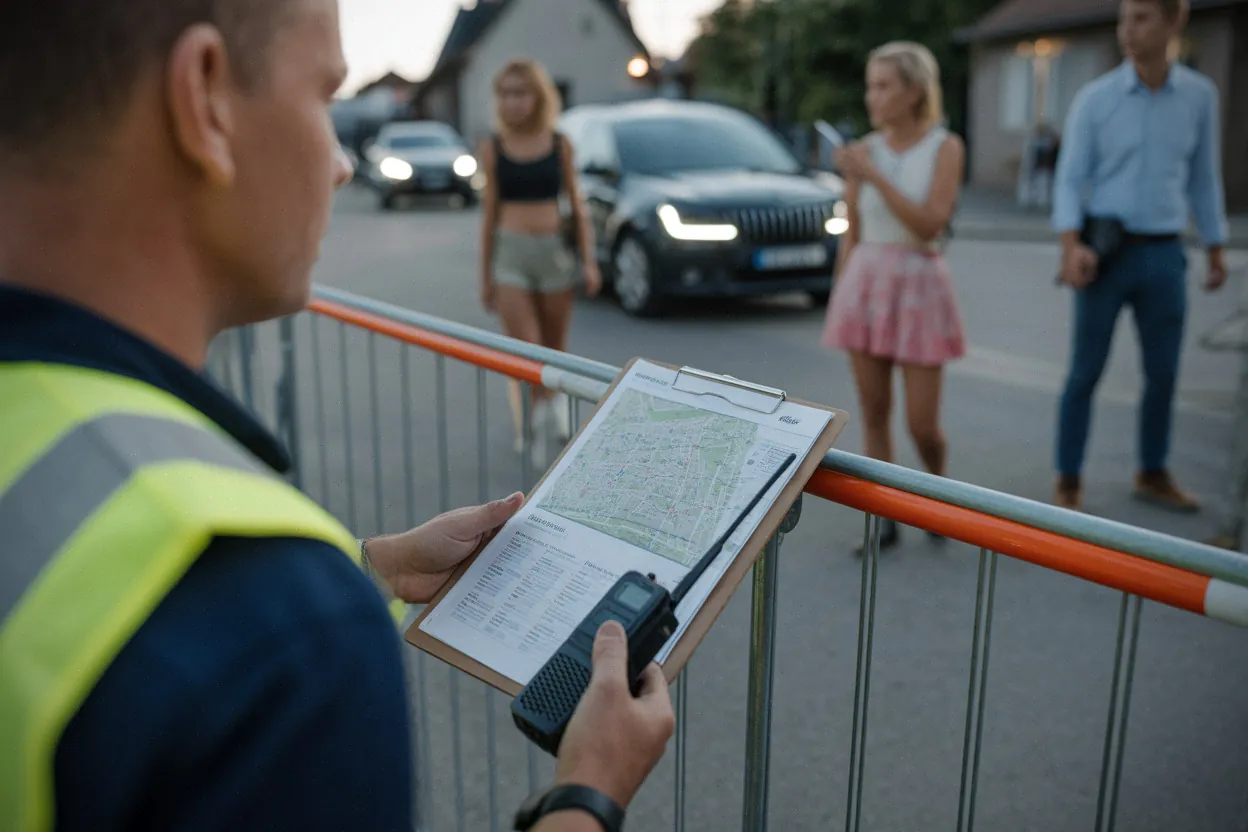
As the event has grown, volunteers have become central to the safety approach—helping visitors find entrances and parking, keeping pedestrian routes clear, and serving as identifiable contacts if someone needs help. The goal is to keep the atmosphere open and friendly while adding structure that matches the size of the crowd.
A local group is leaning on a mobile app to guide visitors and reduce bottlenecks
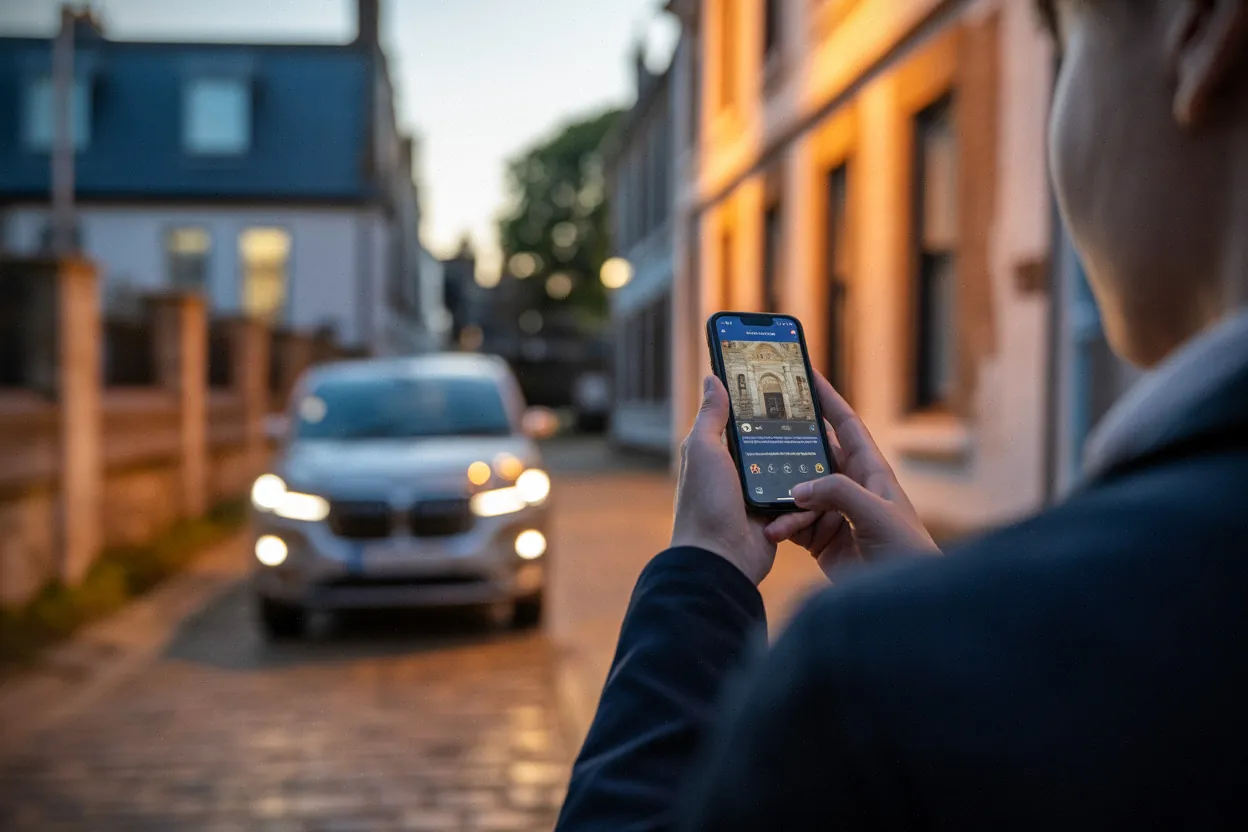
One of the more recent features of the Heritage Evenings is the use of smartphones as a tool for interpretation. The local association Capella-Bertrandi offers visitors an interactive mobile app to explore heritage sites. The logic is twofold: enrich the visit with on-demand content and smooth movement by avoiding large clusters around a single guide.
On the ground, that can change how people circulate. When a stop is presented as a single live talk, the crowd gathers in one place at one time. With an app, the route becomes more individual—or done in small groups—which can reduce pressure at certain points. Visitors can spread their exploration across the evening, return to a stop, or move faster through others. For organizers, it can also help with orientation by suggesting routes, recommended timing, and potentially information alerts if the system allows.
Organizers stress that digital tools don’t replace human contact. The Heritage Evenings remain a social event, with artisans, musicians and volunteers at welcome points. But a phone can serve as a thread for visitors who don’t know local history. In a village like La Chapelle-Bertrand, where heritage is often in the details, the app can provide reference points—dates, anecdotes and architectural vocabulary—making the walk easier for children and families.
Safety is part of the technology choice. A well-marked route, even a virtual one, can improve visitor autonomy and reduce wandering in poorly lit areas. It can also support crowd management by encouraging detours or alternative stops. In that sense, the app becomes an organizational tool, not just a cultural add-on.
The shift reflects a broader trend: small heritage events borrowing from cultural tourism, with audio guides, themed routes and on-demand content. The challenge is keeping the experience accessible for people less comfortable with technology, by maintaining physical information points and volunteers who can help.
Heat, crowding and parking are the most closely watched risks on a summer night
Accounts from previous editions describe a festive atmosphere—music, crafts and heritage—sometimes under high temperatures. Heat can turn a cultural event into a small-scale public health issue, especially when visitors stand for long periods, move between stops, and drink beverages that may not help with hydration. Prevention, organizers say, comes down to simple messages: drink regularly, take breaks in the shade, and keep an eye on older adults and young children.
Crowding is the other major variable. A popular event increases the risk of falls, children getting separated, and tensions around lines. Organizers typically try to spread people out by multiplying points of interest, widening circulation areas and avoiding choke points. Volunteers are key—not just for directions, but for quickly spotting risky behavior, a medical issue, or someone who appears disoriented.
Parking and road traffic are among the most frequent sources of difficulty. Visitors often arrive in waves early in the evening and want to park as close as possible. But village centers and heritage areas aren’t designed to absorb large numbers of vehicles at once. The risk isn’t just inconvenience: blocked access for emergency services, obstructed entrances, or dangerous maneuvers on narrow roads. A clear traffic plan and identified parking zones become safety measures in their own right.
Night adds its own hazards: reduced visibility, fatigue, driving home, and trouble finding one’s group. Appropriate lighting, clear landmarks and regular information can reduce mistakes. And because the Heritage Evenings are not a single closed venue—people move between multiple locations—coordination across the route is essential to prevent one area from becoming overloaded while another sits empty.
Organizers frame the heightened vigilance as continuity: protecting a local celebration without being overwhelmed by its success. Feedback from previous years, including episodes of high heat, is being used to make practical adjustments. Visitors, for their part, are looking for a reassuring framework, clear information and the ability to respond quickly if an incident occurs.
Local coverage describes an event “under surveillance,” focused on organization rather than a specific threat
Local media have emphasized the idea of an evening “under surveillance.” In an article by Ouest-France—a major regional newspaper—this wording is presented as attention to organization rather than any particular threat. For a municipal event, “surveillance” can include identifiable point people, coordination with relevant services, and shared instructions, with the aim of securing the event without changing its welcoming character.
The approach mirrors what many modest summer events have experienced: bigger crowds, more complex standards, and higher public expectations around safety. Volunteers no longer just set up stands; they help with welcoming, monitoring and relaying information. The “surveillance” becomes a human network built on visibility, listening and quick response.
In La Chapelle-Bertrand, the mix of heritage, crafts and music creates multiple activity points, requiring distributed oversight. It’s not about securing one site, but a route with continuous movement. Local authorities and organizers are working to reduce blind spots, better align schedules, and prevent everyone from converging at once on a narrow point.
Information control is part of that effort. A successful evening depends on simple reference points: reliable times, coherent signage and clear instructions if something goes wrong. When information doesn’t circulate, visitors improvise and spread out, making oversight harder. Digital tools, identifiable volunteers and regular announcements are meant to reduce uncertainty, while clear communication about access and parking can ease tensions before they start.
Organizers argue the safety focus supports—rather than limits—the cultural ambition: an accessible heritage walk, a village atmosphere, and conversations around local know-how. The fact that “surveillance” is being highlighted reflects a gradual professionalization of the event’s organization, even in a small community where success depends on a careful balance of conviviality, logistics and prevention.
https://www.europe-infos.fr/actualites/9995/a-deyvillers-isabelle-limonier-part-a-la-retraite-du-ministere-des-armees-un-metier-discret-ce-que-la-commune-retient/
Key Takeaways
- The Heritage Evenings in La Chapelle-Bertrand are scheduled for July 25.
- Security measures and crowd-flow management have been reinforced to handle the expected turnout.
- Capella-Bertrandi is offering a heritage trail through an interactive mobile app.
- Heat, traffic, and parking are among the most closely monitored risks.
Sources
- La Chapelle-Bertrand: actualités et infos en direct … – Ouest-France
- La Chapelle-Bertrand. Les soirées du patrimoine vont avoir lieu
- La Chapelle-Bertrand. Une nuit entre patrimoine et émotion
- La Chapelle-Bertrand. Le patrimoine téléphone en main
- Soirée du patrimoine de Gâtine 2026 – La Chapelle-Bertrand