


SENVEN-LÉHART, France — In the small Brittany village of Senven-Léhart, a once-private family home has officially become public property — and soon, a place for new tenants to live.
The Jagu house, bequeathed to the local government in this rural corner of the Côtes-d’Armor department, has been renovated and converted into a municipal rental at a time when housing options in the countryside can be scarce and turnover is low. Residents were invited to an inauguration on July 18, 2026, alongside the town’s elected officials, marking a symbolic handoff from family legacy to community use.
For a village of just a few hundred people, the project carried real financial stakes. Town leaders framed the renovation around everyday practicality: comfort, compliance with modern standards, and keeping ongoing costs as low as possible.
Senven-Léhart inaugurates the Jagu house on July 18, 2026
The July 18 ceremony brought together residents and local officials around a building now folded into Senven-Léhart’s municipal assets. In a community like this, putting even a single rental unit into service is a notable event: the rental stock is small, and demand can be uneven but persistent, especially for households looking to move closer to a local job, relatives, or community groups.
The inauguration also served as a public accounting. Residents could see how a donated property was being used and what the town chose to preserve or change — and why. In a village setting, debates over renovation, budget priorities, and protecting local heritage tend to be direct, and officials leaned into that transparency.
Town leaders also emphasized the home’s place in the center of the village. A municipal rental in the town core can help limit vacancy, prevent a building from deteriorating, and keep daily life present on the street — with ripple effects for even modest local shops and facilities.
The moment marked a shift in identity: a house with family history becomes a public tool. The fact that the Jagu name remains attached to the property reflects the unusual nature of the project — a private bequest extended into a collective purpose. In places with strong local identity, keeping that memory can make a change in use easier to accept.
Officials said the home is intended to welcome its first occupants quickly. The timeline from the start of work to the inauguration has been closely watched, because a municipal rental cannot sit empty for long. Small towns generally try to balance upkeep and any financing costs against rent revenue, all while operating with limited administrative staff.
https://www.europe-infos.fr/actualites/10166/15-milliard-3-000-par-ouvrage-pres-de-500-000-livres-pirates-ce-que-laccord-danthropic-change-pour-les-auteurs/
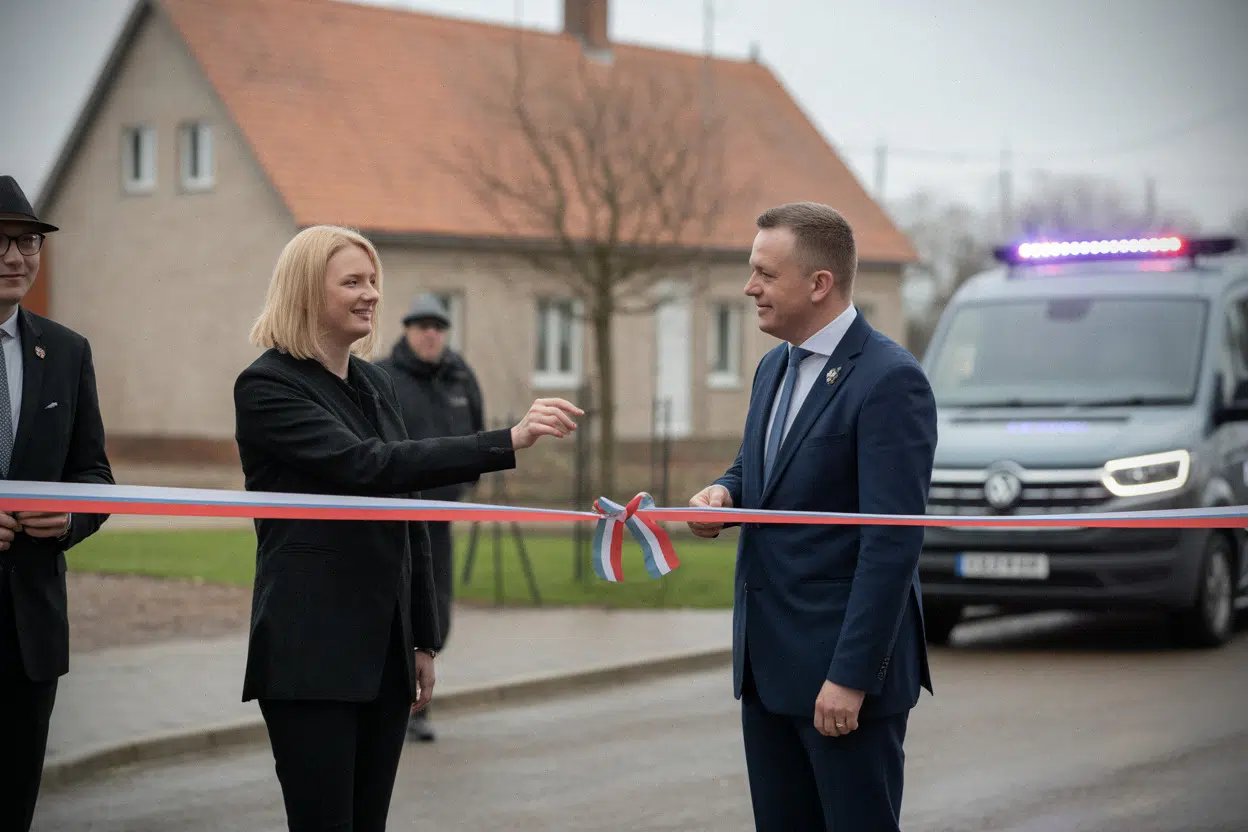
A family bequest turns a private home into a town-run rental
The project began with a bequest that transferred the house into municipal ownership. In small local governments, that kind of gift immediately raises practical questions: the building’s condition, the cost of bringing it up to standard, obligations tied to the donation, and what public use makes the most sense.
Converting the property into a municipal rental followed a pragmatic logic. A rental provides direct social utility and recurring income, helping offset the investment required to rehabilitate the home.
But turning an older private house into public housing forces tradeoffs between preserving what exists and adapting it. Older buildings can require major work — insulation, heating, ventilation, utilities, and safety upgrades. Towns increasingly look for technical choices that limit energy spending, since operating costs affect tenants and, by extension, the unit’s appeal. Keeping monthly costs manageable can matter as much as the rent itself.
The project also highlights a lesser-known reality: a municipality can become a landlord, with responsibilities similar to any property owner. That means setting rules, establishing a rent aligned with the local market, organizing move-in and move-out inspections, scheduling maintenance, and planning for repairs — often with very little staff. That’s why ease of operation becomes a key factor during renovation.
In a small town, the decision about how to use a property is also political. One additional unit can help welcome a young couple, a worker relocating, or someone living alone who wants to be closer to services. Depending on the moment, it can also serve as a temporary solution when the local market can’t respond quickly.
The bequest carries a moral dimension as well: the town is expected to respect the spirit of the gift without turning the house into a museum. Keeping it as a lived-in home maintains a “living building,” and for residents, that continuity — a house that remains a house — can feel more straightforward than alternatives like offices, storage, or a sale.
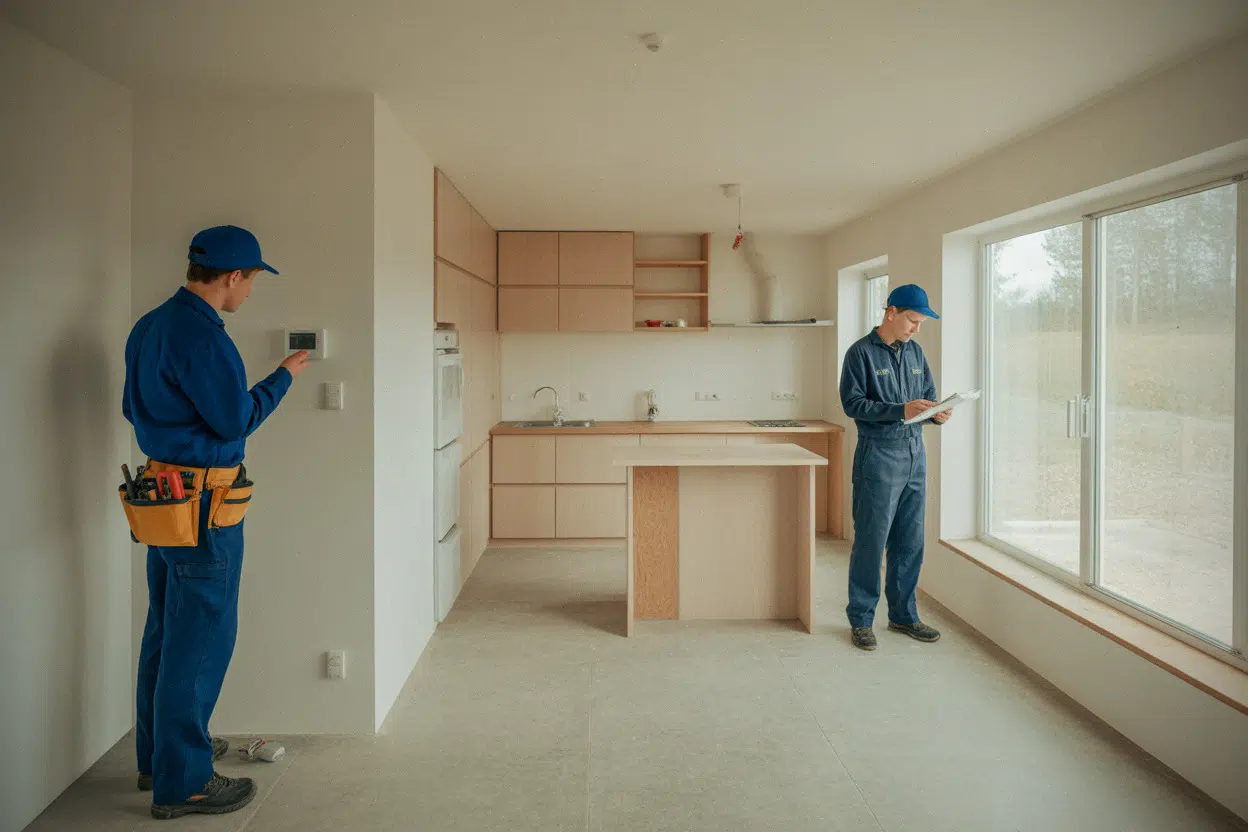
Renovation work designed for long-term rental use in the village center
The Jagu house rehabilitation was designed for durable, long-term rental occupancy, with technical choices aimed at sturdiness and easy upkeep. In a municipal context, priorities often center on reliability: standardized equipment, hard-wearing materials, and an interior layout that reduces the need for future interventions. The renovation sought a balance between comfort, compliance, and budget.
Energy performance was treated as a practical issue, not an abstract one. A municipal rental has to remain attractive over time, and households pay close attention to utility bills. Insulation, the heating system, ventilation, and window and door tightness all directly shape what tenants can afford month to month. In rural areas where a car is often essential, home energy costs can become a second major pressure point, increasing attention to building performance.
Bringing the home up to code was another major piece. Depending on the starting condition, that can mean reworking electrical systems, securing stairs, adjusting openings, improving natural light, and addressing moisture. Towns must also meet France’s basic housing decency rules, which require detailed checks on space, ventilation, heating, hot water, and safety. That regulatory framework shapes the construction plan and helps prevent deferred costs later.
Working in the village center brings its own constraints. Contractor access, parking during construction, and day-to-day coexistence with neighbors require coordination. Visible work — the façade, roof, and surrounding areas — is also closely watched. In a place where many people know one another, every detail can become a topic of conversation, and the town has to justify choices, especially when a modern solution replaces an older element.
Finally, the shift to municipal housing comes with a calendar imperative: deliver quickly without sacrificing quality. The town wants to minimize the period when the property provides neither social use nor rental income, one reason municipal renovations often favor proven, readily available solutions over rarer options that can slow timelines or complicate maintenance.
With about 235 residents, Senven-Léhart bets on housing to help stabilize its population
With a population of around 235, Senven-Léhart faces challenges typical of very small communities: sustaining local life, renewing the mix of households, preserving services, and fighting vacancy. One additional municipal rental may sound modest, but the impact can be tangible. A household that moves in can mean participation in local activities, nearby shopping, and a stronger presence in community organizations.
The local real estate market is often sluggish. Homes may sell only occasionally — sometimes at relatively accessible prices, but often requiring significant work. Rentals are limited, which can hurt people in transition: after a separation, during a job move, returning to the region, or for young workers. A town-managed unit can provide an immediate option, with clearer conditions and a close-to-home relationship with the landlord.
Rural housing policy also runs into competition from second homes and short-term rentals, where they exist. Even at low levels, those uses can reduce year-round supply. In that context, a municipal property dedicated to long-term renting helps secure permanent occupancy. For a town government, it’s a way to influence — even slightly — the structure of the local housing stock.
There’s also a budget logic. A municipal rental requires upfront spending, but it can generate rent and prevents a building from deteriorating. Long vacancy can accelerate decline, and deterioration becomes expensive over time. Getting a property back onto the rental market quickly helps protect the value of municipal assets.
In Senven-Léhart, the Jagu house reflects a method: using an opportunity — a bequest — to meet a concrete need without waiting for a larger, more complex program. In very small towns, progress often comes in increments, one unit or one building at a time, an approach that can strengthen local appeal when paired with other factors like mobility, services, community life, and quality of life.
Key takeaways
- The Jagu house was converted into a municipal rental after being bequeathed to Senven-Léhart.
- Residents and elected officials gathered for an inauguration on July 18, 2026, ahead of tenants moving in.
- The renovation focused on long-term durability, compliance, and lower day-to-day operating costs.
- In a town of about 235 people, even one additional rental can affect the village’s ability to attract and keep residents.
Sources
Key Takeaways
- The Jagu house was converted into a municipal rental home after it was bequeathed to Senven-Léhart.
- A ribbon-cutting brought together residents and elected officials on July 18, 2026, ahead of the tenants moving in.
- The renovation aims to provide a sustainable, code-compliant home that is cheaper to run.
- In a town of about 235 residents, adding one more home makes a real difference to the village center’s appeal.