

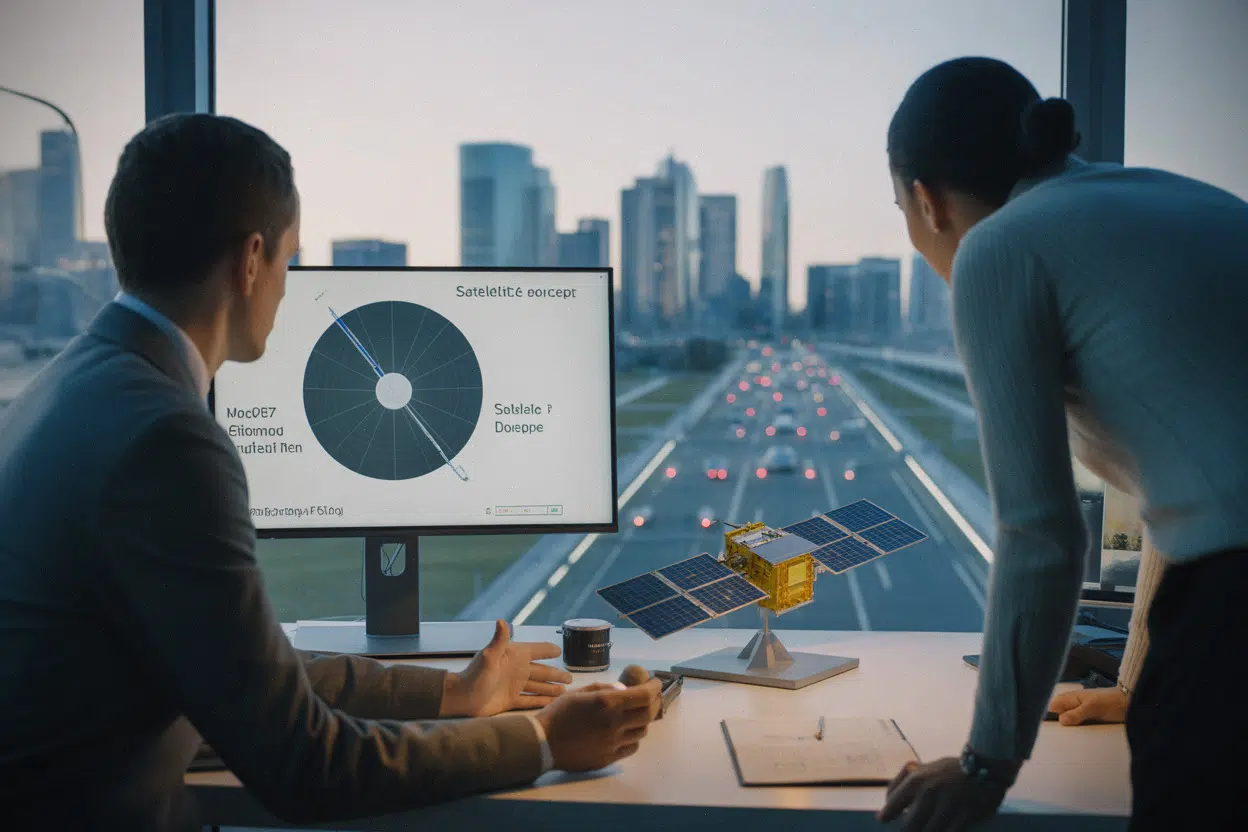
Elon Musk is again pushing a provocative idea in tech circles: measuring the economy in units of energy rather than money. The comments, picked up in a Benzinga France dispatch, landed as SpaceX is examining concepts tied to orbital solar power—capturing electricity above Earth’s atmosphere and transmitting it back to the ground.
At the same time, media outlets and analysts have been circulating talk of a potential SpaceX initial public offering and eye-popping valuation scenarios. Together, the threads are feeding a two-track narrative that mixes industrial ambition with a market story investors can latch onto.
Musk links money, energy and productivity on X
By framing the economy as a matter of energy units rather than monetary flows, Musk is steering the conversation back to a physical baseline: any material production requires an expenditure of energy. The argument echoes a view sometimes advanced by innovation economists—money is an intermediary, but the hard constraint is energy availability, energy density, cost, and supply stability.
For a businessman whose companies build rockets and electric vehicles, the logic is internally consistent. Competitiveness, in that view, depends heavily on the price of a kilowatt-hour, storage, and grid capacity.
Critics who typically respond to this kind of post argue that money doesn’t just “measure energy.” It also bundles risk, time, preferences, and institutional constraints. A society can have abundant energy and still fail to turn it into growth if it lacks infrastructure, labor, legal security, or investment capacity. Musk’s point is presented less as accounting than as a hierarchy of priorities—secure low-carbon sources and reduce conversion losses.
The 2026 backdrop makes the framing feel less abstract. Electricity prices remain politically sensitive in multiple regions amid fuel volatility, grid investment needs, and tradeoffs among nuclear power, solar, wind, and storage. For the digital sector, the pressure point is also the power draw of AI- and cloud-related data centers. Musk, through xAI and its computing ambitions, has a direct interest in energy stability.
The rhetoric also acts as connective tissue across his businesses. Tesla has long argued for vertical integration across solar generation, batteries, and vehicles, while SpaceX controls access to orbit. Putting energy at the center offers a single storyline spanning mobility, space, and computing—one that can make a complicated industrial equation sound like a unified value proposition for investors.
https://www.europe-infos.fr/actualites/9633/cyberattaque-contre-la-ffe-donnees-de-licencies-potentiellement-exposees-message-politique-revendique-ce-que-la-fede-risque-desormais/
SpaceX studies orbital solar power—and the hard constraints
Orbital solar power isn’t a new idea, but it tends to resurface when launch costs fall and electricity demand rises. The basic concept is to place structures in orbit that can capture sunlight continuously, then send that energy back to Earth—typically via microwaves or lasers—to ground-based receivers. The selling point is availability: above clouds and, depending on orbit, without the same day-night cycle constraints, output could be more consistent than a terrestrial solar farm.
Turning the concept into an industrial system comes with major obstacles. First is mass: even with reusable rockets, deploying square miles of panels and supporting structures would require heavy orbital logistics. Second is total efficiency—each conversion step (solar to electric, electric to beam, beam back to electric) creates losses. The real metric is the cost per delivered megawatt, not the technological prestige.
Safety and regulation are another sensitive front. Any energy transmission would have to be tightly controlled, limited in intensity, and accepted by regulators.
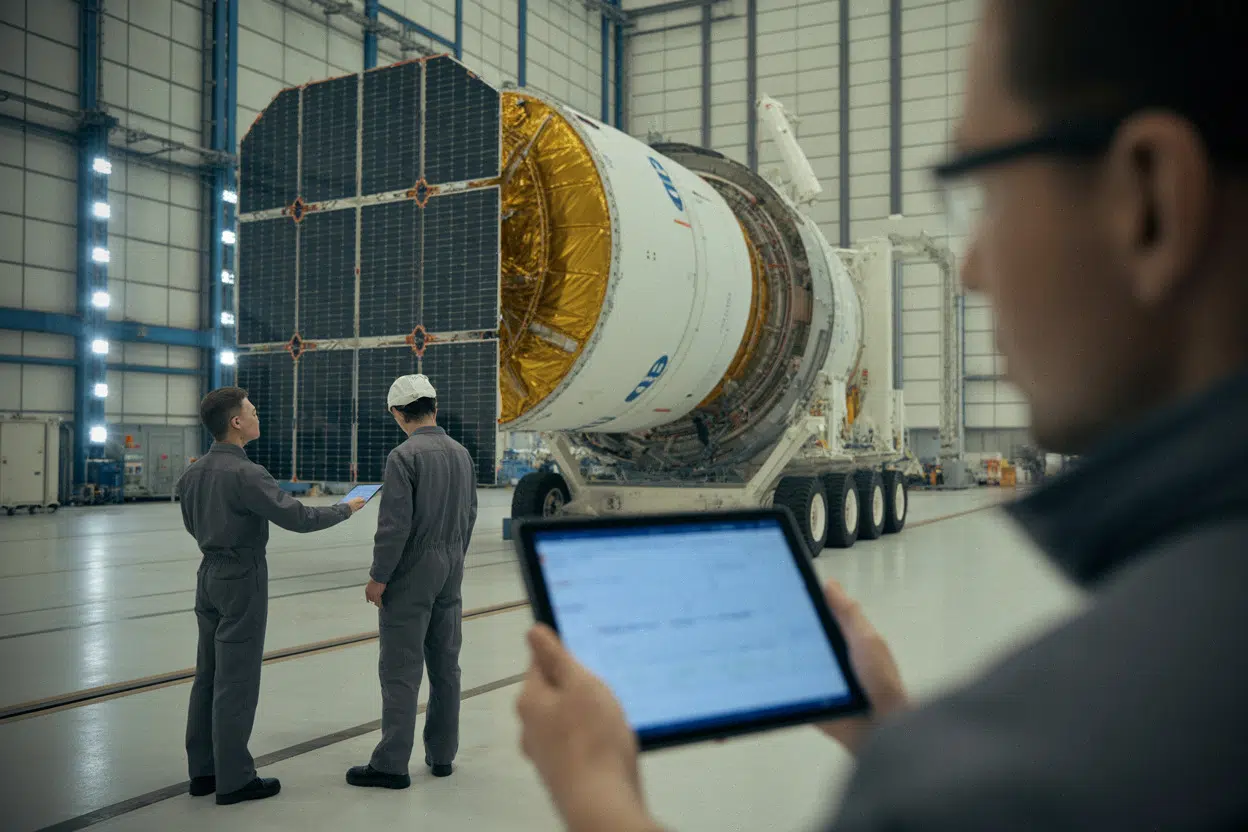
For SpaceX, the strategic appeal is described as resting on two levers. One is its launch advantage, which lowers the cost of reaching orbit and could make some scenarios less far-fetched. The other is its experience operating large constellations, proven with Starlink. An orbital energy architecture would demand large-scale operations—maintenance, replacement, space-traffic management, and debris protection. A company that has already industrialized satellite production might see continuity there, though at a vastly different power scale.
Potential benefits are framed as targeted use cases: powering isolated installations, supporting grids during peak demand, or supplying military bases or disaster zones. But terrestrial competitors are improving quickly as panel costs fall, storage improves, and smart grids expand. Orbital solar would need to prove a decisive economic advantage, not just continuous generation. In documents and leaks cited by tech media, Musk’s expressed interest in solar is portrayed as evolving, fueling speculation that the exploration is opportunistic rather than doctrinal.

IPO talk, valuation speculation, and SpaceX’s long-horizon growth story
Discussion of a SpaceX IPO—and the valuation estimates attached to it—has been intensifying in business media. Recent coverage has pointed to very high levels and scenarios in which Musk would become even more financially dominant. At the same time, messages attributed to Musk on X suggest SpaceX could, over the long term, be worth more than his other holdings if certain goals are met.
Those projections fit a communications style built around distant horizons: Mars exploration, orbital infrastructure, and global services.
The article draws a line between two layers of the business. On one side are already-monetized activities: launch contracts, government missions, and especially Starlink, which has introduced recurring subscription revenue and a growing customer base. On the other side are big bets—orbital energy among them—that would require massive capital, time, and regulatory maturity. An IPO prices both the present and the promise, but markets typically demand clearer visibility into margins, investment trajectory, and governance.
Some observers warn of a gap between narrative and execution. The harshest critics argue that overly ambitious projects are used to justify high multiples. Supporters counter that SpaceX has already turned multiple bets into operational products—reusable rockets, higher launch cadence, lower costs, and industrial-scale satellite manufacturing. Both views coexist: a record of concrete innovation alongside promises with major technical unknowns.
In that context, Musk’s energy framing takes on a financial dimension. Presenting the economy as a matter of kilowatt-hours implies that controlling access to energy and space transport could be a value base akin to critical infrastructure. That can invite comparisons to networks, utilities, or telecom giants—though the article notes the limits of the analogy, given geopolitical, security, licensing, and supply-chain constraints that shape space companies.
Musk’s energy bet runs into regulators, orbital environment concerns, and cost realities
Centering the story on energy doesn’t erase regulatory hurdles. Any orbital transmission solution would need approvals for spectrum, safety, and ground sites. Ground infrastructure—antennas, rectennas, land footprint, and grid interconnection—can be the slowest part to deploy. Governments would likely demand assurances on interference, beam control, and airspace protection. In this kind of project, timelines are shaped as much by agencies as by factories.
The environmental argument cuts both ways. Continuous low-carbon generation could be a selling point, especially if it displaces fossil fuel generation during peak demand. But adding more objects to orbit increases pressure on the space environment—debris, collisions, and congestion in useful orbits. Criticism over orbital crowding has already surfaced around Starlink; extending the concept to energy platforms would likely reignite those debates with even greater scrutiny.
Economics remains the central test: cost of capital, launch costs, equipment lifespan, insurance, and operating expenses. Orbital projects face structural disadvantages—every kilogram matters, and failures are difficult to repair. Business models come into focus quickly: long-term electricity sales, sovereign contracts, or resilience services. Energy markets are often regulated and unforgiving about delivery uncertainty, which raises the bar for reliability to something closer to terrestrial infrastructure.
For Musk, the stakes are also political and industrial. If AI and electrification accelerate demand, suppliers of decarbonized capacity gain leverage. The French business newspaper Les Echos is cited as describing an ambitious 2026 funding trajectory across the Musk ecosystem, a sign of preparations for heavy investment. Across Tesla, xAI, and SpaceX, the throughline is securing abundant electricity to power computing, mobility, and future infrastructure. The economic feasibility of orbital solar remains uncertain, but the shift toward energy as the organizing theme signals a priority: easing the physical constraints that can limit technological growth.
https://www.europe-infos.fr/actualites/9577/herimoncourt-les-deux-animatrices-de-gym-harmonie-prennent-leur-retraite-apres-des-annees-de-cours/
https://www.europe-infos.fr/actualites/9596/en-2026-lia-sinstalle-dans-bureaux-usines-hopitaux-services-publics-ce-que-lhumain-doit-preserver-au-travail/
https://www.europe-infos.fr/actualites/9567/550-monuments-1-000-km-carte-des-megalithes-du-morbihan-un-an-apres-lunesco-ce-qui-change-pour-vos-visites/
Key Takeaways
- Elon Musk supports the idea of an economy measured in energy rather than money.
- SpaceX is exploring space-based solar power, facing hurdles in mass, efficiency, and safety.
- Debates over an IPO and SpaceX’s valuation amplify the long-term narrative.
- Regulation, the space environment, and operating costs weigh on the model’s credibility.
Sources
- Musk affirme que SpaceX pourrait valoir plus que le reste … – Binance
- SpaceX et xAI : l'odyssée solaire d'Elon Musk – Les Echos
- Elon Musk a changé d'avis sur l'énergie solaire – Frandroid
- Les projets irréalistes d’Elon Musk censés justifier la valorisation astronomique de SpaceX
- Economie Archives – Benzinga France