

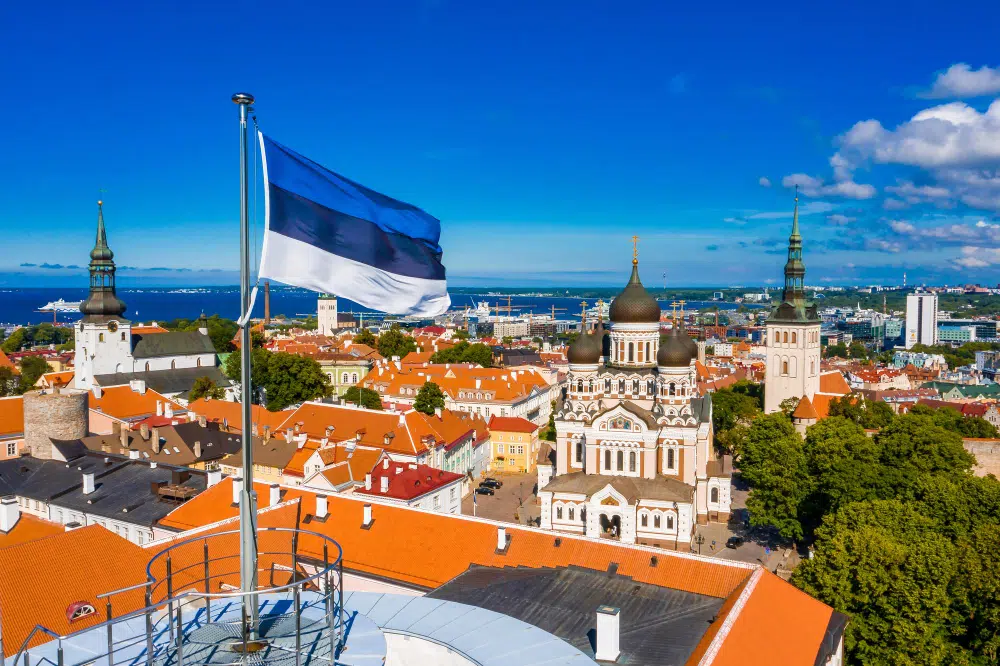
Eastern Europe has become a go-to play for entrepreneurs who want to launch a company inside the European Union while keeping taxes and red tape lower than in Western Europe.
But “Eastern Europe” isn’t one place, it’s a menu. Estonia, Bulgaria, Romania, Poland, Latvia, and the Czech Republic all offer different tax rules, startup costs, and levels of bureaucracy. And the biggest catch is the one many glossy guides skip: forming a company abroad doesn’t automatically change whereyouowe personal taxes.
Here’s how six popular options stack up for 2026, with real-world costs and the fine print that can make, or break, the strategy.
Why entrepreneurs are eyeing Eastern Europe
The pitch is straightforward: corporate tax rates in much of Western Europe often land around 22% to 25%. In parts of Eastern Europe, they commonly range from about 9% to 21%, with special regimes that can push the effective rate even lower in certain cases.
Unlike setting up in far-flung low-tax hubs, these countries are in the EU. That means an EU-registered company can more easily sell across the bloc, move goods within the single market, and often looks more “bankable” to European institutions than a company incorporated in a classic offshore jurisdiction.
Several of these countries also let founders incorporate remotely, sometimes fully online, while ongoing costs like accounting and registered office services tend to be cheaper than in Western Europe.
How to choose: the checklist that matters
If you’re comparing countries, the headline corporate tax rate isn’t enough. The practical questions include the effective tax you’ll actually pay, how dividends are taxed, minimum required capital, whether non-residents can form and manage the company, tax-treaty coverage, and the true annual cost of compliance (accounting, filings, registered address).
Side-by-side: 6 Eastern European picks for forming a company
Here’s the quick comparison, with euro figures converted at roughly €1 ≈ $1.08.
Estonia:0% on retained earnings / 20% when profits are distributed; dividends effectively taxed at 20%; minimum capital about $0.01; remote setup yes; as fast as 24 hours.
Bulgaria:10% corporate tax; 5% dividend tax; minimum capital about $1.08; remote setup yes; roughly 3–5 days.
Romania:1% tax on revenue under a “micro” regime (with conditions) or 16% on profit; dividends 8%; minimum capital about $49; remote setup partially; roughly 3–10 days depending on process.
Poland:9% corporate tax for smaller firms (with thresholds) or 19% standard; dividends 19%; minimum capital about $1.08; remote setup partially; about 1 day for some filings.
Latvia:20% tax due when profits are distributed (retained earnings untaxed); dividends can be 0% in certain structures; minimum capital about $1.08; remote setup yes; about 1–3 business days.
Czech Republic:21% corporate tax; dividends 15%; minimum capital about $1.08; remote setup generally no; often 5–10 days with notary steps.
Estonia: the online-incorporation pioneer
Estonia is the name that comes up first for a reason. Since launching its e-Residency program in 2014, the country has built one of Europe’s most advanced digital systems for foreigners to form and run an Estonian company without living there, or even visiting.
E-Residency is a government-issued digital ID for non-residents. It allows electronic signatures and access to online services, including forming and managing an Estonian private limited company (OÜ), roughly comparable to a U.S. LLC in day-to-day flexibility (though the legal frameworks differ).
Typical first-year costs:e-Residency card about €100 (≈ $108); registration about €265 (≈ $286); required accounting often €50–€150/month (≈ $54–$162); registered address often €30–€100/month (≈ $32–$108). Many founders land around €1,500–€2,500 for year one (≈ $1,620–$2,700), depending on providers.
The tax hook is widely misunderstood. Estonia’s corporate tax is effectively0% as long as profits stay inside the company. Once you distribute profits, a20% tax applies to the distribution. It’s not “no tax”, it’s a powerful deferral model that can favor companies reinvesting for growth.
One more reality check: authorities can scrutinize whether the company has real economic substance. If it’s just a mailbox with management and operations elsewhere, it can trigger challenges, especially when your home country’s tax agency looks at where the business is actually run.
Bulgaria: the EU’s low-tax standout for distributed profits
Bulgaria’s appeal is blunt: a flat10% corporate taxand5% tax on dividends. For owners focused on paying out profits, that combination can keep the total tax bite on distributed earnings around14.5%, among the lowest in the EU.
Unlike regimes that come with tight caps or residency requirements, Bulgaria’s 10% rate applies broadly, regardless of company size. Non-residents can generally form and manage Bulgarian limited-liability companies, often using a local attorney or agent with a power of attorney. Minimum capital is symbolic, about €1 (≈ $1.08).
Typical costs:formation via an agent often €500–€800 (≈ $540–$865); annual accounting €600–€1,200 (≈ $650–$1,300); registered address €200–€400 (≈ $215–$430). Many businesses come in around €900–€1,800 per year (≈ $970–$1,945), making it one of the cheapest options operationally.
Romania: a revenue-tax regime that can be a cheat code, if you qualify
Romania is less famous in many incorporation guides, but it can be unusually aggressive for small, high-margin businesses.
Under Romania’s “micro-enterprise” regime, qualifying companies can pay1% tax on revenue(not profit) if annual revenue stays under€500,000(≈$540,000) and the company hasat least one employee, which can include the manager under an employment contract.
That structure can dramatically favor businesses with big margins and low overhead. But if you exceed the threshold or don’t meet the employee requirement, the tax can shift to16% on profit, still competitive, just less eye-popping.
Incorporation may require more hands-on steps than Estonia, often involving a local representative and sometimes an in-person visit. Formation costs are commonly €600–€1,000 (≈ $650–$1,080), with timelines often around a week or so depending on the setup.
Poland: built for scale, not just tax optimization
Poland is often overlooked in tax-first comparisons, even though it’s one of Europe’s economic heavyweights. With roughly 38 million people, it’s the EU’s sixth-largest economy, more like the size-and-demand argument you’d make for choosing Texas over a smaller state, not just a tax arbitrage play.
Poland offers a9% corporate tax ratefor smaller companies under a revenue threshold of€2 million(≈$2.16 million). Above that, the standard rate is19%.
Some online incorporation is possible through the S24 system, but certain steps can still require additional formalities, including notary involvement in some cases.
Latvia: a sleeper pick for holding companies and dividend planning
Latvia runs a system similar to Estonia’s: profits kept inside the company generally aren’t taxed, and a20% corporate taxis triggered when profits are distributed.
Where Latvia can stand out is in holding-company structures. Under certain conditions, often tied to ownership percentage and holding period, dividends received from subsidiaries can beexempt, which can matter for founders building a multi-company group.
Latvia also supports remote formation via notarized power of attorney. Minimum capital is about €1 (≈ $1.08), and incorporation can take roughly 1–3 business days. Formation via an agent often runs €600–€1,000 (≈ $650–$1,080), with annual accounting commonly €800–€1,500 (≈ $865–$1,620).
Czech Republic: higher taxes, stronger “corporate” credibility
If you’re chasing the lowest possible corporate tax rate, the Czech Republic won’t win. Its corporate tax is21%. But it offers something harder to quantify: stability, predictability, and a broad network of tax treaties, factors that can matter when you’re dealing with international partners, banks, or investors.
Prague, in particular, carries a strong business reputation in Europe. For some B2B companies and startups courting European capital, that “address effect” can be a real asset.
The tradeoff is process. Incorporation often requires notary steps and typically can’t be done fully remotely, making it more operationally demanding than Estonia or Latvia.
The biggest traps: what incorporation guides often bury
Forming a company abroad doesn’t automatically change your personal tax residency.In plain English: where you live and where you run your life usually determines where you owe personal taxes. If you’re a U.S. citizen, you also face worldwide taxation regardless of where you live, with complex rules around foreign corporations, reporting, and credits.
Another common pitfall is “substance.” Tax authorities increasingly look at where a company is actually managed, where decisions are made, contracts are signed, banking happens, and whether there’s real activity on the ground. A pure mailbox company can invite reclassification and penalties.
Founders also routinely underestimate compliance: local bookkeeping is typically mandatory, filings are not optional, and the cheapest-looking jurisdiction can become expensive once you add professional fees and ongoing reporting.
Which country fits which founder?
Estonia:best for digital-first founders who want a remote, streamlined setup and plan to reinvest profits.
Bulgaria:best for entrepreneurs focused on low taxes on distributed profits and low ongoing costs.
Romania:best for high-revenue, high-margin service businesses that can qualify for the 1% revenue-tax regime.
Poland:best for companies that want access to a large domestic market and a platform to hire and scale.
Latvia:best for holding-company structures and certain dividend strategies inside the EU framework.
Czech Republic:best for founders prioritizing credibility, treaty coverage, and a long-term Central Europe footprint.
What this means for 2026
The real takeaway isn’t that one country “wins.” It’s that the best choice depends on how you make money, whether you plan to reinvest or pay out profits, and, most importantly, where you personally live and manage the business.
For entrepreneurs thinking about an EU base in 2026, Eastern Europe offers legitimate options. But the smartest move is matching the jurisdiction to your operating reality, not just the lowest tax number on a chart.