
After a fresh round of earthquakes rattled Venezuela, parts of the country’s crypto community sprang into action with a familiar pitch: send help in digital dollars.
Organizers are steering donations into stablecoins like USDT and USDC, tokens designed to track the U.S. dollar, along with some Bitcoin contributions. The idea is speed and transparency: money can arrive in minutes, and anyone can watch it move on a public blockchain. The hard part comes next, when those digital funds have to turn into clean water, food, medicine, and fuel in places where power and internet can vanish overnight.
Venezuela is a natural test case. Years of runaway inflation, banking restrictions, and a massive diaspora have pushed many Venezuelans to use crypto, especially dollar-pegged stablecoins, as a practical way to save and send money. In a disaster, that existing network of mobile wallets, peer-to-peer traders, and local nonprofits can become an emergency pipeline.
Stablecoins take center stage in Venezuelan-led fundraising drives
Donation appeals have spread through the channels Venezuelan crypto users already rely on: Telegram groups, X accounts, peer-to-peer trading communities, and local tech associations. Most campaigns are asking for USDT or USDC to avoid the whiplash of crypto price swings between the moment someone donates and the moment volunteers buy supplies.
That stability matters when teams are trying to fund standardized grocery bundles or basic medical kits. A $20 donation should still be about $20 when it’s time to pay a supplier, not $16 because the market dipped.
Many organizers post public wallet addresses or QR codes, sometimes paired with simple tracking sheets showing what came in and what went out. It’s a trust play in a country where corruption scandals have touched traditional aid efforts, too. Blockchain records can show where funds moved, but the most careful groups also publish receipts, delivery photos, and anonymized beneficiary lists to prove the money turned into real-world help.
The totals vary widely because much of the giving comes in small increments, $5 here, $10 there, often from Venezuelans living abroad. For donors in the diaspora, sending stablecoins can be faster than international bank transfers and less dependent on business hours or intermediary banks.
Turning crypto into food and medicine exposes the real bottlenecks
Once donations land, the central challenge is execution: convert, buy, move. Organizers often have to cash out through exchanges or peer-to-peer markets to get Venezuelan bolívars or U.S. dollars in cash. That step can bring ugly surprises, bad exchange rates, thin local liquidity, scams, or sudden compliance checks.
And in disaster zones, crypto isn’t the scarce resource, logistics are. Fuel, functioning vehicles, secure supply routes, and reliable vendors can matter more than what’s sitting in a digital wallet.
Earthquakes can also knock out the basics: electricity, cell towers, point-of-sale systems. Without internet, a mobile wallet is dead weight. In response, better-connected cities often become hubs, teams buy in bulk where communications still work, then ship supplies into harder-hit areas or fund local crews who still have a signal.
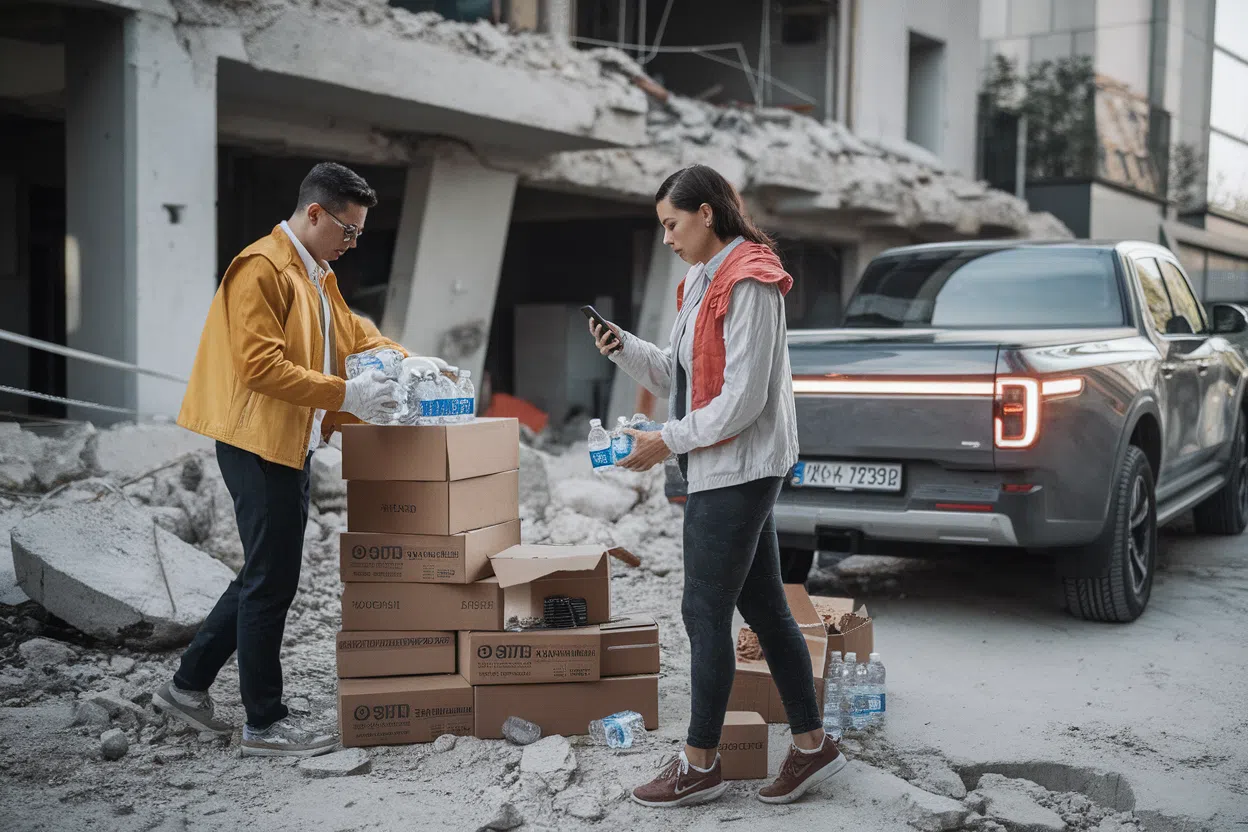
Most campaigns prioritize fast-moving essentials: drinking water, canned food, hygiene kits, blankets, batteries, and first-line medications. Purchases are sometimes split up to avoid emptying shelves or forcing volunteers into risky long trips. In places where merchants don’t accept digital payments, cash remains king.
Security is another constant concern. Moving goods, or cash, can put volunteers in danger. Some organizers try to pay vetted suppliers directly when possible, or rely on trusted intermediaries such as churches, neighborhood groups, and NGOs that already operate on the ground.
Blockchain transparency helps, but it doesn’t prove aid was delivered
Crypto advocates point to traceability as the big advantage: donors can follow funds from a campaign wallet to an “execution” wallet used for spending. For faraway contributors, especially the diaspora, that visibility can feel like a safeguard against misuse.
But a blockchain transaction only proves money moved from one address to another. It doesn’t prove the purchase was made at a fair price, or that the supplies arrived where they were needed. That’s why serious campaigns pair on-chain records with off-chain documentation: receipts, photos, videos, and confirmations from local partners.
Some groups also use multi-signature wallets, which require multiple people to approve transfers. It can reduce the risk of one person walking off with the money, but it can also slow decisions when time matters most. The most effective efforts tend to set clear emergency budgets and publish frequent updates to balance speed with oversight.
Compliance can also trip up relief work. Exchanges and payment providers often require identity checks and source-of-funds documentation, which can delay conversions or direct payments. Organizers who plan ahead diversify their cash-out options and work with partners who can document transactions cleanly.
Why crypto relief is gaining traction in a country shaped by inflation
Venezuela’s crypto response didn’t appear out of nowhere. After years of economic turmoil, many households and freelancers already use stablecoins as a store of value or a way to get paid. For families receiving support from relatives abroad, crypto can be a faster, sometimes cheaper alternative to traditional remittance services.
That familiarity makes crypto-based fundraising plausible in a crisis, but it also highlights a gap. The most vulnerable people may not have smartphones, reliable internet, or the digital know-how to receive aid directly to a wallet. In practice, crypto donations usually fund physical distributions or targeted purchases rather than mass person-to-person transfers.
Over time, these earthquake fundraisers are becoming real-world stress tests for the crypto ecosystem: it can move money quickly across borders and make accounting easier to audit, but it can’t fix broken roads, blackouts, or supply shortages. The campaigns that earn trust will be the ones that can document what they bought, show where it went, and keep operating when the lights, and the cell service, go out.