

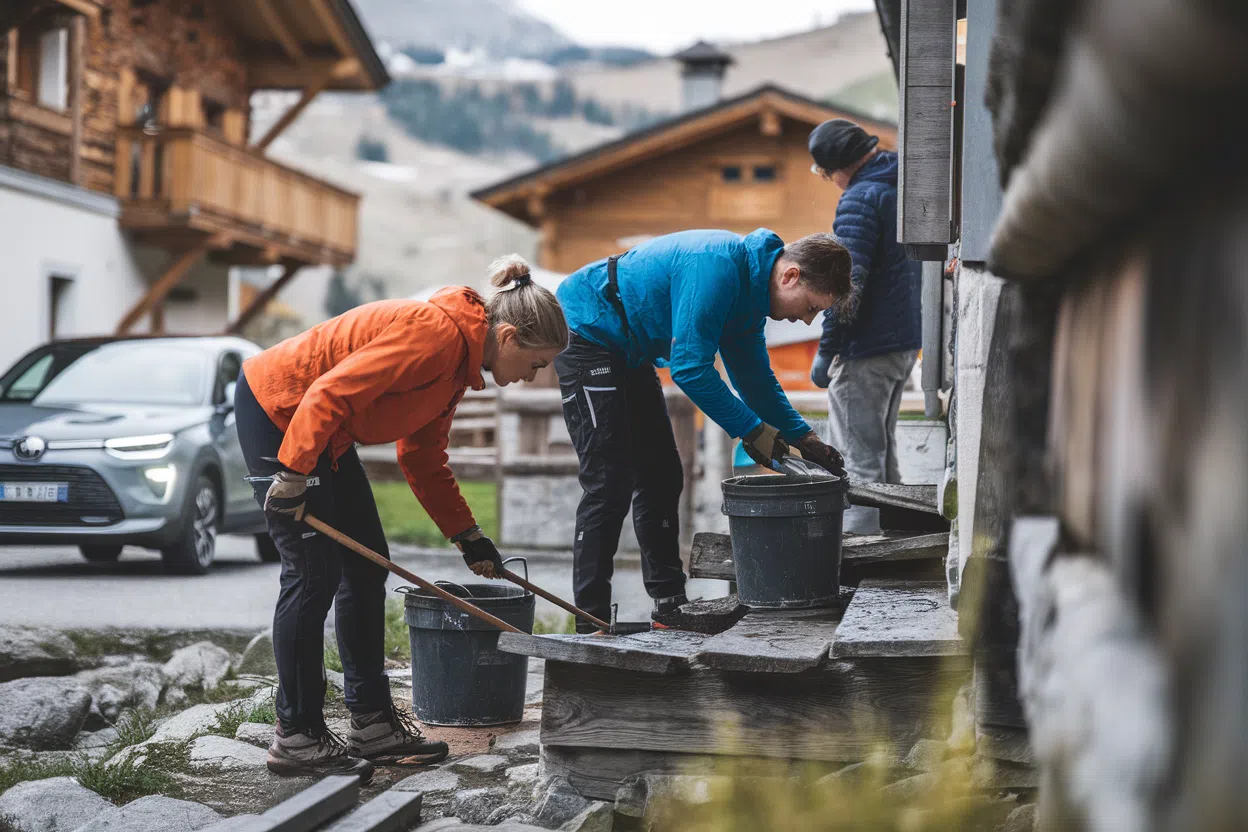
Twelve vacationers arrived in the tiny French Alpine village of Aussois expecting mountain views and hiking trails. Instead, they also signed up for hard hats, gloves, and a crash course in saving a crumbling piece of local history.
Over roughly two weeks, the visitors donated a few hours a day to a supervised restoration worksite, part of a growing push across the Alps to keep centuries-old chapels, stone walls, and farm buildings from collapsing as small towns struggle to pay for repairs and find specialized craftspeople.
The idea is simple: summer is the narrow window when weather at high elevation cooperates, but it’s also when local contractors are booked solid. So towns and nonprofits are turning tourists into short-term helpers, without replacing professionals.
A vacation that includes a worksite shift
Aussois sits in the Haute Maurienne valley in France’s Savoie region, near the Italian border, an area Americans might think of as the French equivalent of a remote Rocky Mountain town with deep local history and a short building season.
The project, highlighted by local outlet Savoie News, was organized as a structured volunteer worksite. Participants joined for a few hours a day, following safety rules and taking on tasks matched to their skill level: clearing brush, hauling debris, cleaning and sorting reusable stones, and helping with basic masonry when supervisors allowed.
Organizers stressed the point wasn’t to turn tourists into construction crews. It was to handle the time-consuming prep work that makes professional restoration faster, safer, and cheaper once specialists step in.
Why these small repairs matter more than a postcard
In mountain villages like Aussois, “heritage” isn’t just about charm. A deteriorating wall can threaten a footpath. A leaking roof can accelerate structural failure. And when repairs are delayed, costs spike fast.
That’s why local leaders and preservation groups push preventive maintenance, small, regular interventions that keep a site stable, rather than waiting for a major collapse that forces an expensive emergency rebuild.
Volunteer labor, even in short bursts, can shave meaningful time off a project by tackling the unglamorous work: clearing access routes, protecting fragile areas, and sorting materials so experts can focus on the technical restoration.
Small towns, big bills, and not enough specialists
The financial math is brutal for small Alpine municipalities. Restoring old stonework, timber framing, or roofs requires specialized skills and materials. Add the cost of transporting equipment up narrow roads, setting up scaffolding, and meeting safety requirements, and estimates climb quickly.
Even when grant money is available, from regional governments, heritage foundations, or tourism-linked programs, towns often need detailed applications: site assessments, photos, technical plans, and a credible financing package.
That’s where volunteer worksites can help beyond the labor. Documented progress and visible community buy-in can strengthen a funding pitch and convince partners the project is real, organized, and worth backing.
There’s also a workforce problem. Traditional trades, like lime plastering and historic stone repair, aren’t available everywhere, and many specialists have long waitlists. A site that’s already been cleared, secured, and prepped is simply easier for a contractor to accept.
“Useful tourism” is gaining traction in the Alps
Aussois is part of a broader trend sometimes described as participatory or “useful” tourism: travelers volunteer a slice of their trip for a community project, then go back to normal vacation activities, hiking, sightseeing, relaxing.
Supporters say it creates a different relationship with a place. Instead of consuming the scenery, visitors help maintain something shared. Many learn why old stone walls need drainage, how vegetation can destabilize mortar joints, and why rushing a repair can do more harm than good.
For towns, the benefits can extend beyond the worksite. Volunteers still spend money locally on lodging, meals, and shops, and they often become long-distance ambassadors, donating later, joining an association, or spreading the word.
Safety, legality, and the line between help and hired work
Organizers also have to manage risks. The boundary between volunteering and under-the-table labor must be clear, and tasks must stay appropriate for non-professionals. That typically means support roles under a technical lead, not complex structural work.
Safety is central: protective gear, tool rules, daily briefings, and realistic goals. In the Alps, weather can flip quickly, rain, wind, heat, so short work sessions and tight supervision matter.
Preservation groups also emphasize using compatible materials and methods. The wrong mortar, for example, can trap moisture and damage old masonry. Volunteers can sort and clean stones, but technical decisions stay with experienced supervisors.
A local partnership that keeps the project from falling apart
Projects like this don’t run on goodwill alone. They require coordination between the town government, local associations, and sometimes architects, contractors, and heritage agencies. The municipality typically handles permits, access, waste disposal, and part of the funding, while associations recruit volunteers and manage schedules.
Clear communication with residents is also key, what’s being done, when, by whom, and with what safeguards. Visible worksites can draw curiosity and criticism, and transparency helps keep trust intact.
Most of all, organizers see this as long-haul work. Heritage sites aren’t “saved” in a single summer session. The goal is steady progress, small, repeatable actions that prevent a treasured place from sliding into ruin after just a few harsh seasons.
https://www.europe-infos.fr/non-classe/9264/ia-et-culture-la-deputee-celine-calvez-alerte-sur-des-opportunites-a-saisir-en-france/