

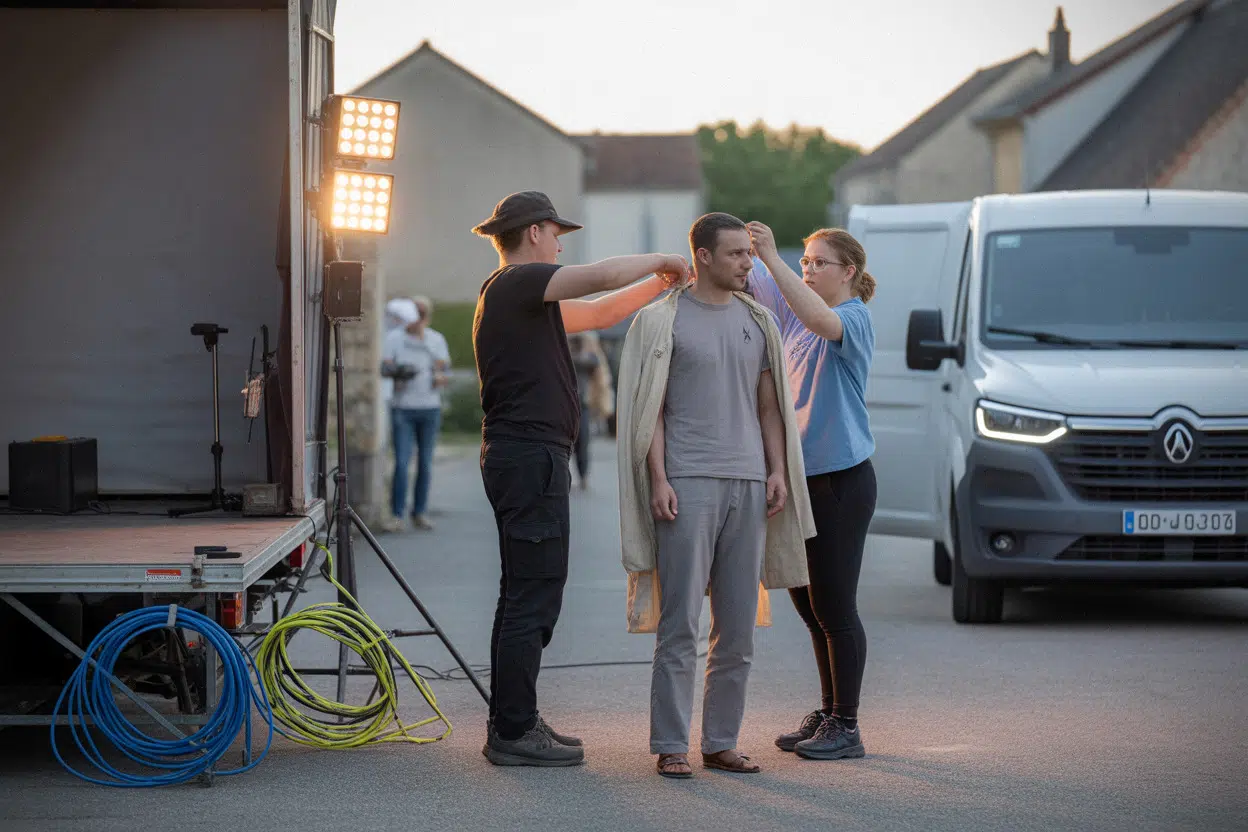
LARRA, France — A small rural community north of Toulouse is trying to turn its streets and squares into an open-air stage for an immersive historical production that spans everything from prehistory to modern times.
The project, reported locally by La Dépêche, is built around a “living fresco” told in 10 separate scenes. Organizers are now publicly recruiting volunteers to form the troupe, build sets, sew costumes, and handle the logistics needed to mount an outdoor show where the audience moves close to the action instead of watching from fixed seats.
In Larra, the goal is both cultural and civic: offer a big local outing that brings residents together while reinforcing a shared story about the town and its territory.
A volunteer-driven production, coordinated by Michel Hastenteuffel
The push to staff up is being coordinated by Michel Hastenteuffel, who has issued a broad call for help. The message is intentionally inclusive: people can join even without artistic experience, reflecting how small-town productions in France typically depend on residents rather than professional crews.
Organizers are looking for a wide range of roles—amateur actors, seamstresses, handy people, stage managers, extras, and volunteers to help with welcoming and crowd flow. The work is expected to function like a community “cultural worksite,” with planning meetings, read-throughs, staging tryouts, and hands-on workshops to make props and scenery.
Behind the scenes, the needs add up quickly: enough costumes and coherent accessories, entrances and exits that work in public spaces, basic lighting, and sound that can carry outdoors. For an immersive format, managing audience movement becomes central, especially when spectators may pass through narrow areas and end up close to performers.
Organizers are also emphasizing the social side of the effort. Rehearsals can become a meeting place for residents who don’t normally cross paths, encouraging intergenerational cooperation—adults building, teenagers performing, retirees passing along practical know-how.
https://www.europe-infos.fr/actualites/9539/11-juillet-2026-bruno-patino-lia-en-telecommande-inversee-comment-elle-pilote-nos-choix-et-rend-lhumain-obsolete/
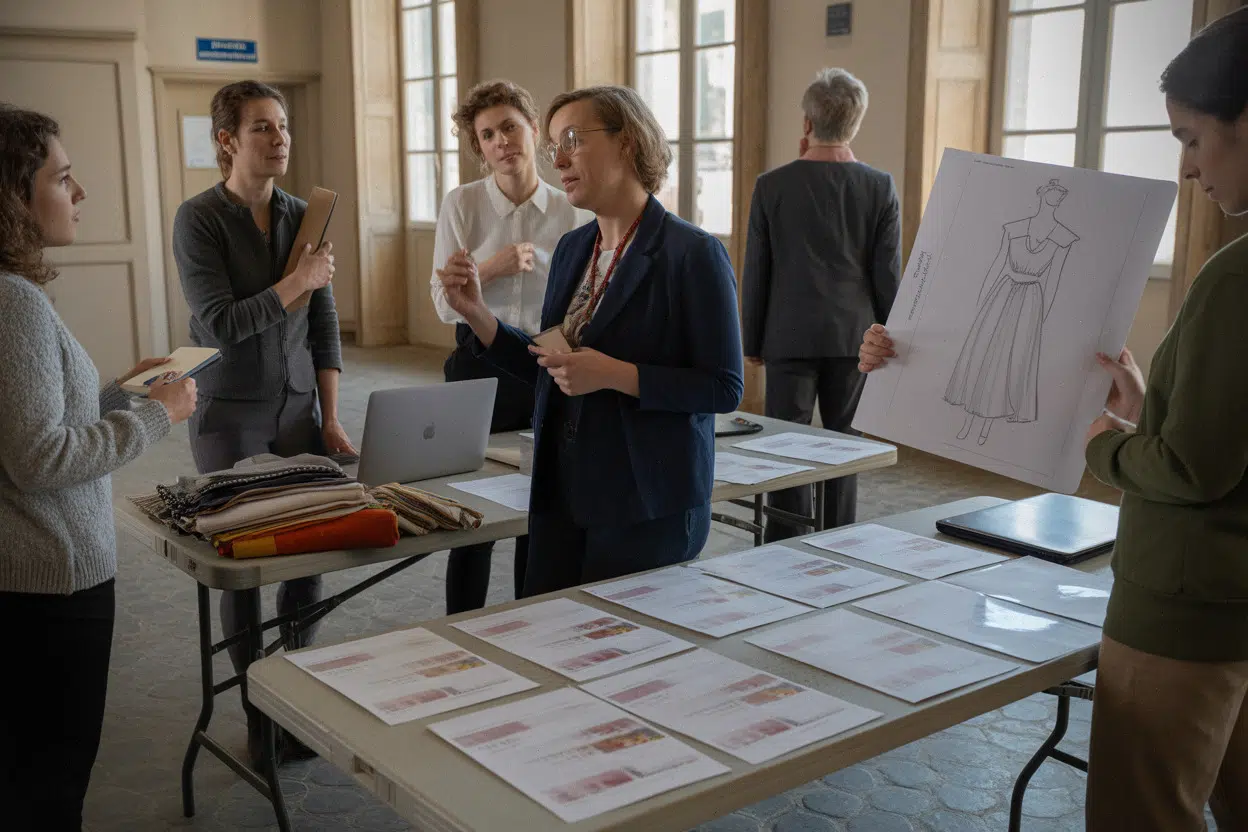
Ten scenes, from prehistory to the present, designed for an outdoor “living fresco”
The show’s structure is built around 10 scenes, a format that lets organizers cover a long timeline without forcing a single continuous plot. Each segment can establish its own moment, costumes, and soundscape before handing off to the next—while also making it easier to distribute roles, since not every volunteer has to appear in every scene.
Dramatically, the approach aims for a balance between historical rigor and clarity. Rather than piling on scholarly detail, the scenes are meant to communicate context quickly through visual storytelling—everyday gestures, tools, symbolic movement, and short exchanges—supported by music and sound effects that help mark shifts between eras.
The real village environment is part of the staging: a town square can become a forum, a path can become a guided route, and agricultural spaces can double as backdrops for rural life. But the broad sweep—from prehistory to today—also creates a challenge: avoiding caricatured shortcuts while still keeping the story accessible.
Costumes are expected to do much of the work of signaling time periods, with materials and color choices helping sell the illusion even without museum-level reconstruction. Sets, meanwhile, must be portable, wind-resistant, and quick to assemble. Safety constraints also apply to props—no uncontrolled weapons or sharp elements.
https://www.europe-infos.fr/actualites/9534/1-600-drones-feu-dartifice-le-13-juillet-2026-show-de-20-minutes-au-champ-de-mars-les-meilleurs-spots-a-viser-vite/
https://www.europe-infos.fr/actualites/9515/smr-300-10-juillet-2026-holtec-nuclear-depose-son-dossier-dipo-aux-etats-unis-ce-que-wall-street-va-vraiment-scruter/
Larra’s modern identity—and a town created in 1955
The production draws on a local wrinkle that shapes how Larra tells its story. According to information published by the town hall, Larra as an administrative municipality was created in 1955 after the larger commune of Grenade was divided. That means the territory and hamlets have deep roots, even if the official entity called Larra is relatively young.
Organizers see the show as a way to strengthen local identity in a place where belonging is often built through concrete ties—neighbor networks, agricultural activity, associations, school life, and local festivals. In that context, a historical performance becomes a kind of amplifier: residents don’t just come to watch; they come to recognize places, spot friends and relatives, and see a collective effort made visible.
La Dépêche has previously reported on Larra’s celebration of the 70th anniversary of its “regained independence,” an event treated locally as an identity marker. The new project is positioned as part of that same community tradition, using staged storytelling rather than a commemorative gathering.
Organizers also want the event to reach beyond Larra, potentially drawing visitors from neighboring towns—an outcome that can benefit local associations and nearby businesses and lodging. But that requires planning: communications, access, parking, welcoming, and security, especially in peri-urban areas where traffic and limited spaces can quickly become a problem.
Costumes, sets, lighting, and safety: the hard part of an immersive outdoor show
Turning a village into a performance space comes with constraints that can be easy to underestimate. An immersive show means a moving audience, which requires strict control of accessible zones, ground cables, steps, and gathering points. Organizers must build in safety rules, plan exits, reduce crowding risks, and adapt scenes to what volunteers can physically manage.
Weather is another variable—rain, heat, and wind can all reshape an outdoor event—pushing teams to consider backup options or practical adjustments. Costumes need to look coherent while staying comfortable and durable for repeated scenes, with footwear that can handle uneven ground and accessories that remain lightweight.
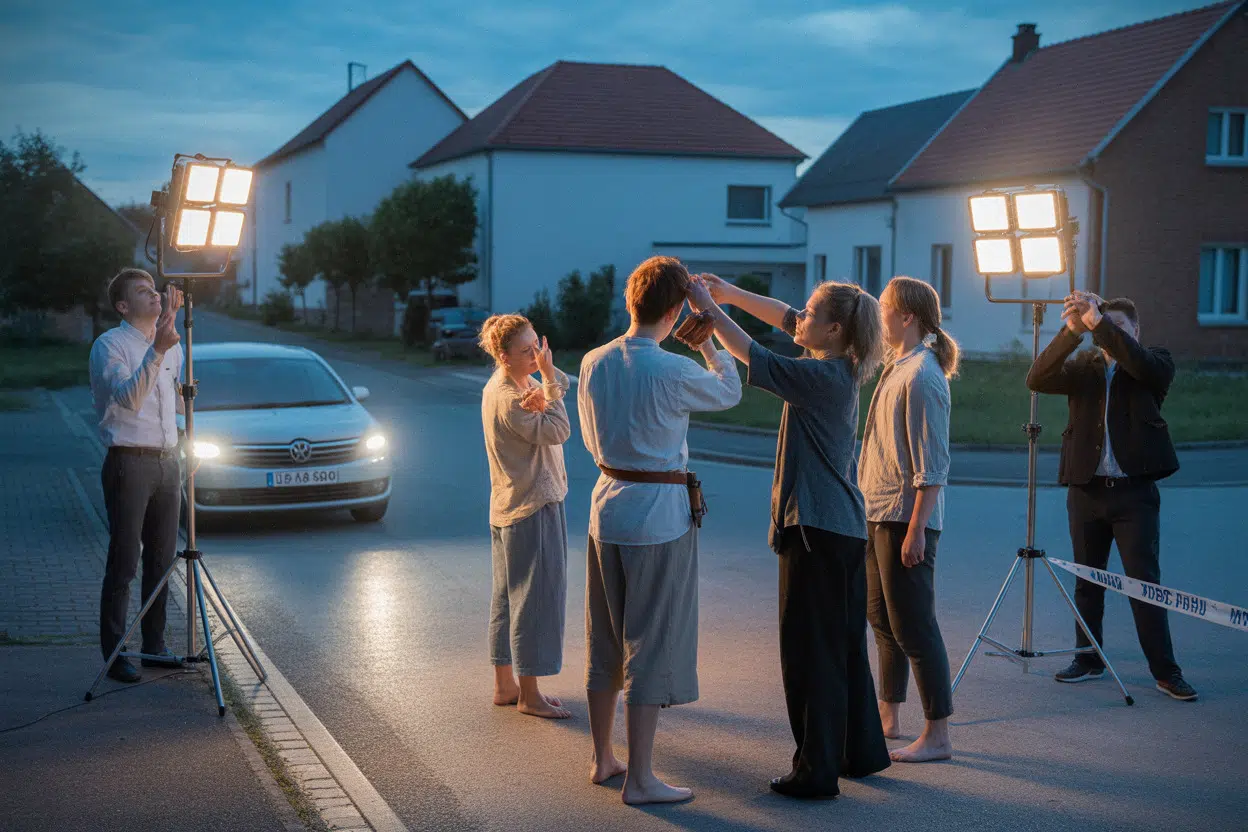
Sets are expected to suggest rather than fully reproduce historical environments; sometimes a frame, a doorway, or a single piece of furniture can be enough to anchor a period. Lighting choices matter, too, because outdoor scenes read differently depending on time of day. The teams will have to decide whether to stage the show in late afternoon or evening and choose simple solutions—such as LED fixtures, faux torches, and supplemental lighting compatible with temporary installation.
Finally, organizers must handle the regulatory and insurance side that comes with hosting the public, including permissions to use space and coverage for participating associations. In practice, French municipalities often support these projects with material help and administrative guidance—an alignment that can determine whether volunteer energy translates into a smooth, safe event.
https://www.europe-infos.fr/actualites/9506/2e-edition-repas-mensuel-de-lamac-a-masseube-tombola-et-depart-a-la-retraite-ce-rendez-vous-fait-fureur-au-bourg/
https://www.europe-infos.fr/business/9487/pourquoi-les-consultants-independants-optent-pour-le-portage-salarial/
Key Takeaways
- An immersive historical show is being prepared in Larra with strong volunteer involvement.
- The announced pageant is based on ten scenes, from Prehistory to the modern era.
- Larra, a municipality established in 1955, is using the event to strengthen its local identity.
- Success depends on costumes, sets, lighting, and an appropriate safety framework.