

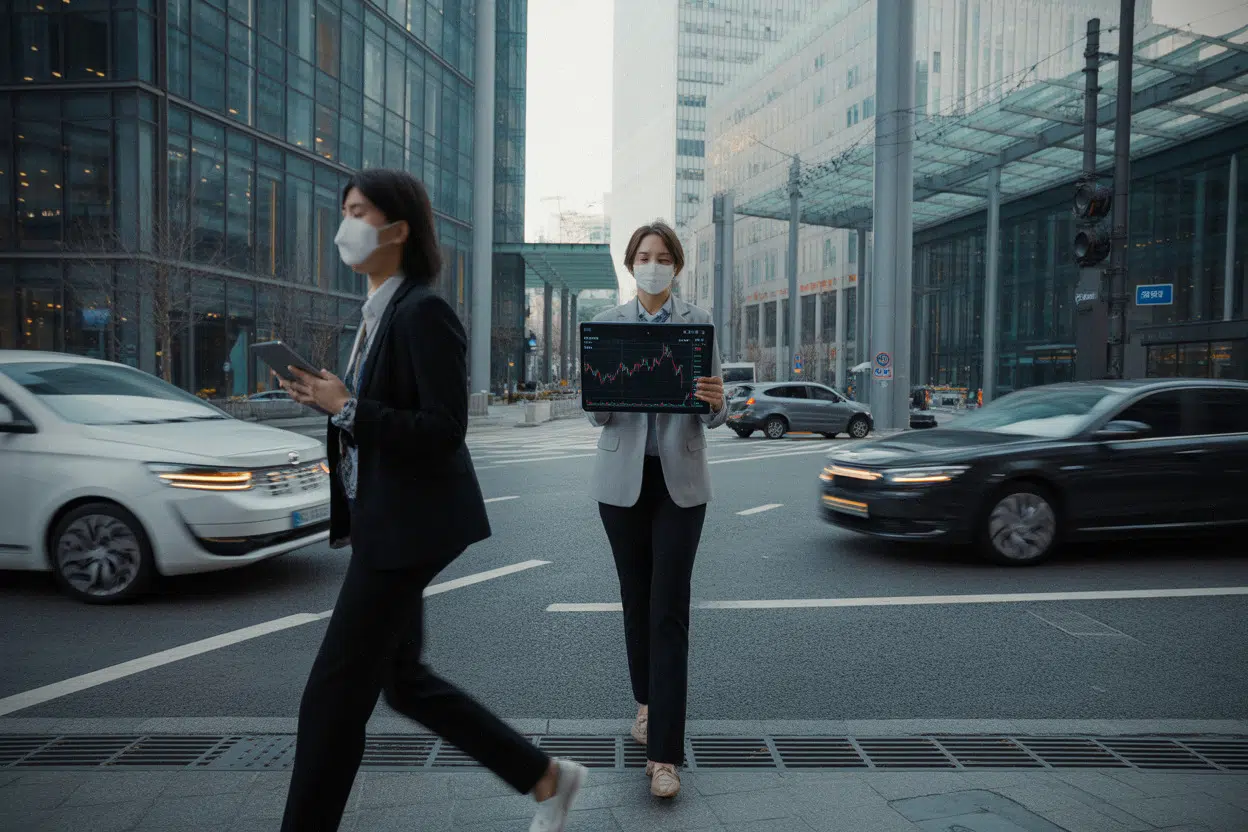
South Korea’s stock market has become one of 2026’s most sensitive gauges of the global artificial intelligence boom—and its potential excesses. In Seoul, investor enthusiasm for semiconductor and digital-infrastructure plays has pushed the Kospi higher, but it has also made the market prone to sudden, sharp reversals.
The same trading sessions can swing from tech optimism to doubts about whether valuations are sustainable. Signals from the United States—especially around spending on computing power and data centers—are quickly reflected in Seoul, where the ecosystem for memory chips and AI-focused semiconductors sits at the center of the supply chain.
That mix of momentum, profit-taking and defensive repositioning is reviving a familiar worry: a bubble. Investors are effectively stress-testing one question in real time—does AI’s promised growth justify the multiples on the screen, and how quickly can South Korea’s national champions deliver results to match?
Samsung Electronics and SK Hynix are amplifying Kospi moves
A big part of the Kospi’s 2026 story is concentration. Shares of Samsung Electronics and SK Hynix—two pillars of the memory-chip industry—have acted as market locomotives, magnifying both rallies and pullbacks.
When investors increase exposure to semiconductors, the index can climb quickly; when they cut risk, the correction can spread just as fast. The dynamic is tied to high-bandwidth memory, which is used for training and running AI models, and to expectations that demand for AI hardware will remain durable—supporting volumes, pricing and margins.
That sensitivity means earnings updates, industrial guidance and even production-capacity rumors can move stocks across the supply chain in a single session, from subcontractors to equipment makers. With international investors heavily involved in large-cap names, large sums can shift on small changes in the narrative as funds rebalance between U.S., Japanese and Korean markets.
South Korea’s heavy reliance on tech exports adds another layer. Because the country is exposed to the global electronics cycle, any change in expectations for AI services consumption can quickly alter forecasts for orders. In Seoul, the market isn’t just pricing innovation—it’s pricing industrial capacity and the ability to defend market share, which makes expectations highly cyclical.
That creates a constant contrast: AI offers a growth story, but the market demands frequent, measurable proof. In that environment, rising share prices can turn into a credibility test, with investors favoring near-term profitability over long-horizon promises.
https://www.europe-infos.fr/actualites/9605/action-stellantis-stlap-a-4841-e-a-paris-rebond-de-364-et-pression-sur-les-marges/
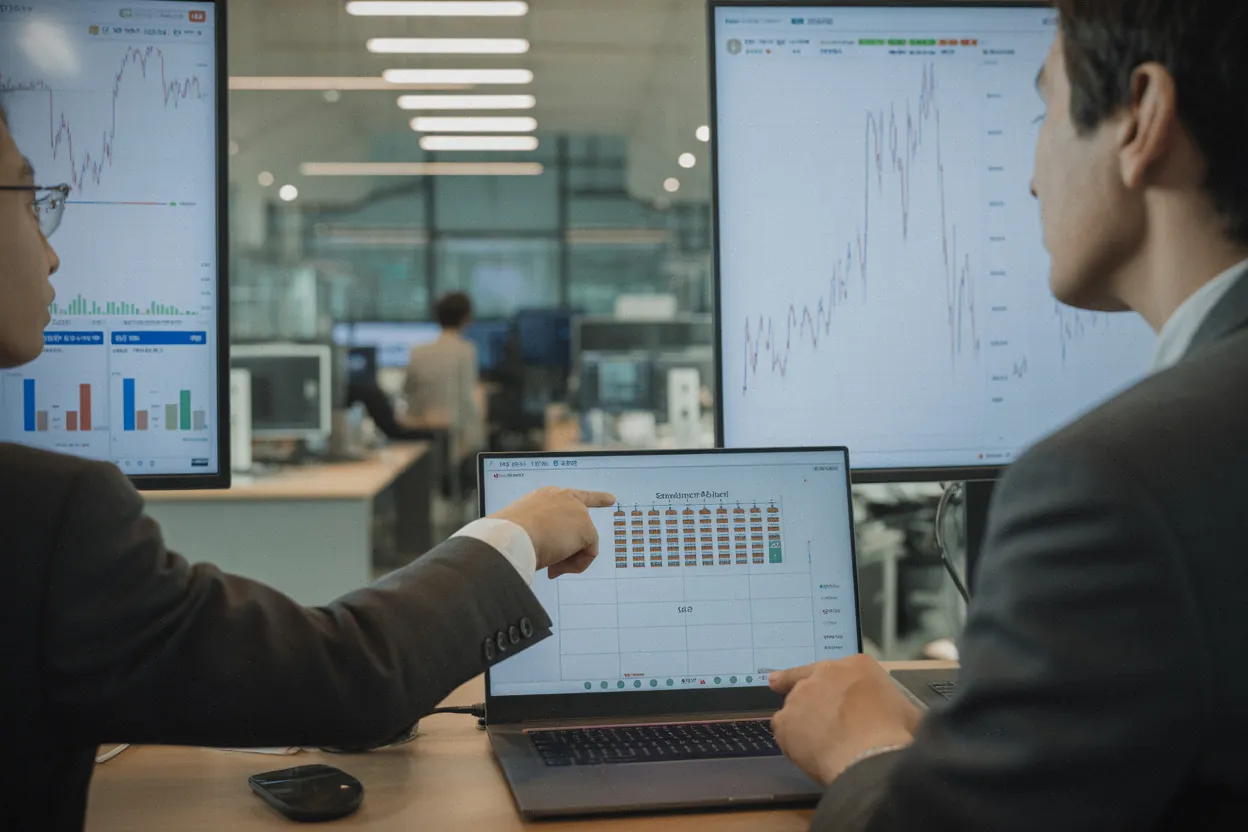
Microsoft investment signals reignite AI bubble worries
Recent jitters intensified after reports pointing to a marked increase in Microsoft investment in AI—a signal investors are reading in two very different ways. For one camp, it reinforces the strength of demand for computing capacity, data centers and components.
For another, it looks like a spending race in which each player invests to avoid falling behind—raising the risk of overcapacity if AI monetization takes longer than expected. In Seoul, that debate has shown up as an alternation between euphoric sessions and bouts of profit-taking.
Investors are searching for comparable markers: growth in AI-linked revenue, visibility into order books, and the ability to hold pricing in a fiercely competitive sector. When those markers are missing, the market tends to fixate on valuation multiples and how quickly prices have already baked in the bullish scenario.
Bubble fears aren’t only about high prices—they’re also about a potential gap between infrastructure spending and the revenue it ultimately generates. Past tech cycles have shown that periods of massive investment can be followed by consolidation when customers rationalize purchases or delay projects. Korean investors are watching U.S. signals closely because any pullback in hyperscaler spending would ripple through memory suppliers and Asian equipment makers.
Portfolio strategy can shift quickly. Some managers who benefited from the run-up reduce exposure by rotating into more defensive stocks or diversifying into sectors less sensitive to U.S. headlines. Others treat pullbacks as temporary and use them to rebuild positions in chip champions, arguing the underlying trend remains intact as long as demand for compute keeps rising.
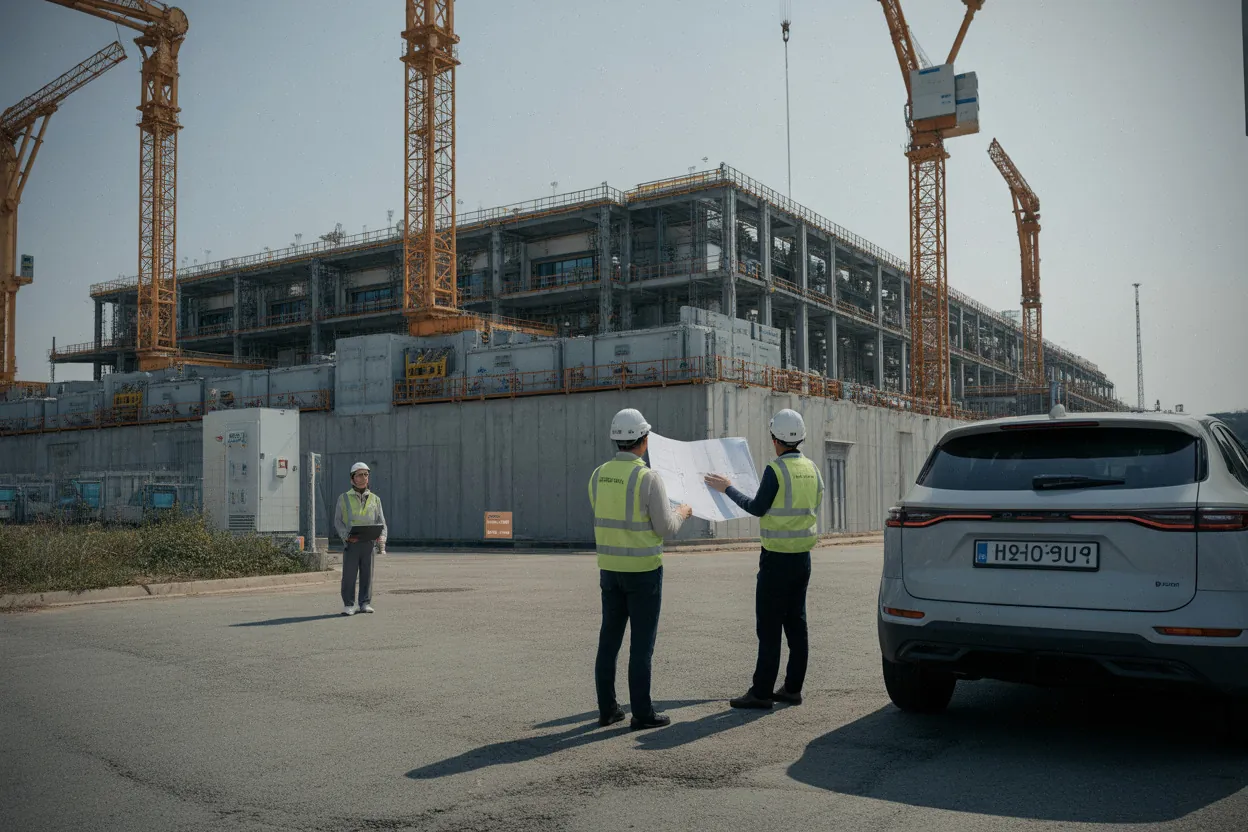
South Korea’s 1,800,000 trillion won plan reshapes expectations
Adding to the market’s intensity, South Korea’s government unveiled a 2026 plan totaling 1,800,000 trillion won over 10 years, pitched as an industrial transformation effort centered on AI and semiconductors. The sheer scale—relative to the country’s macroeconomic benchmarks—immediately fueled expectations about future demand, production capacity and the broader supplier ecosystem.
For markets, such an announcement can act as long-term support, but it also raises questions about financing, allocation and timing. In the details released, an initial 800,000 trillion won tranche would include four advanced semiconductor plants—two associated with Samsung Electronics and two with SK Hynix—along with other infrastructure.
Industry Minister Kim Jung-kwan highlighted an ambition to accelerate technologies needed for data centers and industrial AI applications. For investors, that can reduce political risk of the country falling behind, while also setting very high expectations for future performance.
The plan has also revived a domestic debate over how profits from the chip boom should be shared. When a sector posts large earnings, questions about taxation, wages and spillover benefits for subcontractors move to the forefront. Markets are watching because overly restrictive redistribution measures could pressure margins, while a stable compromise could strengthen the investment climate.
Execution constraints are practical as well: energy, water, land and skilled labor. Next-generation fabs and data centers require robust grids and fast permitting. Delays could lead investors to punish companies exposed to cost overruns; faster progress on construction and industrial partnerships could bolster confidence and attract more international capital.
Day to day, Seoul’s market is reacting to both the political narrative and microeconomic indicators. Investors want to see tenders, orders, deliveries and signals on memory-chip pricing. The plan may set the framework, but the market path will depend on whether companies can turn national ambition into recurring revenue.
Investors weigh AI upside against regional geopolitics and capital costs
The AI focus hasn’t erased other risks. Seoul remains sensitive to regional tensions and macro variables, with 2026 trading showing investors chasing AI exposure while monitoring geopolitics, energy prices and trade routes. For an export-driven market, higher shipping costs or tighter access to raw materials can quickly show up in margin expectations.
Those trade-offs are visible in sector rotation. When investors want tech-linked returns, chip stocks capture the flows. When the backdrop deteriorates, they may cut exposure to the most volatile names and move toward steadier segments—while keeping an AI allocation to avoid missing a rebound. That tactical approach can intensify daily swings and reinforce the sense of nervousness.
Institutional investors are also tracking global monetary policy because the cost of capital affects financing for industrial projects and data centers. If rates are expected to stay high, growth stocks can come under pressure even if tech demand remains strong. Regional comparisons matter too: managers weigh liquidity, governance and how much revenue is truly attributable to AI when allocating across Asian markets, including Tokyo.
Another key vulnerability is dependence on a small number of global customers, particularly major cloud operators. If those clients spread out purchases or renegotiate contracts, the impact can cascade through the entire chain. Korean players are seeking to diversify into autos, industry and digital public services, but those markets can scale more slowly than server cycles.
In that landscape, Seoul looks like a two-speed thermometer—highly reactive to short-term AI spending signals, and heavily dependent on geopolitical and financial stability to sustain long-term industrial investment. In 2026, the market has moved fast when the tech narrative dominates, and corrected just as quickly when investors decide peripheral risks are back in control.
Key takeaways
- The Kospi’s direction in 2026 has been heavily influenced by Samsung Electronics and SK Hynix, central to the AI theme.
- U.S. tech-giant investment signals, including from Microsoft, are adding to Seoul’s volatility.
- AI bubble fears are resurfacing, tied to overcapacity risk and elevated valuations.
- South Korea is promoting a 10-year, 1,800,000 trillion won plan focused on chips and data centers.
- Investors are balancing AI growth against capital costs and regional geopolitical risk.
- La Bourse de Séoul, épicentre de la tension autour de l'IA – Libération
- La Bourse de Séoul en chute, retour des craintes de bulle de l'IA
- Droguée à l'IA, la Bourse de Séoul gagne 8 % et triple sa valeur sur …
- Les bourses asiatiques bondissent, les investisseurs privilégient l'IA …
- Corée du Sud : un plan colossal dans l’IA en plein débat sur le partage des « superprofits » des géants des puces
Sources
Key Takeaways
- The KOSPI is being strongly driven by Samsung Electronics and SK Hynix, key players in the AI theme.
- Investment announcements from U.S. giants, including Microsoft, are increasing volatility in Seoul.
- Fears of an AI bubble are resurfacing, tied to the risk of overcapacity and high valuations.
- Seoul is highlighting a 1,800 trillion won plan over ten years, focused on chips and data centers.
- Investors are weighing AI growth against the cost of capital and regional geopolitical risks.
Sources
- La Bourse de Séoul, épicentre de la tension autour de l'IA – Libération
- La Bourse de Séoul en chute, retour des craintes de bulle de l'IA
- Droguée à l'IA, la Bourse de Séoul gagne 8 % et triple sa valeur sur …
- Les bourses asiatiques bondissent, les investisseurs privilégient l'IA …
- Corée du Sud : un plan colossal dans l’IA en plein débat sur le partage des « superprofits » des géants des puces