


Two 2025 rulings from the Third Civil Chamber of France’s Court of Cassation—the country’s highest court for civil matters—are reshaping how judges step into real estate disputes, drawing a sharper line between protecting litigants and sticking to the powers set out in law.
The decisions, issued February 6, 2025 (No. 23-18.360) and July 3, 2025 (No. 23-12.925) and analyzed by Kohen Avocats, address two common flashpoints: commercial leases with “termination clauses” and neighbor disputes over construction that crosses a property line. Together, they carry practical consequences for landlords, tenants, neighbors, and construction professionals by reaffirming core principles while expanding certain tools judges can use.
February 6, 2025: Emergency judge can pause a lease termination clause beyond unpaid rent
In its February 6, 2025 ruling (Third Civil Chamber, No. 23-18.360), the Court of Cassation resolved a recurring question in French commercial leasing: whether an emergency judge (a “référé” judge, who can order quick interim measures) may grant time and suspend the effects of a lease termination clause when the alleged breach is not nonpayment.
The dispute began after a restaurant closed in January 2019. A real estate holding company that became the landlord served a formal notice demanding the tenant resume operating the business, invoking the lease’s termination clause.
An appeals court had rejected the tenant’s request to suspend the clause, effectively treating Article L. 145-41 of France’s Commercial Code as a tool limited to rent and charges. The Court of Cassation partially overturned that approach, holding that the statute allows a judge to grant time and suspend a termination clause for any contractual breach by the tenant—not only unpaid rent.
Practically, that means an “operating obligation” can still trigger a termination clause, but it can also be temporarily paused under judicial supervision if the judge finds a deadline is justified.
The court also reinforced the boundaries of the emergency judge’s role: the judge can make short-term adjustments to prevent an automatic outcome that could be disproportionate in the compressed timeline of a formal notice, without deciding the merits of the entire case. For practitioners, the signal is straightforward: the termination clause remains leverage, but it is not untouchable when the law provides for suspension.
In lease litigation, that broader reading shifts leverage. Landlords will likely focus on showing there is no serious prospect of curing the breach—such as an economic inability to reopen, missing authorizations, or ongoing nonperformance. Tenants, meanwhile, can seek deadlines even outside rent disputes, but only with objective support: scheduled work, administrative steps, commitments to resume operations, accounting documentation, and other proof that reopening is realistic on a workable timeline.
https://www.europe-infos.fr/actualites/10115/mesquer-6-artistes-6-univers-a-la-maison-du-patrimoine-cette-expo-estivale-fait-fureur-aupres-des-vacanciers/

July 3, 2025: Once encroachment is proven, the judge must order a measure to end it
The July 3, 2025 ruling (Third Civil Chamber, No. 23-12.925) tackled a different corner of real estate law: neighbor conflicts involving “empiétement,” or encroachment onto someone else’s land. The Court of Cassation reaffirmed a traditional rule, applied strictly: once encroachment is established, the judge must order a measure capable of bringing it to an end.
The decision explicitly grounded that approach in the protection of property rights under Article 545 of France’s Civil Code.
The key dispute centered on an argument based on Article 8 of the European Convention on Human Rights, claiming the structure at issue could be treated as a home. The appeals court had applied a proportionality analysis, weighing a demolition request against the encroacher’s right to respect for the home.
The Court of Cassation rejected that method in this context, saying it improperly shifts the judge’s role by wrongly treating a private neighbor dispute like a case of public-authority interference. In the court’s view, the concept of “home” does not create civil immunity against a measure intended to restore the boundary line.
The phrase “any measure capable of bringing it to an end” is central. It does not rule out demolition, described as the ordinary route when a structure occupies another person’s land, even though the court hearing the case on remand must determine the most effective measure based on technical facts. In other words, the judge has discretion over the tool—but not over whether the encroachment continues. The obligation is results-driven: end the infringement on property rights.
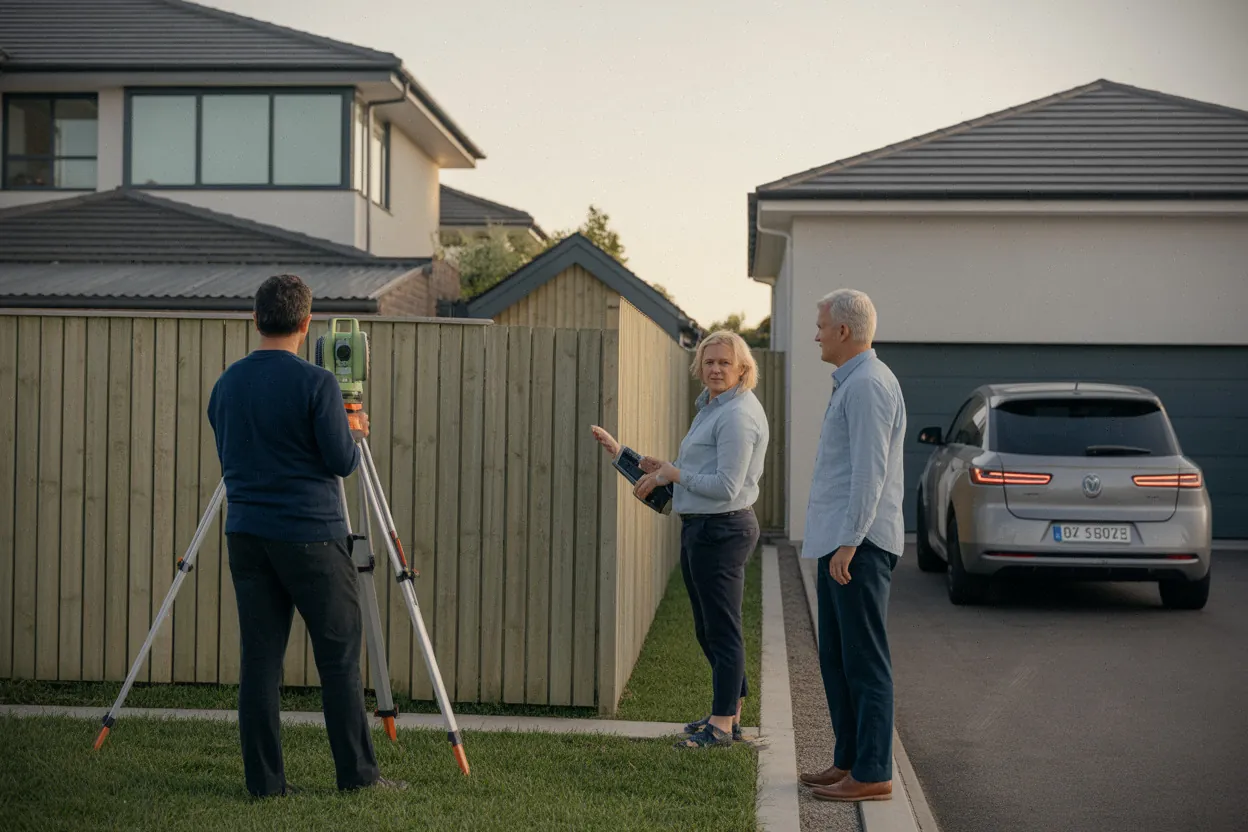
The practical impact extends beyond the courtroom. For project owners, the ruling heightens the value of land checks and boundary surveys before construction, beyond planning and zoning permissions. For contractors, it is a reminder that building “to the plans” is not enough if the plans rely on an incorrect boundary. For owners harmed by encroachment, the decision strengthens the clarity of the remedy: proving encroachment should lead to a concrete order to stop it, shaping how parties approach expert reports, formal findings, and evidence strategy.
A consistent message: protect parties, but stay inside the legal toolbox
Read together, the two 2025 rulings point to the same guiding idea: a judge’s role is neither to mechanically rubber-stamp contract clauses and physical situations nor to rewrite private relationships in the name of a subjective sense of fairness.
In the commercial lease case, the Court of Cassation broadened access to a protective mechanism already provided by statute—suspending a termination clause under Article L. 145-41. In the encroachment case, it narrowed the use of rights-balancing when that balancing would neutralize a major civil-law principle: the integrity of property rights.
The common thread is method. Judges can protect litigants when they act within tools the legislature created or principles civil law requires. The approach responds to a frequent complaint in real estate disputes: uncertainty driven by overly equity-based outcomes. Here, the court set boundaries—on one side, securing the emergency judge’s ability to intervene through a broad reading of the statute; on the other, preventing proportionality review from becoming a routine escape hatch in neighbor conflicts.
For litigants, the tradeoff is predictability. A tenant can seek time even when the alleged breach involves operating the business, but must show a real ability to cure it. A builder or owner cannot rely on the “home” argument alone to keep occupying someone else’s land. In both situations, the court’s message is to bring objective, verifiable material—timelines, technical documents, formal findings, measurable impacts—rather than arguments based only on the social or emotional weight of consequences.
The rulings also shape settlement dynamics. In commercial leasing, the prospect of a court-ordered suspension may encourage negotiated restart agreements with milestones and penalties. In encroachment disputes, the strictness of the remedy can make pre-judgment fixes more attractive—such as transferring a strip of land or modifying the structure—when legally and technically possible. Litigation remains, but it becomes more scenario-driven and easier to anticipate.
What changes for landlords, tenants, and neighbors
For French commercial leases, the February 6, 2025 decision forces landlords and advisers to recalibrate how they use termination clauses. Serving a formal notice tied to a nonpayment obligation—continuous operation, permitted use, maintenance—can still be a pressure point. But a tenant’s emergency-court request for time is now a more likely stage of the dispute, especially when the breach stems from temporary difficulties.
That makes documentation decisive: financial statements, bank attestations, work estimates, and correspondence with government offices can become the difference between a judge granting time and letting termination take effect.
For tenants, the lesson is not blanket protection. Suspension is not cancellation; it can be conditional and time-limited, and the tenant must be able to cure the breach. Operators facing an administrative closure, compliance work, or a business transition may see it as procedural breathing room. But closures with no plan, inertia, or structurally impossible operations are likely to lead judges to deny deadlines.
In neighbor disputes, the July 3, 2025 ruling strengthens prevention. Before buying or building, boundary surveys and verification of cadastral and land-title limits take on direct litigation value. For owners, preserving proof—plans, boundary-survey reports, formal findings, correspondence—becomes a defensive investment. For potential encroachers, the risk of a drastic order, including demolition, must be priced into project budgets and into liability arrangements with contractors.
The decisions also raise a broader question about proportionality review in private law. The Court of Cassation did not exclude the European Convention, but it limited how judges use it in this type of dispute, avoiding the import of reasoning designed for government interference. In doctrinal terms, the court is signaling that fundamental rights do not automatically override property rights between private parties. Protection of the home remains meaningful, but it cannot serve as a shield to maintain an unlawful occupation of someone else’s land.
For professionals—lawyers, notaries, expert surveyors, property managers, insurers—the rulings offer operational anchors. They support more targeted court filings, stronger preventive advice, and clearer risk assessment. In a sector where timing matters—formal notices in leases, construction schedules, emergency proceedings—the Third Civil Chamber’s clarification of the judge’s role shapes strategy without promising automatic outcomes, leaving each case to rise or fall on its evidence.
Key takeaways
- On February 6, 2025, the Court of Cassation allowed suspension of a lease termination clause for any breach, not just unpaid rent.
- An emergency judge can grant time outside nonpayment cases, but only with strong supporting evidence.
- On July 3, 2025, once encroachment is proven, the judge must order a measure to end it.
- A proportionality argument based on “home” does not neutralize property rights in a private encroachment dispute.
- Chambre civile, Cour de cassation, le 6 février 2025, n° 23-18.360 – Avocats en droit immobilier et droit des affaires – Kohen Avocats
- Troisième chambre civile de la Cour de cassation, le 3 juillet 2025, n°23-12.925 – Maître Reda Kohen, avocat en droit immobilier et droit des affaires à Paris
- Jurisprudence récente et son impact sur le droit civil – Juridique Online
- Cession de parts sociales : consentement du cessionnaire, fixation du prix et garantie de passif dans la jurisprudence récente de la chambre commerciale – Maître Reda Kohen, avocat en droit immobilier et droit des affaires à Paris
- Article 1102 – Code de procédure civile – Avocats en droit immobilier et droit des affaires – Kohen Avocats
Sources
Key Takeaways
- On February 6, 2025, the Court allowed the suspension of a termination clause for any breach.
- The emergency (summary) judge may grant extensions even when there are no unpaid amounts, subject to evidentiary requirements.
- On July 3, 2025, an encroachment that has been established requires a measure to bring it to an end.
- A proportionality review based on the home does not override property rights.
Sources
- Chambre civile, Cour de cassation, le 6 février 2025, n° 23-18.360 – Avocats en droit immobilier et droit des affaires – Kohen Avocats
- Troisième chambre civile de la Cour de cassation, le 3 juillet 2025, n°23-12.925 – Maître Reda Kohen, avocat en droit immobilier et droit des affaires à Paris
- Jurisprudence récente et son impact sur le droit civil – Juridique Online
- Cession de parts sociales : consentement du cessionnaire, fixation du prix et garantie de passif dans la jurisprudence récente de la chambre commerciale – Maître Reda Kohen, avocat en droit immobilier et droit des affaires à Paris
- Article 1102 – Code de procédure civile – Avocats en droit immobilier et droit des affaires – Kohen Avocats