

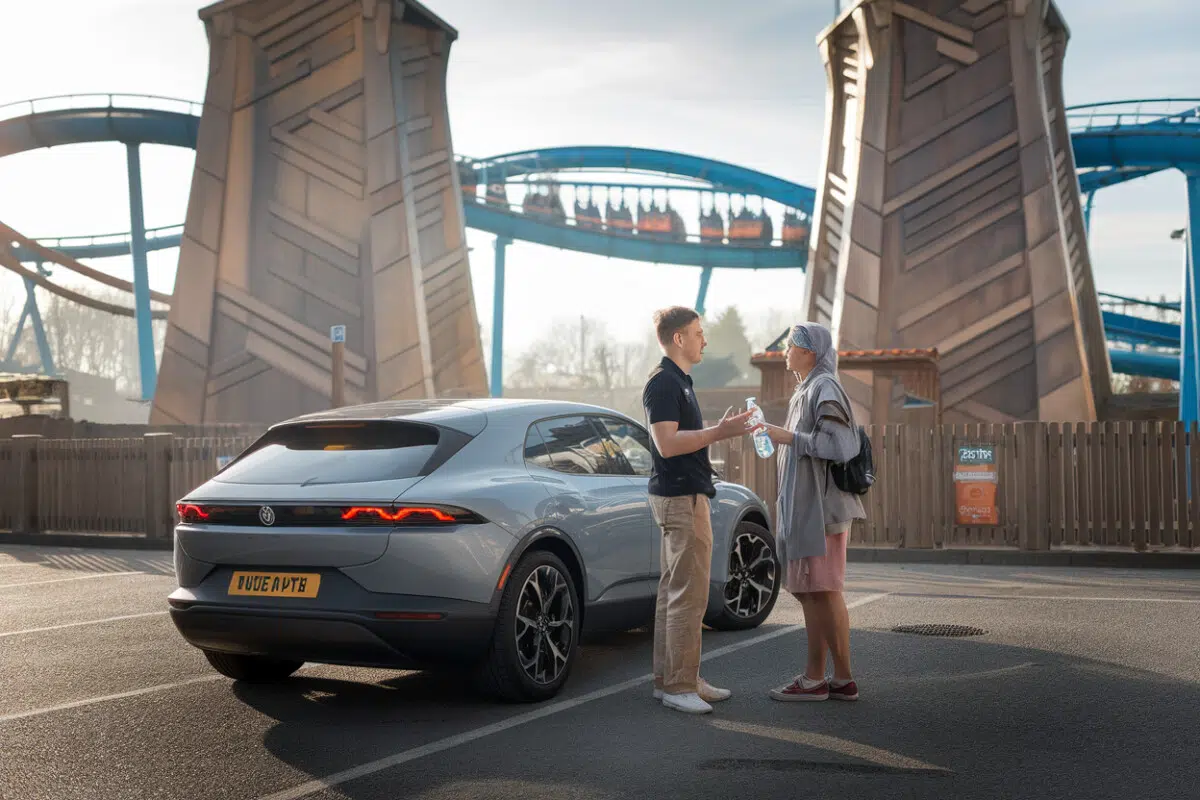
Two major rides at Thorpe Park, one of the U.K.’s best-known theme parks, stopped at the same time on May 25, stranding riders roughly 200 feet above the ground as temperatures climbed to about 91°F.
Videos shot from inside the park quickly went viral, showing cars frozen high on the track and passengers waiting for the rides to restart or for crews to step in. Thorpe Park has not publicly identified what caused the simultaneous shutdown.
The incident is reigniting a familiar question for amusement parks everywhere, from Six Flags to Cedar Point: when extreme heat hits, how do parks balance mechanical limits, rider safety, and the relentless pressure of packed crowds?
Two attractions stopped at once, an unnerving sight at 200 feet
What made the Thorpe Park incident stand out wasn’t just that a ride stalled, it was that two did, at the same moment. At around 200 feet up, even a short delay can feel endless. Every creak, gust of wind, and mechanical clunk seems louder when you’re suspended in open air with nowhere to go.
In the clips circulating on YouTube, Instagram, and Facebook, riders appear stuck in place, unable to climb down on their own. And because it’s a theme park, the breakdown instantly becomes a public spectacle: other guests stop, stare, film, and narrate what they think is happening in real time.
Thorpe Park hasn’t released a detailed explanation in the information available so far. But a stoppage doesn’t automatically mean riders were in immediate danger. Modern rides are designed to fail safe, meaning they’re built to stop when sensors detect something off, rather than push forward under questionable conditions.
Heat turned a breakdown into a physical test
The weather mattered. Britain was in a heat wave, and 91°F can feel especially punishing in a country where many places, and plenty of visitors, aren’t acclimated to prolonged high temperatures.
When a ride stops, airflow stops too. Riders can be left sitting in harnesses on dark seats that absorb heat, baking in direct sun. Up high, conditions can shift with wind, but exposure is constant, and stress plus heat can be a risky combination, especially for kids, older adults, or anyone already dehydrated from walking the park all day.
Extreme heat also strains park operations. Lines get more miserable, water stations get crowded, and staff have to make tougher calls about whether to keep rides running. If a sensor flags a potential issue, speed, braking, or another system, shutting down is often the safest decision, even if it infuriates guests.
What used to be a local incident is now instant content. The Thorpe Park breakdown spread in short, dramatic clips, often shot from the ground looking up, giving viewers the impression of a crisis unfolding.
But viral video rarely shows the full picture: how long riders were stuck, what staff told them, what checks were being run, or what safety systems were engaged. A few seconds of suspense can easily become a storyline of panic.
That puts parks in a bind. Speak too soon and you risk sharing incorrect information. Wait too long and the internet writes the narrative for you. With no public cause offered yet, speculation has had room to grow.
There’s also a human angle that gets lost online: the people stuck in the air didn’t sign up to become the stars of a viral clip. They paid for thrills, not to be filmed during what could be a genuinely stressful situation.
When rides stop, parks prioritize stabilization, not speed
In most parks, the first goal during a stoppage isn’t to restart quickly, it’s to secure the situation. That typically means diagnosing the issue, keeping riders informed, and preparing an evacuation if restarting isn’t possible.
At heights around 200 feet, evacuations can take time. They may require catwalk access, safety harnesses, trained technicians, and careful coordination. Add 91°F heat, and crews also have to watch for signs of heat illness and dehydration while keeping riders calm and still.
Safety systems on modern rides are designed to stop operations when something doesn’t look right. That can be counterintuitive to the public, but the stop itself can be evidence that safeguards are working as intended, even if it feels terrifying in the moment.
As heat waves become more common, parks face tougher decisions
The bigger issue is what this signals for the future. The U.K., like much of Europe, is seeing more frequent and more intense heat waves, conditions that used to be rare are becoming a regular part of summer planning.
For theme parks, that means more shade, more water access, clearer heat warnings, and staffing plans that account for workers operating in high temperatures. It also means ride-by-ride decisions, because not every attraction has the same tolerance for heat or the same mechanical demands.
Until Thorpe Park explains what triggered the dual stoppage, the May 25 incident will remain a Rorschach test online, proof of danger to some, proof of safety systems doing their job to others. Either way, as extreme heat becomes less of an exception, parks will face growing pressure to explain their calls in plain language, fast.
Key Takeaways
- Two Thorpe Park rides stopped at the same time on May 25, about 200 feet up.
- The incident happened during a 91°F heat wave, making the wait at that height more taxing.
- No specific cause has been publicly shared so far, fueling online speculation.
- Videos shared on social media amplified the perception of risk and increased pressure on the park’s communications.
- More frequent heat events are forcing parks to adjust prevention measures, crowd management, and operations.
Frequently Asked Questions
Where in England did the incident happen?
The simultaneous stoppage of two rides was reported at Thorpe Park, an amusement park in England. Footage shared online shows visitors stuck high up inside the park.
How high up were visitors stuck?
Reports say they were stopped at around 60 meters (about 200 feet) high. At that height, riders can’t get down on their own and must wait for the ride to restart or for a supervised response.
What was the temperature at the time of the breakdown?
The incident happened during a heat wave, with the temperature reported at 33°C (about 91°F). That kind of heat can make the wait harder, especially due to sun exposure and stress.
Was the cause of the breakdown explained?
No. Based on publicly available information, no specific cause was mentioned. Without a detailed technical statement, it isn’t possible to attribute the stoppage to any particular factor.
What generally happens when a ride stops while it’s high up?
In general, parks follow safety procedures that prioritize stabilizing the ride, diagnosing the issue, communicating with riders, and, if needed, carrying out a controlled evacuation. The duration depends on the ride’s design and the conditions at the time, including the heat.