


Two small towns in France’s Allier department—Cérilly and Hérisson—are rolling out low-cost guided visits in 2026 built around a shared idea: show visitors tangible heritage up close, then layer in the local stories that help explain it. The tours are priced to stay accessible, with Cérilly listing tickets from €3 to €6 (about $3 to $6.50).
The Cérilly route, “Il était une fois Tronçais, Chênes et Légendes,” puts the Tronçais Forest front and center, promoted as a “Forêt d’Exception” (a French quality label used to highlight standout public forests). In Hérisson, “Il était une fois Hérisson, Petite Cité de…” focuses on a medieval townscape dominated by the remains of the castle of the Dukes of Bourbon and shaped by a loop of the Aumance River.
Beyond simple sightseeing, the two offerings reflect a style of local tourism common across France: short, guided formats designed for walking, regular departures, and routes that work for families—where the guide’s job is to turn a pleasant stroll into a readable landscape.
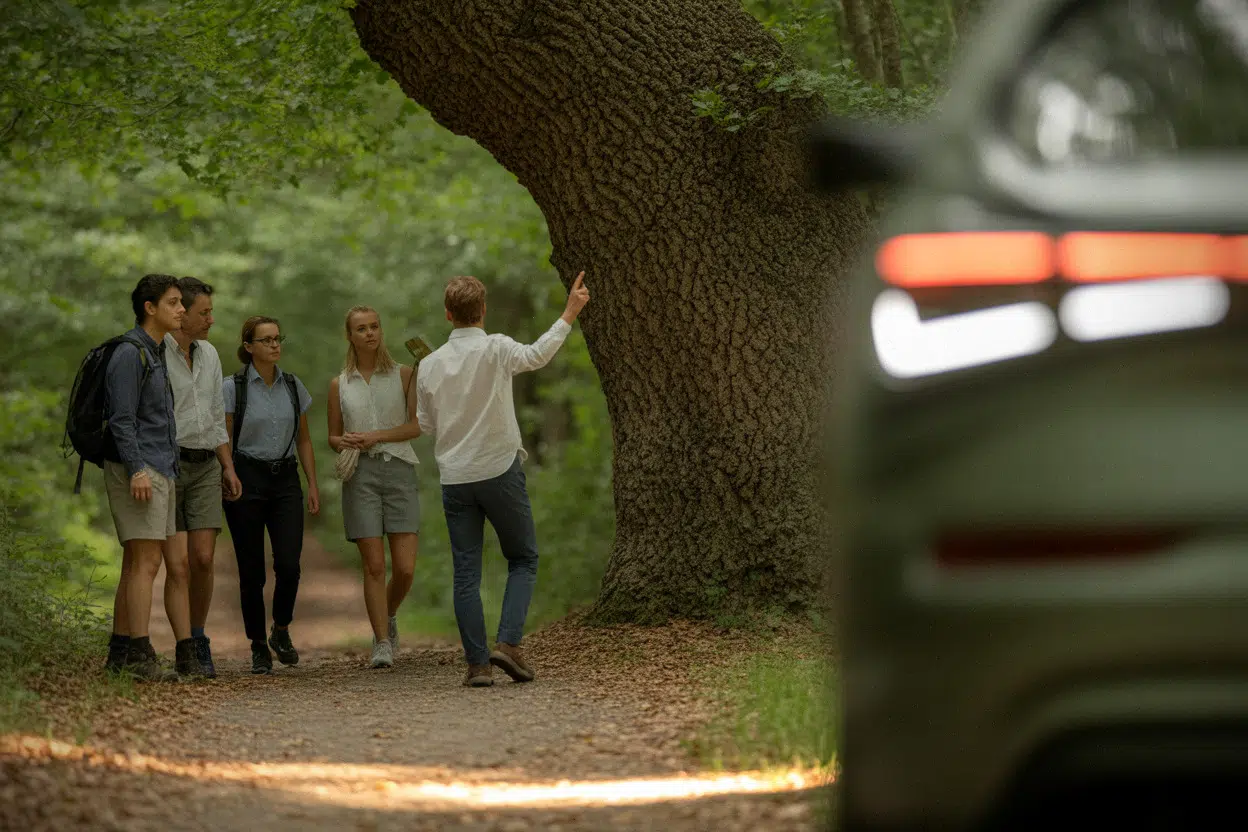
In Cérilly, “Tronçais, Oaks and Legends” makes the forest the main attraction
The Cérilly circuit, titled “Il était une fois Tronçais, Chênes et Légendes,” is framed as a way to tell the story of a place through both historical markers and the narratives that travel with them. Organizers highlight the Tronçais Forest’s “Forêt d’Exception” label as a key credential in tourism messaging, paired with the area’s reputation for remarkable oak stands.
The published pricing—€3 and €6 depending on the audience (about $3 to $6.50)—signals an intentionally budget-friendly approach, similar to heritage tours offered in many small French communities. At that price point, the model typically depends on scheduled departures, groups, and a guided format that fits comfortably into a half-day.
On the ground, the appeal is the range of ways a guide can “read” the forest: how the landscape has evolved, the role of forestry, the importance of roads and crossroads, and how standout oaks become cultural reference points rather than just trees.
The decision to weave in legends isn’t presented as pure folklore. In this kind of tour, stories help pace the walk, hold attention, and show how a territory explains itself. Guides commonly use concrete stopping points—a clearing, an avenue, a distinctive tree, a place name—to connect something visible to an episode from oral tradition, while also clarifying the line between documented history and popular storytelling.
For visitors, the practical considerations are straightforward: appropriate shoes, water, caution in hot weather, and respect for forest rules. The forest also sets its own rhythm depending on weather, light, and crowd levels. In summer, the shade of the understory can make fixed-time guided walks especially appealing—and the guide’s presence adds context that a simple walk might not provide.
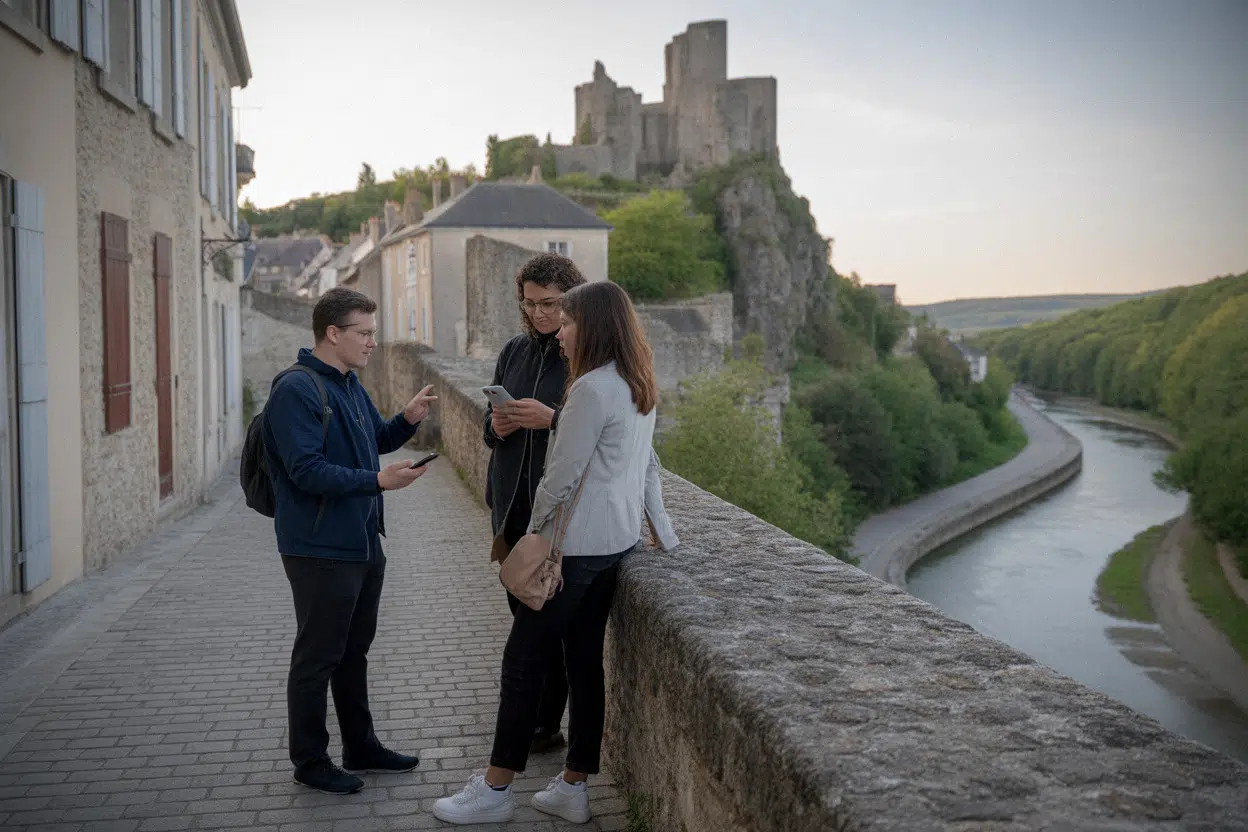
In Hérisson, the Dukes of Bourbon’s castle ruins shape the route
In Hérisson, the guided visit “Il était une fois Hérisson, Petite Cité de…” is built around features that are easy to grasp at a glance: a medieval town, defensive topography, and prominent ruins. The route highlights the castle of the Dukes of Bourbon—set on a rocky spur—then ties the town’s layout to a loop in the Aumance River, reinforcing the logic of enclosure and protection.
The old center functions like an open-air document. Guides typically keep the experience moving in short sequences: a viewpoint toward the castle site, a stop to explain street organization, another to outline the former enclosure and access points. The approach avoids burying visitors in dates while still giving them solid reference points.
For travelers passing through, the value is in connecting visible traces—masonry, breaks in slope, neighborhood organization—to their purposes: defense, control, circulation, and supply. The “petite cité” framing also reflects a broader effort to market smaller towns with strong heritage identities, not by copying major tourist sites but by offering a more intimate visit that can fit into one to two hours.
As in Cérilly, the balance between history and legend is managed stop by stop. Popular stories can provide breathing room, but guides generally emphasize verifiable facts—construction timelines, the role of seigneurial families, changes to the site, and the effects of conflict and rebuilding. In Hérisson, the link to the Bourbon dynasty provides a sturdy historical frame that can accommodate anecdotes without losing coherence.
Pricing, timing, and short formats aim squarely at families
The information available points to a simple pricing structure in Cérilly—€3 and €6 (about $3 to $6.50)—and a guided experience centered on the forest and its stories. That kind of pricing is typical of local heritage tours and suggests an offer meant to work for families, second-home owners, and tourists looking to fill out a day.
Tourism offices and promotional sites, including “Visit Hérisson,” emphasize a broader mix—heritage, culture, nature, and sometimes festivals—without always listing every operational detail in one place. That reflects a common web strategy: attract interest, orient visitors, then direct them to booking pages or visitor centers. For the public, the key questions remain practical: meeting point, duration, accessibility, and constraints such as elevation changes, stretches without shade, and weather conditions.
The spread of guided visits across France offers a point of comparison. The article cites an example elsewhere: a guided visit dated July 15, 2026, in Oudon, advertised with a precise meeting point—illustrating how standardized the format has become, with fixed time slots, marked routes, and guided experiences typically lasting one to two hours. Even though it’s not the same destination, the example shows how visitors increasingly plan outings around clearly identified rendezvous points.
In Allier, pairing Cérilly and Hérisson also creates a practical two-stop itinerary. Tronçais draws visitors for nature and scenery, while Hérisson offers a more urban, castle-centered read of the landscape. The mix can help keep driving distances short while changing the atmosphere—and can spread out crowds, with some visitors favoring shaded woods during heat and others preferring a village route with stops and viewpoints.
How the tours use legends—without sliding into pure folklore
Legends are a common tool in guided tours, but credibility depends on how tightly they’re framed. In Cérilly, the title “Oaks and Legends” openly signals a narrative component. The guide’s challenge is to connect stories to observable elements—place names, forest uses, local rites, and how remarkable trees are perceived—so the legend becomes a teaching tool rather than a distraction.
In Hérisson, the heritage “skeleton” is strong enough—castle remains, the spur-top setting, the Aumance loop—that anecdotes don’t overwhelm the historical content. Visitors often leave with a blend: a memorable fact about defensive organization, an architectural detail, and a locally transmitted story. That mix can help people feel they’ve “claimed” the place, and it can be part of why some return later to revisit the route on their own.
The article points to a similar approach elsewhere in France: communications for the Cascades du Hérisson (a separate site from the town of Hérisson in Allier) promote a playful, engaging guided experience focused on geography and hydrology, with a stated duration of 1 hour 30 minutes. The comparison is meant to illustrate a broader trend—guided experiences aim to make technical content accessible without abandoning rigor.
For local governments, the appeal is twofold. Guided mediation can elevate sites without heavy infrastructure spending, relying instead on trained staff and organization. And it can generate local economic spillover—spending in shops, visits to lodging, and movement to other nearby points of interest. Labels like “Forêt d’Exception” can serve as quality signals, the article argues, as long as they’re explained rather than simply cited.
Ultimately, the Cérilly and Hérisson pitch rests on a simple promise: visitors will walk, pay a few euros, and show up at a set time if they get something solid in return—context, facts, and a controlled narrative that turns forest, ruins, and river into a clear, memorable experience.
Key takeaways
- In Cérilly, the “Tronçais, Chênes et Légendes” tour spotlights the Tronçais Forest.
- The Tronçais Forest is presented as carrying the “Forêt d’Exception®” label and is interpreted by a guide.
- In Hérisson, the guided route is structured around the ruins of the Dukes of Bourbon’s castle and the Aumance River.
- Announced pricing on the Cérilly side runs from €3 to €6 (about $3 to $6.50), targeting families.
- The mix of history and legends works best when guides keep it factual and well-contextualized.
Key Takeaways
- In Cérilly, a “Tronçais, Oaks and Legends” tour offers a focus on the Tronçais Forest.
- The Tronçais Forest is presented as holding the Forêt d’Exception® label and is brought to life by a guide’s storytelling.
- In Hérisson, the tour is organized around the remains of the castle of the Dukes of Bourbon and the Aumance River.
- The prices listed for Cérilly range from €3 to €6, targeting families.
- The mix of history and legends works when the interpretation stays factual and put into context.